
Written by Gracie Henderson-Morris. Edited by Nell Carter
From its opening moments, as two young girls run around together at an English boarding school, their movements perfectly in sync, Extra Geography centralises the female friendship at its core and sets the film’s tone instantly. Best friends Minna (Galaxie Clear) and Flic (Marni Duggan) feel like two parts of the same whole – an immediately charming image, reminiscent of the innocence of adolescence. As the girls play lacrosse together, formidable and focused, you can almost smell the freshly cut grass. In mere moments, Molly Manners’ directorial debut feels like a world that is entirely lived in.
Extra Geography follows Minna and Flic as they move through their small world, attempting to grapple with the confusion of their teenage years and navigate complex relationships. Determined to become more “worldly” through the completion of their annual summer project, the girls decide they must fall in love with the first person they lay eyes on. What begins as an innocent academic pursuit is quickly complicated when the pair set their sights on their Geography teacher, Miss Delavigne (Alice Englert). Adapted from Rose Tremain’s short story of the same name, with a screenplay by Miriam Battye, Extra Geography is a tender coming-of-age film that grapples with the frightening intensity of being fifteen.
Despite the apparent synchronicity between them, the fractures in the girls’ relationship are clear. What initially appears inherent is, in reality, manufactured to fit their standard of ‘inseparable best friends’. As Flic rushes to finish her Maths paper at the film’s beginning, she slows down to ensure she and Minna close their final pages simultaneously. Their relationship is characterised by a desire to achieve sameness, in which milestones are equated on a points basis to ensure their equality. Even their young pursuit of romance is one which must be completed in tandem.
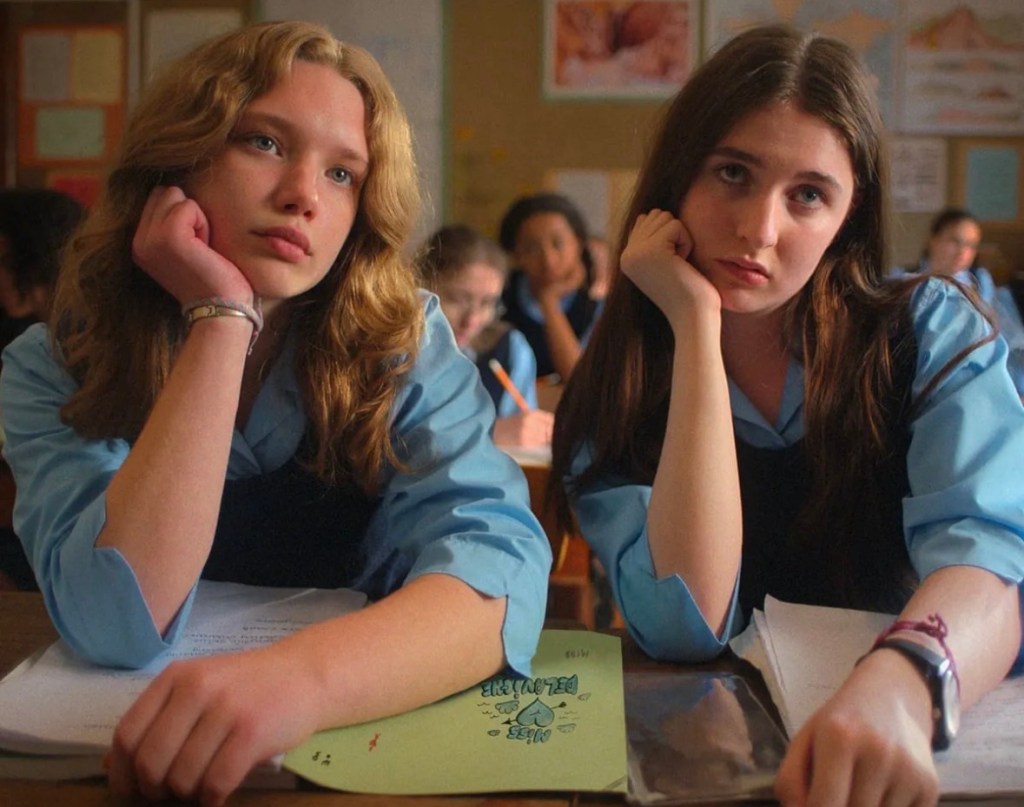
When they both audition for A Midsummer Night’s Dream, Minna is granted the role of Titania, whilst Flic is relegated to ‘tree/bush,’ despite her successful audition. Immediately, the girls seek a way to rectify the power imbalance. In attempting to win the adoration of Miss Delavigne, they try to ensure they do not leave each other ‘behind’. When eye contact is won by Flic, it must later be gained by Minna – it’s just fair, isn’t it?
The broader complexities of the girls’ friendship unfold against a backdrop of class divide. Flic is a “scholarship girl”, whilst Minna isn’t. These differences feel particularly highlighted when Flic is left on the outside of a classroom, forced to watch Minna act alongside boys (which they had both sworn to hate) through a smudged window. What initially appears to be a friendship characterised by synchronicity begins to shed its skin, revealing Flic’s desperate desire to maintain closeness, even as Minna begins to grow away from her. In a Q&A session after the film, Manners commented on the disparity: “Flic wants to be equal to Minna, yet Minna wants to beat Flic”.
Throughout the film, drawn-out silences and lingering eye contact between the girls are undeniably charged. As Extra Geography progresses, you can’t help but feel that Minna and Flic’s pursuit of love is futile — they have already found it with one another. The intensity that brews between them speaks to a relatable teenage co-dependency, reminiscent of obsessive female friendships that skirt around the edges of romance.
As the girls weather a turbulent relationship, Manners cultivates a highly immersive atmosphere, where the stakes feel world-endingly high. In many ways, the film is a callback to our own school experiences – when arguments felt newsworthy, and the beginning of exam season was doomsday. For Minna and Flic, especially in the isolated environment of a boarding school, the pursuit of academia and the seats they choose in their favourite classrooms is their entire world. Every lingering shot, every frame which isolates the girls from one another, every line of dialogue, feels laced with the significance of something deeper – of consequences which will manifest in an irreversibly devastating manner.
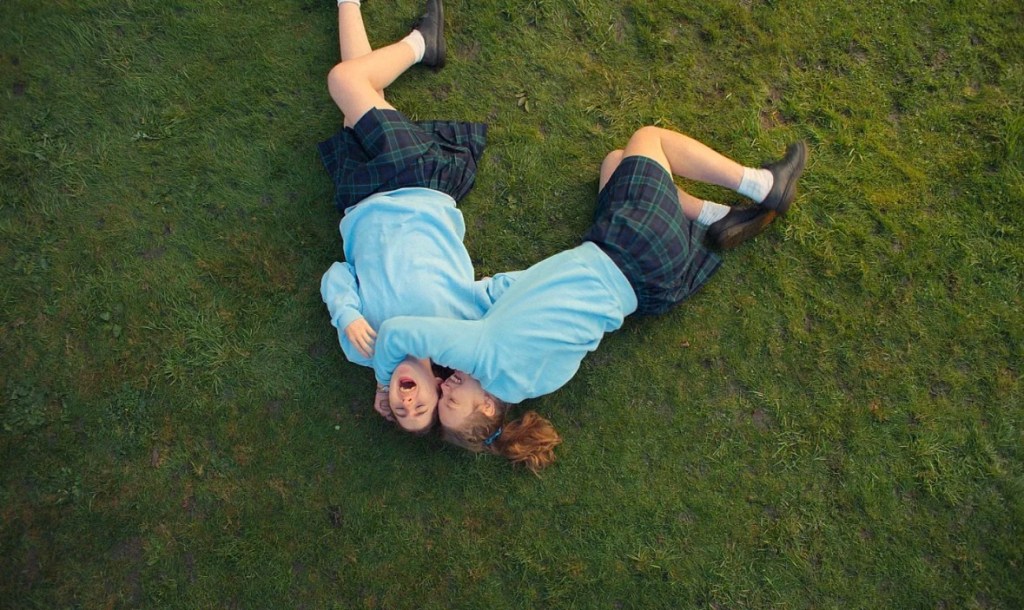
Whilst, at times, heartbreaking, Extra Geography is also sharply funny. The girls’ naivety allows for many moments of comedic relatability. In just one example, both Minna and Flic are completely besotted with the idea of going to Oxbridge and insist they must build the social repertoire for the sole purpose of improving their personal statement. Early in the film, Flic’s aversion to their pursuit of love is because she “hadn’t planned to fall in love until at least [her] Master’s,” because you must be at least twenty-five to fall in love, of course. The girls behave as though they are governed by a concrete ten-year plan that cannot possibly be interrupted.
Clear and Duggan are extraordinary together. As the Extra Geography progresses, you laugh with them, you cry with them, and you sympathise with them deeply – even when perhaps you shouldn’t. By the film’s end, you feel a genuine kinship with the characters and the journeys they have taken. Minna and Flic transform into relatable and understandable figures, with both actors perfectly balancing the portrayal of teenage selfishness and struggle.
Manners expertly marries a rich aesthetic with moving performances, and whilst I could talk about the idiosyncrasies of this film forever, I would hate to ruin the joy of being able to experience it for yourself. With compelling queer undercurrents and a distinctly English sensibility, Extra Geography is a coming-of-age film that captures teenage immaturity, love, and the terrifying possibility of growing apart from the person who has always been beside you. Painfully nostalgic and heart-warmingly relatable, Manners expertly reminds us of what it’s like to be lost and fifteen in a joyful 94-minute runtime.
Extra Geography releases in cinemas on October 2nd, 2026.

