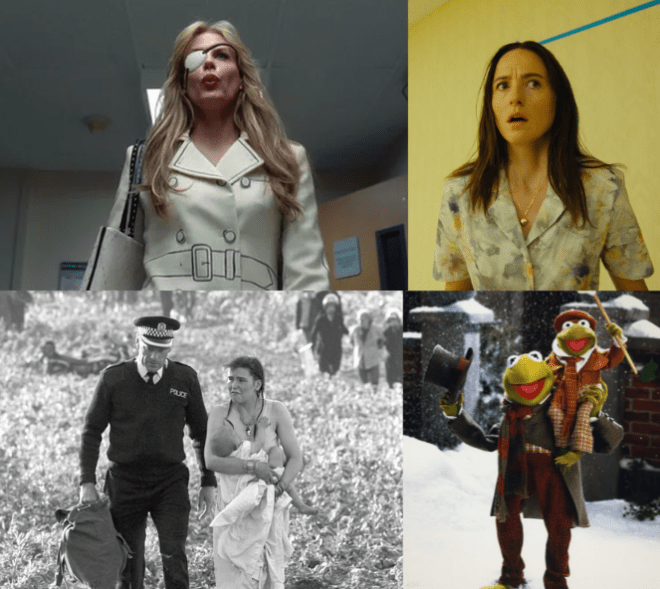
Written by Nell Carter, Sonia Naorozy, Annabel Spinks-Jones and Anna Tilley, edited by Anna Tilley
Nell Carter on watching Kill Bill: The Whole Bloody Affair at the student cinema
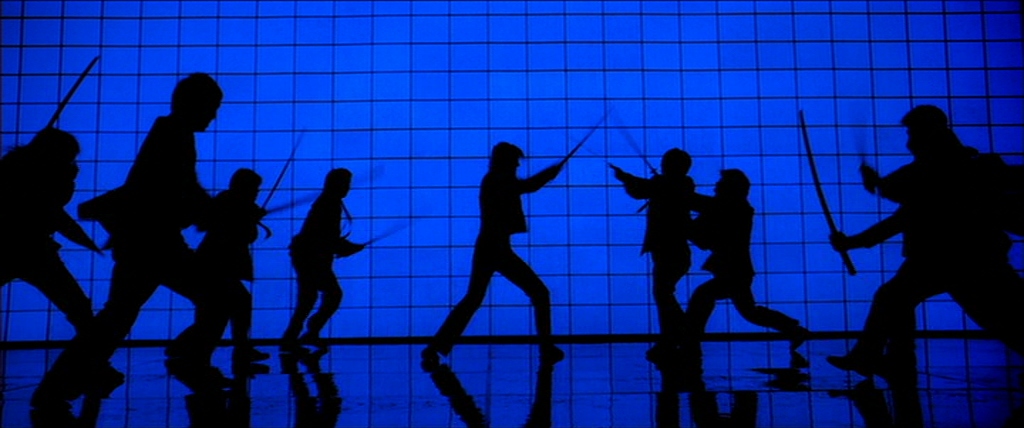
In an era where most films are readily available on streaming services, it can be easy to forget what makes the cinema experience special. Watching Kill Bill: The Whole Bloody Affair at my university’s student cinema reminded me why seeing a film with an audience still matters.
Quentin Tarantino’s The Whole Bloody Affair combines both volumes of Kill Bill into a single four-hour film, restoring and altering scenes from the director’s preferred cut. As someone who considers both Kill Bill films among my all-time favourites, I had always wanted to see this version but never had the opportunity, and this sense of rarity made the screening so much more memorable.
By combining the two original releases, The Whole Bloody Affair allows the story to unfold as one continuous revenge epic, making it feel much closer to Tarantino’s original vision. Watching them back-to-back also transformed the pacing of the story, as the transition between the action-heavy first half and the more reflective second half felt completely natural, blending the film into a single, cohesive work.
One of the biggest surprises of the screening was how much my opinion of Elle Driver changed. While I had always enjoyed her as a villain, seeing The Whole Bloody Affair on the big screen made me appreciate her character in an entirely new way. Elle is ruthless and unpredictable yet there is also a confidence about her that makes her impossible to ignore whenever she appears onscreen. Watching the film as one continuous story emphasised her role as perhaps the Bride’s most personal rival, making their mutual hatred feel far more intense. By the end of the screening, I found myself paying more attention to Elle than ever before, and she unexpectedly emerged as my favourite character.
My friends, many of whom had never seen the films before, rated it highly and we enjoyed discussing our favourite moments, notably the animated sequence of O-ren’s backstory. Their reactions reinforced to me that while streaming offers convenience, it cannot replicate the sense of occasion, collective engagement, and shared excitement that comes from watching a film with an audience.
Sonia Naorozy on seeing The Muppet Christmas Carol at the student cinema
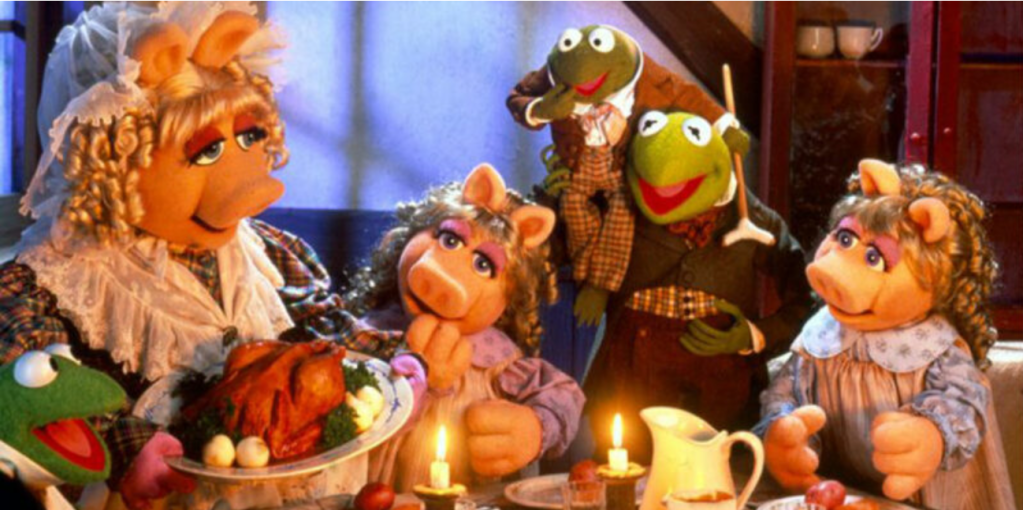
During my last Christmas at university, I watched a screening of The Muppet Christmas Carol at the Student Cinema. It’s a growing tradition that I try to see it on the big screen each year, having watched it with a live orchestra twice now. I remember being sat next to my best friend who was visiting at the time, and I had devoured a bag of toffee popcorn, feeling like a little kid laughing along to the music, jokes, and overall joy of The Muppets. At the end, when it was announced that Tiny Tim did NOT die, the entire audience erupted in cheers and a loud round of applause. I couldn’t keep the grin off my face.
Being able to see the film accompanied by a live orchestra was another amazing experience. I remember going with a group of friends right after school, and walking through the Birmingham Christmas markets on our way to the venue, sharing churros. The film itself was wonderful, as it always is, and being able to hear the soundtrack performed live by the orchestra elevated it to another level. It truly encapsulated the magic of Christmas. I was unsure if you could film the performance, but I recorded a sneaky voice memo on my phone during the credits, so I could reminisce upon that moment, and relive the ecstatic atmosphere. We all rode the Ferris wheel before walking back to the train station, telling ourselves it would be worth it, even if it did cost the last of our spending money! Really it was just an excuse for the night not to end.
Watching films around the holidays always feels like a special experience, even when we’ve watched them a thousand times before and know exactly how they’ll end. Often, it’s the people we watch with that truly matter the most; they make the experience of film worth it and remind us why we love the holidays.
Annabel Spinks-Jones on watching documentaries at the Groovy Movie at The Big Green Gathering
The Big Green Gathering is the sort of festival where you can have a go at basket weaving in the morning, listen to spoken word about reforestation in the afternoon and enjoy a flapjack over some Baltic Ska in the evening. The Rinky Dink pedal-powered sound system pumped ‘In the Summer Time’ by Mungo Jerry between lounging beatniks, and the odd sheepish nudist.
Us teenagers mostly commanded the teen tent. Someone would occasionally pop in and attempt to teach us something useful, like turntablism. At the very least, a veggie burger and some suncream were thrust upon us. Opposite the teen tent was another constant force, a cinema called the Groovy Movie. A castle of immersion and distraction. A defence against boredom. At the back of the cinema was a row of stationary bicycles fixed to dynamos. To groove is to be in motion, in alignment. Sedentary spectatorship was not on offer here; not for us kids, wanting to watch during the lulls at any rate. At prime time, crowds could be counted on to keep the projector energised. But if we were to be saved from long days and aimless teenage angst, we had to get in the saddle.
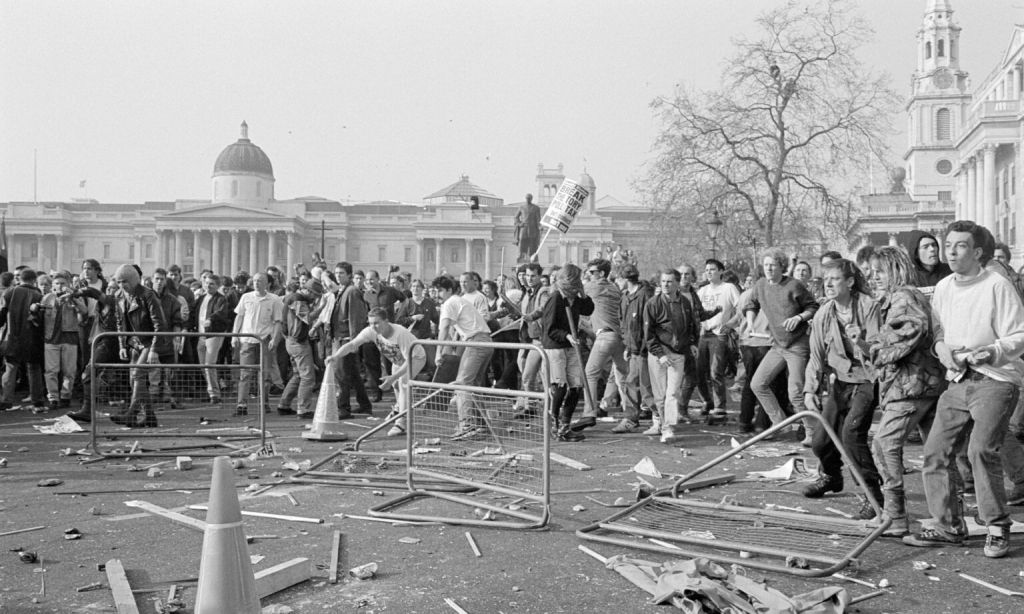
What flickered before us wasn’t always entertainment, as such. We were shown documentaries about topics such as the Poll Tax Riots, Greenham Common Peace Camp and the Battle of the Beanfield. This is where I learnt that there were strategies against people like us. And what was put on the line for our beliefs. This is where I first learnt about police brutality. It’s an intense thing to consume one’s cultural history on screen, collectively, by a method which I am – by default – corporally engaging in the production of.
Documentary, for us, wasn’t voyeurism. It was a record, and a message. To keep pushing, or the light will go out.
Anna Tilley on seeing Backrooms at the Warwick Arts Centre
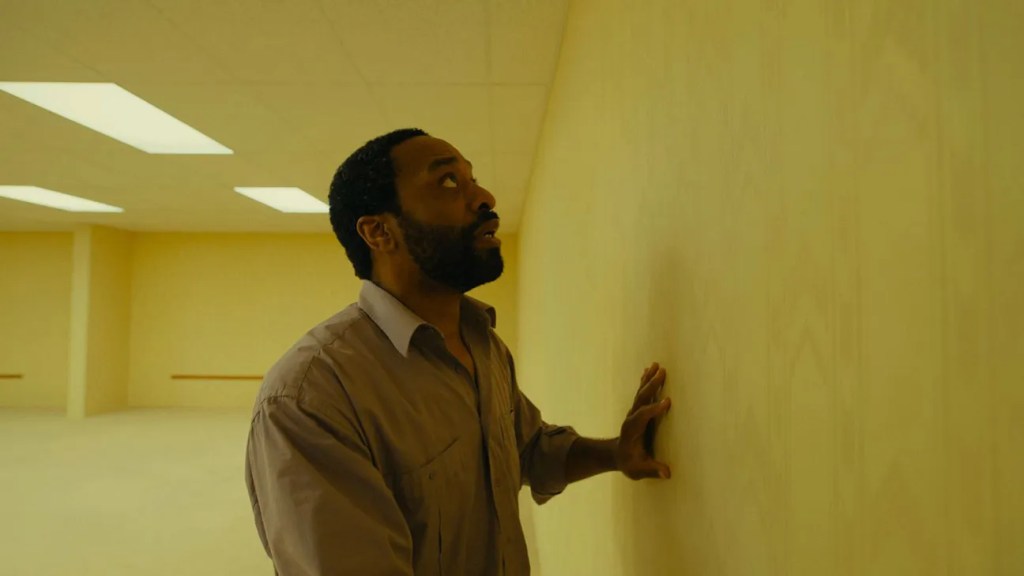
Last weekend I saw Kane Parsons’ Backrooms film, adapted from his eponymous YouTube series, at the Warwick Arts Centre in a packed-out screen. Because of the film’s popularity on this night, me and my friend weren’t able to sit together, and the accidental viewing experience surrounded by strangers helped immerse me further into the unfamiliar and liminal space of ‘the backrooms’. Cautiously I drew strawberry laces from their rustling bag and put them to my lips, anxious as not to disturb those around me, alike the character of Naren in the film, creeping silently through the labyrinth to avoid detection from the monsters within.
The film reimagined the source material’s analogue horror style surprisingly well, translating the fuzzy VHS digital aesthetic into contemporary horror conventions, with its frequent adoption of a first-person video camera perspective and its use of jump scares. The use of point-of-view shots in parts of the film compelled me to align with the characters’ perspectives, heightening the stakes of their misadventures by involving me as a spectator. As a result, the film’s jump scares felt as if they attacked me personally, and clearly the rest of the audience felt this sensation too, as I could almost feel the entire room shudder and jolt each time there was a sudden moment of action.
Seeing the web series reimagined on the big screen filled me with awe for the capabilities of cinema, as Backrooms was able to transform Parsons’ original Blender-produced graphics and visual style into a film which builds upon the lore and perfectly recreates the series’ original eerie atmosphere.

