Written by Mason Stannard-Parages, edited by Sonia Naorozy
There is always a fear that inches its way into my heart when I hear a filmmaker’s next project is an adaptation of classical literature. We have seen so many fail to truthfully encapsulate the essence of the book, such as Oliver Parker’s The Picture of Dorian Gray that came out in 2009, which so poorly emulated Wilde’s intricate web of male homosexuality, desire and youth. It seems that filmmakers favour putting their own directorial spin on a classic, rather than working with the raw material that has entranced people for years and years. Frankenstein stands out as an example here. As a director, Guillermo del Toro is known for his stylistic use of cinematography and dark fantastical narratives and, although I had my initial reservations, his previous films, such as Pan’s Labyrinth, gave me hope for what could come from a gothic adaptation of Shelley’s Frankenstein. There is always a hesitation with turning a book into film, especially since many people have a preconceived image of what certain characters and locations look like, inevitably meaning some will be disappointed with the portrayal. But, with Frankenstein, I believe this isn’t the case. Not only did del Toro make it clear that he had read the book, but he also did research surrounding the environment in which Shelley had written her novel. After having visited the temporary exhibition of Frankenstein: Crafting a Tale Eternal, I knew that this adaptation would be different. No more are the days of seeing green skin, or nuts and bolts protruding from the neck. Goodbye to the stereotype that Frankenstein was a mad scientist, but rather a young man who strove to expand his knowledge.
Del Toro’s adaptation, although not being the most accurate to details within the book (which was to be expected), was the closest a piece of visual media got to near perfection. The Creature, played by Jacob Elordi, was exactly how the book had constructed him.
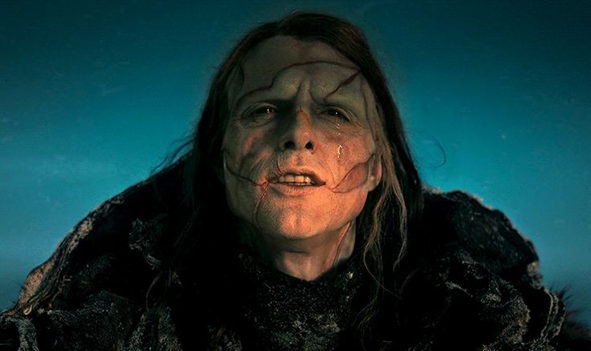
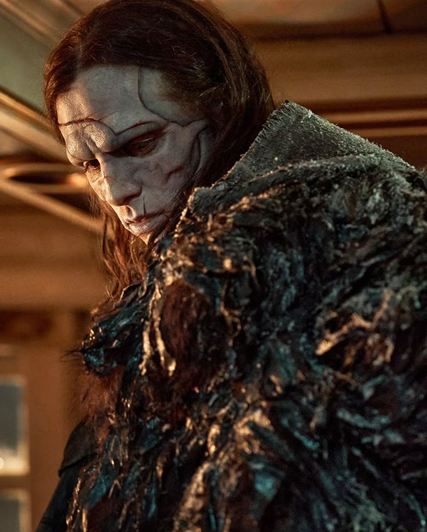
Taking quotes from the book, such as ‘His limbs were in proportion, and I had selected his features as beautiful’, ‘his hair was of a lustrous black, and flowing, and ‘his shrivelled complexion and straight black lips’, we see a clear parallel with how Elordi looked as The Creature. Elordi took great care in how he moved and sounded as The Creature, stating in an interview that he researched throat singing and ancient Japanese dance to capture the essence of The Creature’s raw humanity, as Influencer writes, ‘Elordi’s emotional preparation, which included studying butoh, a Japanese dance form, to embody the Creature’s raw and primal emotions’. His performance here was stunning. His previous roles had made many quite nervous about his ability to play a character so different, but these fears were melted immediately. His ability to play child-like innocence, which slowly transforms into wrath, was spectacular and made his story arc heart-wrenching to watch. This rendition of The Creature truly leant into the humanistic side of the character that Shelley portrayed, rather than a ravenous, malicious demon whose aim is to hurt.
Del Toro was also quite faithful to the way the novel was structured, written through an epistolary narrative. It introduces The Creature and his creator, Victor Frankenstein, through the eyes of explorer Walton, who is stranded in the Arctic ice where he meets a wounded Victor who then narrates his story. A vital part of the book was balancing the contradicting narratives between Creator and Creation, which many adaptations neglect, leaning more towards one character. We are thrown away from Victor’s life, and the build up to his usurpation of the natural order, to the Creature who is neglected and left to fend for himself. Although, we do see some drastic changes to plot and character, such as Elizabeth who is played by Mia Goth. This was the main divergence, but not necessarily for the worse.
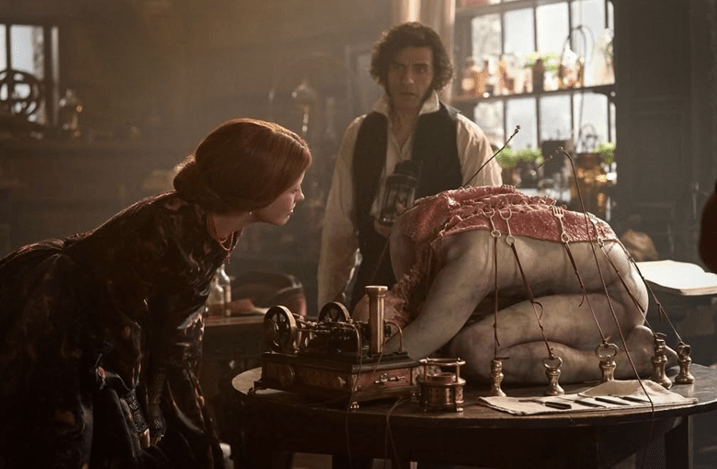
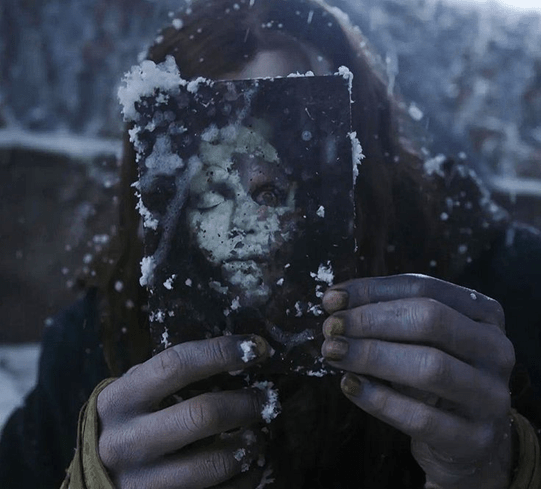
Elizabeth becomes the daughter of Harlander, who finances Frankenstein’s lab and experiments for his own cure (against the knowledge of Victor), and ends up marrying William Frankenstein, instead of Victor. She becomes a strong feminine influence who constantly puts Victor in his place, and refuses his romantic advances, moving away from the common trope that a woman’s role is to marry a man and advance his character arc. We also see that Elizabeth is given an interest in the small creatures of the world such as insects, which foils Victor’s focus on the bigger, grander aspects of life. She acts as a beacon for the misunderstood, which we see through her rather ambiguous relationship with the Creature, and a push away from the traditional role of women in classic literature, which is a refreshing divergence in the adaptation.
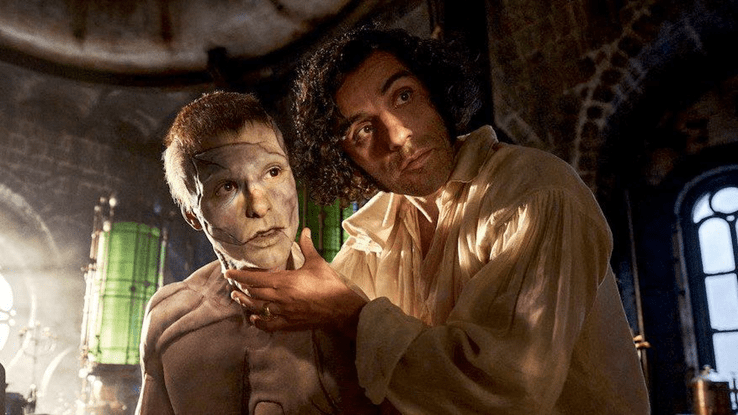
We cannot forget about Oscar Isaac’s rendition of Victor Frankenstein, which was just as truthful to the book as Elordi, with his arrogance and desire for knowledge becoming his hamartia and eventual downfall. His refusal to heed warnings and listen to others isolates him as he slowly starts to lose his humanity, while his Creation seems to gain it. It was easy to dislike Victor’s character in the book with his constant self-victimization, and just as easy for distaste to settle in your stomach when watching him on the big screen, seeing him as a pathetic man who only thinks of himself. Isaac’s performance achieved a strangely charismatic energy, and his ability to entrance not only the people within his world, but the audience was truly amazing. Watching the degradation of his life and his slow descent into madness perfectly encapsulated the dangers of science that Shelley forewarned in her cautionary tale.
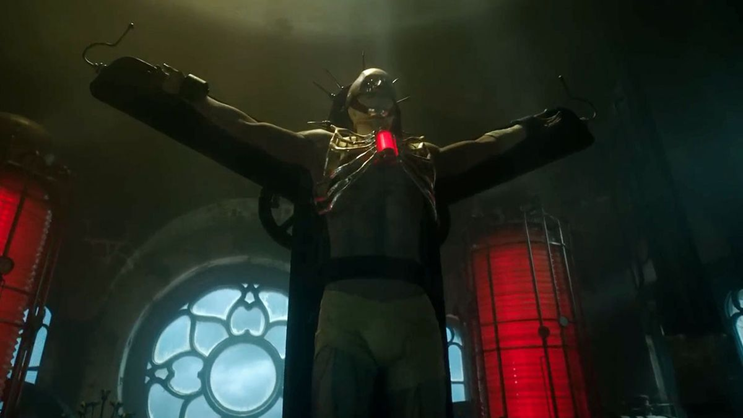
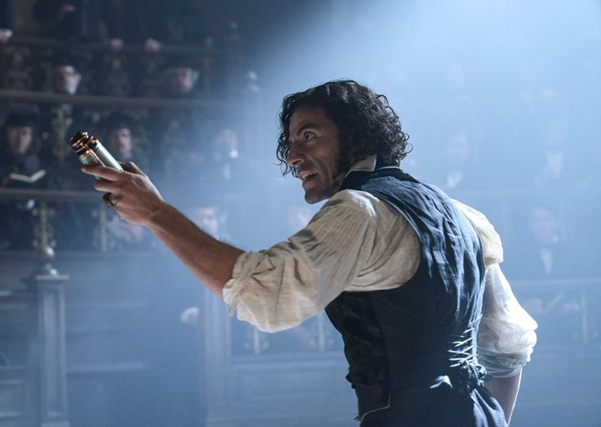
At the 98th Academy Awards, Frankenstein won 3 awards, including Best Costume Design, Best Make-Up and Best Production Design, as truly deserved. Del Toro’s characterisation was brilliant, and his ability to capture the essence of Gothicism with his use of cinematography, colourisation and costume was spectacular. The use of greens, icy blues and bright reds brought the perfect amount of chill to the scenes and the abstract, at times even modern costumes added to the culmination of the character. The make up that took almost 10 to 12 hours to transform Elordi into the face of the gothic novel was otherworldly, and the set being constructed by hand for the sake of authenticity, including the lab and even the boat stuck in the ice, truly highlighted Del Toro’s passion and care when adaptating such a timeless piece of literature. I hope that this adaptation sets the bar for future projects that involve re-animating classics into visual media, and that directors are less opposed to straying far from the original source material.