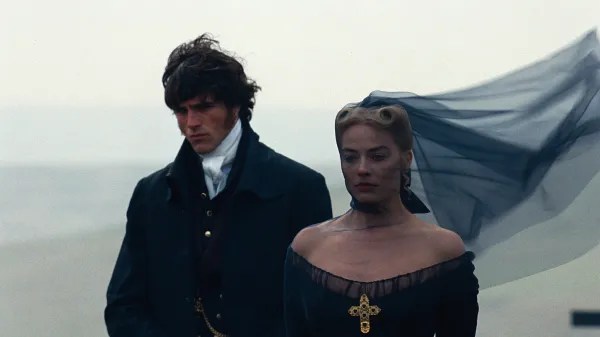
By Gracie Henderson-Morris
As a first-year Film and Literature student, I was offered the opportunity to watch Emerald Fennell’s “Wuthering Heights” at the Warwick Arts Centre last week, having studied Brontë’s novel and its adaptations for our Adaptation module.
Ahead of the film’s eventual release on Friday 13 February, online discourse had already shaped our perception of the “Wuthering Heights” – and had quickly become something of a controversial joke. With an almost-Valentine’s release, it seems to set itself up as a romance for the ages (for those of us who are familiar with the original novel, this is clearly not the case).
It seemed fitting, then, that Fennell emphasised (through the use of quotation marks) that her version of Wuthering Heights is simply an interpretation of the novel. Fennell then seems to behave as though this resolves her of all sins. In reality, in order to view Fennell’s “Wuthering Heights”, as a another student commented, the film “must always remain within inverted commas to try and avoid the status of abomination in comparison to the progenitor”.
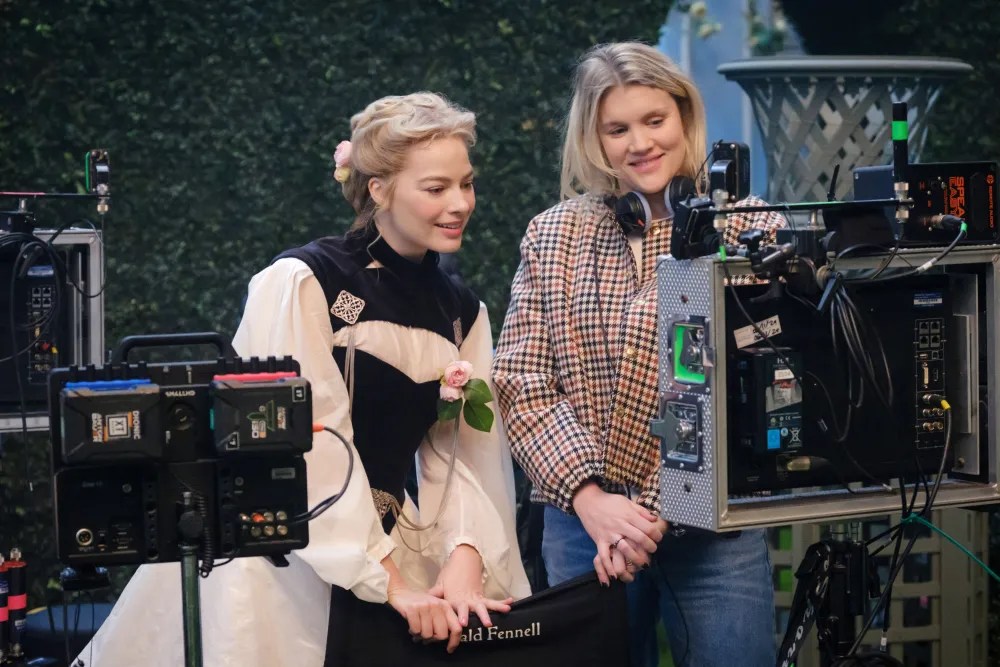
In many ways, Fennell’s deviations from the source text mean that the stakes she attempts to set up later in the film fall quite flat. As noted by another student, “as an adaptation, it does not contain the spirit of the original text because of its inherent changes from its source.” By disregarding Heathcliff’s race as a man of colour, and removing Hindley, the ‘forbidden’ element of Catherine (Margot Robbie) and Heathcliff’s (Jacob Elordi) relationship fails to be clear. If Heathcliff is not placed into his position of ‘slave’ by Hindley after Mr Earnshaw’s death, it is unclear how a monster is created out of him. In fact, you could argue that there is hardly a monster created at all. This romanticisation of Heathcliff’s character is hardly a new compulsion when adapting the character for film, but it becomes especially clear here that Fennell is trying to force Wuthering Heights into the box of a romance. When, in reality, as pointed out by another student, “Wuthering Heights isn’t meant to be a romantic love story”.
As the film continues, it becomes clearer that Fennell is attempting to reframe the narrative to fit her tragically romantic fantasy. When commenting on the film, another Adaptation student pointed out something particularly perceptive:
“In Emerald Fennell’s 2026 adaptation of Wuthering Heights, there are several scenes in which Heathcliff (played by Jacob Elordi) is caught in the rain, often in a white shirt. It would be impossible to look at these scenes and not think of the 2005 Pride and Prejudice adaptation. Jane and Darcy, both drenched from the rain, have a heated and tense argument, which ends in an almost-kiss scene. As one of the most well-known adaptations of Pride and Prejudice, the inspiration for Elordi’s multiple “caught-in-the-rain-in-a-white-shirt” scenes is incredibly clear to see. Perhaps Fennell aimed to replicate the romantic tension in the 2005 Pride and Prejudice adaptation and transform it into a sort of romantic/sexual tension for Wuthering Heights. I would argue that Fennell’s replication is poorly executed – there’s far more tension to be found in Darcy, drenched but fully covered, realising his love for Jane, compared to Heathcliff, in a wet shirt clinging to his shoulders and arms…”
The few bright spots of the film come from Owen Cooper’s naturalistic performance as Young Heathcliff, but these emotionally stimulating scenes are few and far between. There seems to be a focus on exploiting the attractiveness of its A-list cast, as opposed to focusing on genuinely good performances.
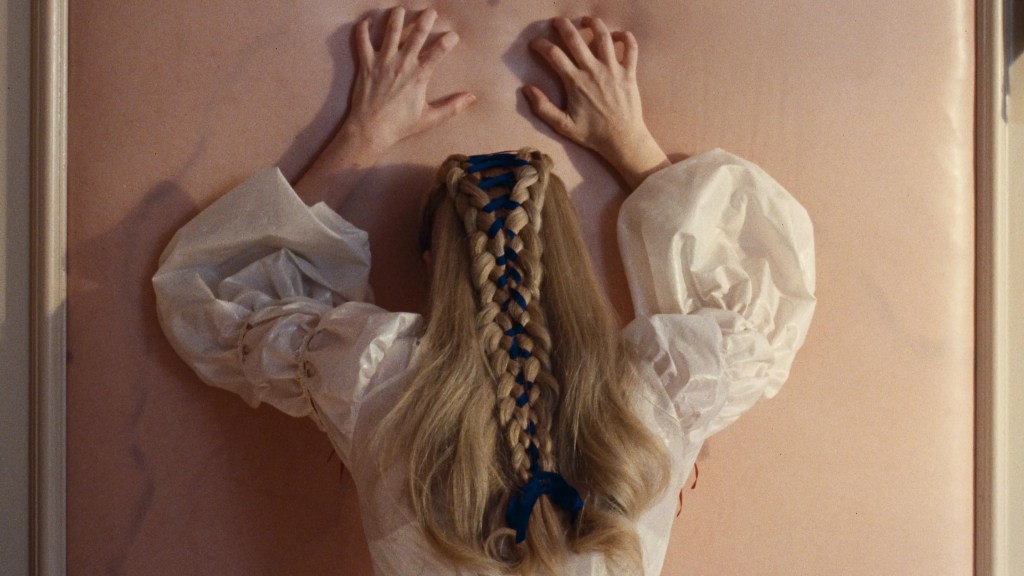
As picked up by many of us, you’re left feeling as if, regardless of the quality of the adaptation itself, Fennell even fails to live up to the promises presented to us at the film’s beginning. Aside from a few scenes scattered throughout, you are left under the impression that Fennell believes she was creating something much more scandalous and erotic than what appears on-screen. Even the film’s tagline “Come Undone” seems to set “Wuthering Heights” up for failure, and I was left feeling like Fennell could not fully commit to the ‘kink’ of it all. Perhaps 2026’s answer to “Wuthering Heights” is simply Fennell trying to fulfil the fantasy of her 14-year-old self. To finish on a comment from a like-minded Film and Lit student, “[you’re made to feel that] Emerald Fennell’s want for this adaptation had nothing to do with an admiration for Brontë’s work and instead a want to create something ‘new’ and ‘edgy’ but utterly devoid of substance.”
 reeltalk0.movie.blog