Written by: Maddalena Parlato, Char Taylor, Ava Bibb, Nell Carter, Annabel Spinks-Jones
Edited by: Jamie Pakes
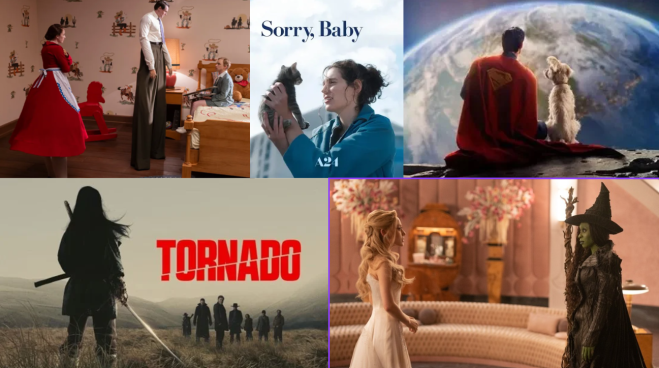
After another year, another Oscars ceremony is coming up, and it’s once again time for Reel Talk’s Alternative Oscars (the better version). We asked our editors for their favourite film and TV of the year and received five brilliant pieces. Every year a range of films are seen to be unfairly snubbed, but what do our contributors think deserve to be hailed as the greatest works of 2025?
And don’t forget – Warwick Film and Television Studies Students and Staff can have your say on our Alternative Oscars by voting in our poll over on Moodle.
Superman- Maddalena Parlato
Despite their ubiquitous presence in the franchising era, superhero films had long become stale clones of each other over the last decade. Every flicker of wonder was sanitised by a clear corporate sheen that saw villains fall, heroes rise, and society scrub their problems, and the film itself, from their memory shortly after. But Superman (2025) deserves to be recognised, because for myself and others, this film changed how we viewed heroism.

Sure, it includes breathtaking aerial fight scenes, intricately stitched worldbuilding, and a swooping score by John Murphy and David Fleming. But the conflicts faced by Clark Kent/Superman (David Corenswet) and Lois Lane (Rachel Brosnahan) are more than comic book spectacle, instead poignantly speaking to audiences. We don’t know the extent to which Gunn wished to intentionally refer to ongoing politics, wars, and genocides that are raging worldwide through this film, but implicitly, Superman clearly made us think about them. Through its choices, it nudged audiences towards seeing the world where a kind act or a deeper look could make a difference. And there’s something uniquely cathartic in watching this film in a year where hope felt like it was slipping out of our hands. The goodbye scene between Clark and Lois as he sets off to hand himself in in exchange for his rambunctious dog best symbolises the film’s quiet power. There’s something powerful in the realisation that someone’s fear and loneliness are important and worth doing something about. Through the success of the Man of Tomorrow, but today more than ever, “kindness is the real punk rock” outgrew this film and became an anthem for change. Because if kindness is alternative, then maybe the audiences finally had enough of remaining in the mainstream.
Sorry, Baby- Char Taylor
Eva Victor’s Sorry, Baby is an oftentimes hilarious, thoughtful, and accessible film, one that feels impossible to overlook. The film, released in 2025, follows Agnes, a young academic who, following an experience with sexual assault, drifts behind in work and dating, struggling to reconcile with the normal rhythms of everyday life. As a film, Sorry, Baby refuses to map out any linear path of recovery, instead unfolding in temporal fragments which shift fluidly as Agnes remembers, dissociates, and slowly reorients herself back towards meaning and connection. This structure positions the film as a brilliant piece of queer cinema, not only due to its characters’ gender identities or dating preferences, but through its refusal of straightforward character arcs as Agnes processes the fallout of what has happened.
Seeing Naomi Ackie in Mickey 17 (2025) was an absolute delight, but her role as Agnes’ closest friend and protector, Lydie, is just as delightful and refreshing, and perhaps the film’s central connection, gently holding together all the fragmented pieces of Agnes’ forever-changed world.
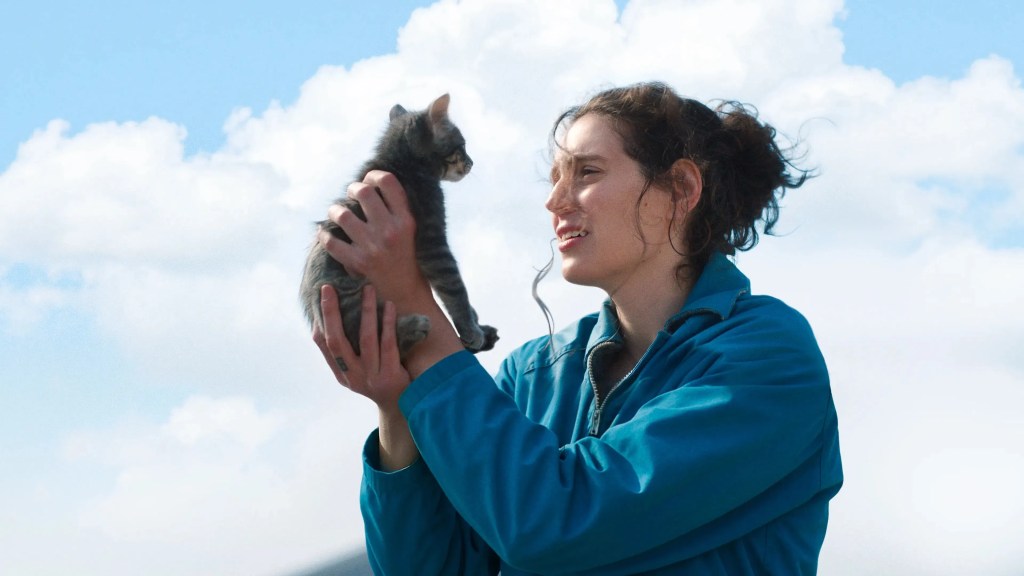
Approaching trauma with a particular softness, Sorry, Baby is a film deeply in dialogue with memory. What initially appears fragmented is, in fact, seamlessly unified by one persistent image: the beauty of life itself. Whether it be a lesbian couple’s newborn child, or a stray cat’s stubbornness to survive, even a time-stopping, depression-numbing sandwich, each moment insists on life’s quiet background persistence. Agnes finally taps into what has its own agency, and the steps she must take to regain her own, depicting a process not of rescue, but of recognition. With all these narratives interspersed, it becomes clear that multiple things can be true at once; as Agnes tells Lydie’s newborn daughter, Jane: though bad things happen, there always exists beautiful things in the world. Sorry, Baby is undoubtedly of those things.
The Rehearsal- Ava Bibb
An underappreciated yet excellent season of television from last year was season two of Nathan Fielder’s The Rehearsal. The show can be described as a docu-comedy although it is difficult to say it fits under any one genre. Nathan himself debates this in the first episode asking himself if “this counts as comedy”. The show originally premiered on HBO on July 15, 2022, to critical acclaim. It was renewed for a second season in August 2022, which premiered on April 20, 2025. The show follows Nathan as an almost sequel to Nathan For You (2013-2017) as he helps ordinary people rehearse upcoming difficult conversations or life events through the use of sets and actors hired to recreate real situations.
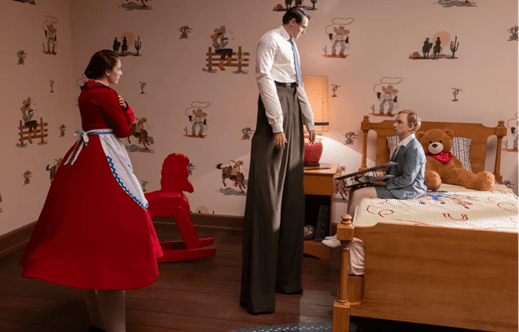
In the second season Nathan investigates the alarming number of plane crashes caused by pilots and first officers who can’t communicate in the cockpit. His solution is to build his own 1:1 life-sized replica of Houston airport to analyse how these pilots interact. In a particularly shocking episode Nathan takes on the role as the pilot Sully Sullenberger who landed his plane on the Houston River after the engines failed. Nathan wants to understand how Sully was able to pull this off, so he lives out Sully’s life from a baby being breastfed by his mother, to that fateful day in the cockpit. As unhinged as the show may appear at times, it remains grounded in its approach to ethical questions, always implicating the viewer to an uncomfortable but never not still funny extent.
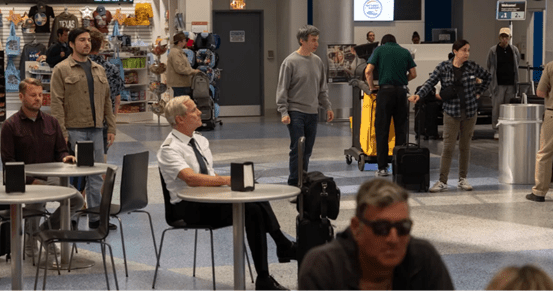
Season two cements The Rehearsal as one of the most daring projects in modern TV—part comedy, part social experiment, part existential spiral. If you care about television that takes real risks and trusts the audience to keep up, you owe it to yourself to watch.
Wicked: For Good– Nell Carter
Wicked: For Good concludes the cinematic adaptation of Wicked, the Broadway musical that famously reimagines The Wizard of Oz through a revisionist lens. Directed by Jon M. Chu, the film translates the stage production’s diegesis into a visually expansive and unexpectedly reflective examination of morality and power. Picking up after the first instalment, Elphaba (Cynthia Erivo) lives in exile as the vilified Wicked Witch of the West, while Glinda (Ariana Grande) is elevated into a public symbol of goodness within an increasingly politicised Oz. As in the Broadway production, the film’s greatest strength lies in its refusal to frame good and evil as fixed or natural opposites. Instead, it interrogates how moral labels are constructed, enforced, and ultimately internalised by society. Chu expands this thematic concern beyond the confines of the stage, presenting Oz as a world shaped less by truth than by propaganda, spectacle, and fear. Ideas previously conveyed through theatrical symbolism are reinforced here through impressive cinematic scale, and the visual presence of institutional power.
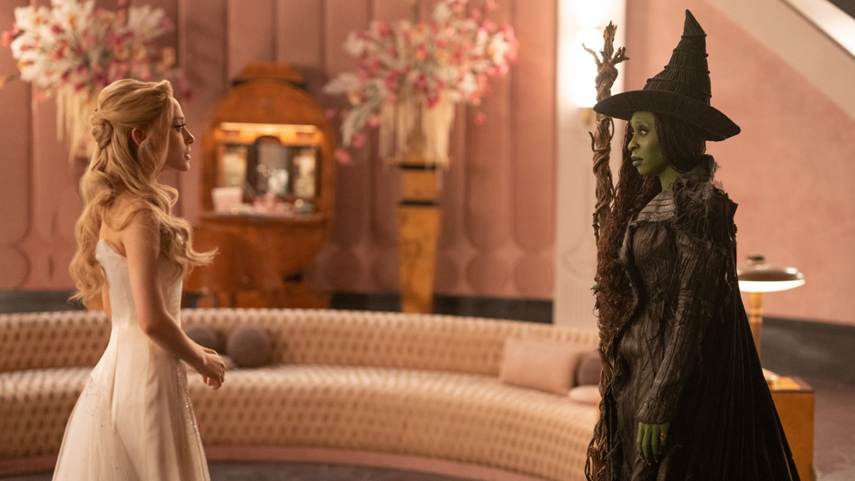
Both central performances bring remarkable depth to these themes. Erivo portrays Elphaba with intensity, allowing her defiance to coexist with exhaustion and grief, while Grande subtly complicates Glinda’s trademark brightness with moments of doubt and moral compromise. Their fraught relationship, a core element of the original musical, becomes the emotional and thematic drive of the film, illustrating how proximity to power can demand silence just as exile demands resistance. The broader political undercurrents such as scapegoating, surveillance, and public compliance, feel distinctly contemporary without overwhelming the film’s fantasy framework. Ultimately, Wicked: For Good succeeds because it resists easy resolution. Like its Broadway predecessor, it leaves the audience reflecting on their own relationship with morality, exploring themes that allow it to stand apart within an already remarkable year for cinema.
Tornado– Annabel Spinks-Jones
Tornado (2025) has revenge and katanas and blood and PUPPETS and character actors with really great faces. What more could you want? Oh, and Scottish scenery. Unexpected, you may think. But director John Maclean has prior. His debut feature length Slow West (2015) features flashbacks of the Scottish Highlands, with some of the supporting actors reappearing in Tornado, including the beloved Rory McCann (Game of Thrones) who plays aptly named Kitten. But whereas Slow West centres around a Scottish émigré’s experience, Tornado features a variety of outsiders – be that by criminality, vocation or nationality – within Scotland.
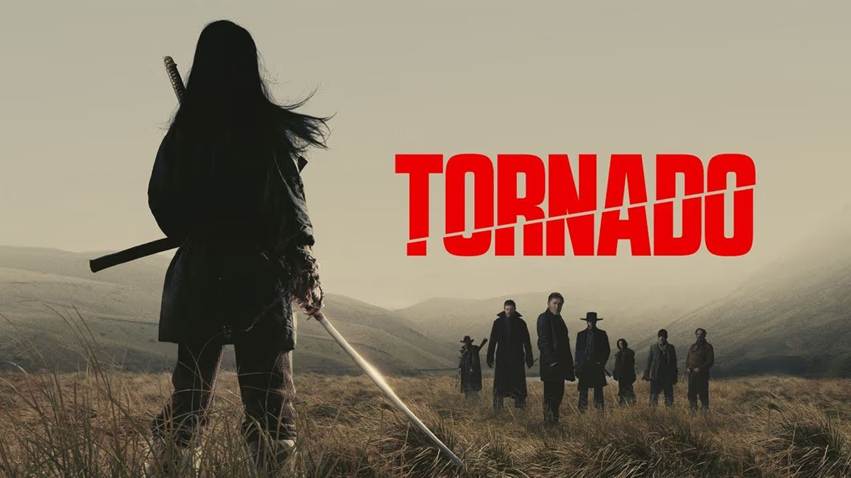
I especially loved the depiction of Travelling Showpeople, which added a prairie wagon feel to this cowboy and western-coded fusion film. Alongside moments of intentionally poised flare, this film is rooted by the authentic performance of the consistently excellent Tim Roth, playing a scarily single-minded villain, Sugarman. Multihyphenate artist Kōki, playing the titular Tornado, really comes into her own in the final act, which is well worth the wait. I also adore the use of the majestic Scots Pine (Pinus sylvestris), and Scotland’s serene lochs, both of which hold special significance in this story. You’ll have to watch it to see what I mean… I think I may need to take the LNER soon, but I shall watch my back on the Scottish moors
 reeltalk0.movie.blog