Edited by Nikki Wilks
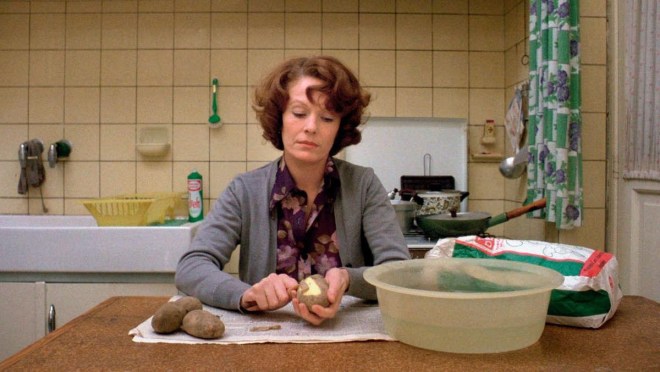
Following the most recent edition of Sight and Sound’s famous round-up of films considered to be the ‘greatest of all time’ (a critics poll that only takes place once a decade), we got thinking about what might make a film the ‘greatest’. Is it truly possible to select one film and dub it greater than any other? According to Sight and Sound, as of 2022, the greatest film of all time film is Chantal Akerman’s Jeanne Dielman, 23 quai du Commerce, 1080 Bruxelles (1975). Disappointingly, although perhaps unsurprisingly, this marks the first time a female filmmaker has taken the number one spot since the poll’s inception in 1952.
With the recent poll in mind, some members of the Reel Talk editorial team have written about what they would consider to be the ‘Greatest film of All Time’ to launch Warwick Film and TV’s very own poll! Read our editors’ picks then head over to vote in the online poll, which is open to all Warwick Film and Television Studies students and staff.
April Story (Shunji Iwai, 1998)– Issy Smith
I find it hard to label any film as the greatest. So many films enter my life and profoundly change me that choosing only one would be like denying parts of myself in favour of others. If I had to choose a film, however, I wouldn’t be ashamed to say April Story (dir. Shunji Iwai, 1998).
April Story came to me at a strange moment in my life. Unable to sleep, as I often find myself when things aren’t going well, I resigned myself to begin my day without the energy to leave the house. First thing in the morning, I curled up with my laptop and threw on a film from a director I’d been meaning to explore. All About Lily Chou-Chou (dir. Shunji Iwai, 2001), which I lovingly dub “my favourite film I don’t like”, was a tough and intense watch which shook me to my core. Having taken breaks throughout to process the horrors unfolding, I finished the film with a desperate need for more and the acceptance that anything as intense would leave me in a bad place.
Enter April Story. Barely clocking in over the hour mark, the film floats by in a dream. Following a young woman moving to Tokyo from Hokkaido for college, the film evolves into a thoughtful piece on loneliness and connection. It offers vignettes into the life of its protagonist as she struggles to make acquaintances in her new home: from offering food to a reclusive neighbour, to joining a club to help a classmate. In return, we’re revealed glimpses of the kindness offered to her by others trying desperately to form connections of their own: lending her an umbrella in a storm or returning her forgotten bag.
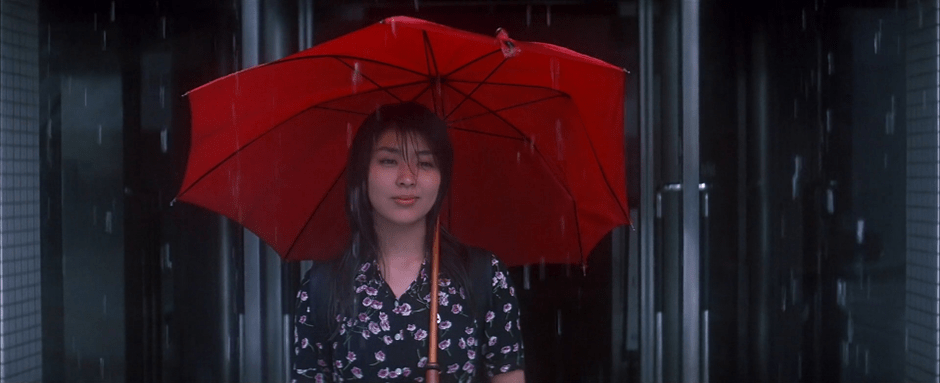
The film glides through Tokyo springtime in bike rides, blossom fall, and April showers. Pastels and sunny skies fill the screen. Underpinned with the delicate beginnings of an innocent young romance, the film has a naive charm that lets you—if just for an hour—truly believe in the world it presents. Even as people take advantage, forget about her, and ignore her wishes, she finds her way to connections and ends the film at the cusp of May with a smile.
Aftersun (Charlotte Wells, 2022) – Mithun Muraleetharan
A great film does not have to be great in scope or complex in narrative. Instead it could be slight and small yet hold within itself an unexpected potency, a small stone casting ripples across oceans. Charlotte Well’s Aftersun is one such film. Depicting a father and daughter’s (Calum and Sophie’s) holiday in Turkey, the film’s premise holds a deceptive lightness in its almost episodic portrayal of the duo playing pool, having a Turkish mud bath or taking part in other benign tourist activities. But as the film unravels, it slowly discards nostalgic reverie and enables complicated reality to enter the frame, moments of casual beauty and love between its protagonists become infected by an undercurrent of heartache strengthened by the nuanced acting.
Paul Mescal, as Calum Paterson, charges his performance with an understated vulnerability, sensitively portraying depression, conveyed not through words but sunken eyes and shifting smiles. His scene partner, Frankie Corio, delivers a similarly superlative performance far beyond her age, as she captures Sophie’s love for her father, but also a desire to form an identity of her own.
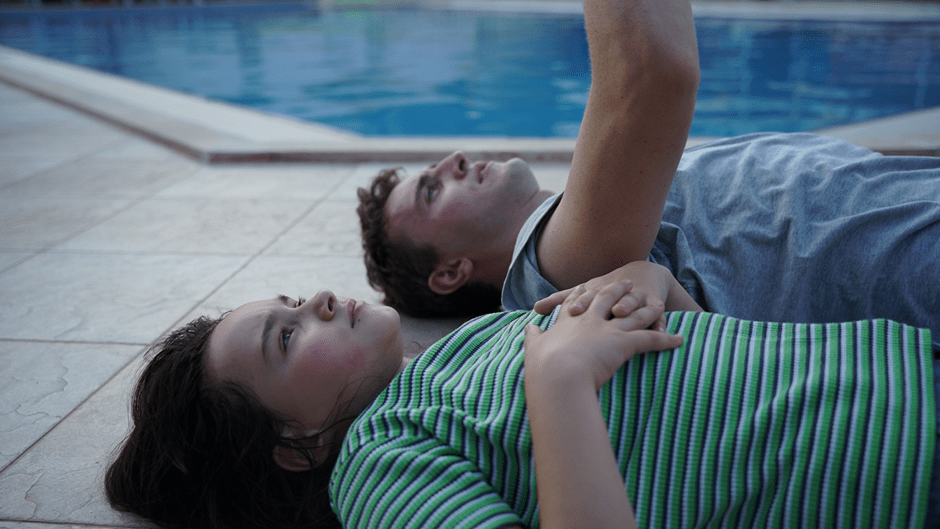
In spite of lacking a traditional plot structure of conflict and resolution, Wells’ screenplay has an ephemeral structure of its own, slowly building to a cathartic crescendo. This crescendo, on paper, may sound slight, a father and his nine-year-old daughter scrambling on the dancefloor to Queen and David Bowie’s ‘Under Pressure’, but through Wells’ emotionally charged imagery, and Mescal and Corio’s performances, this scene gains an epic weight that certain films with greater scopes can only dream of.
Through its quiet intimacy, Charlotte Wells’ Aftersun casts a vast ripple, growing in potency as the viewer wrestles with the quiet, aching heartbreak long after the screen cuts to black.
The Dark Knight (Christopher Nolan, 2008) – Patrick Maslin
I know perhaps this is too stereotypical a choice but every time I watch this film I appreciate something new about it.
Even now, just watching bits and pieces of it to briefly talk about it again, I never noticed the cinematography that Christopher Nolan employs. Take a Michael Bay spin-around shot with the Joker, something that frequently is just disorientating and pointless. In the moment Nolan uses it, the disorientation works so well by almost placing the Joker in control of the movie camera and showcasing his ability to disrupt the typically ordered and precise shots within the rest of this movie.
I know uniqueness should not necessarily be considered a mark of quality in itself but the way Nolan handles characters is so unique in this film. Placing them as archetypal figures and the way that those figures destroy or reveal aspects of the society they interact with is always fascinating to watch. Even the way action is presented. It’s so visceral and uses a close camera to emphasise the action without ever losing any sense of clarity. And as a streamlined adaptation of The Long Halloween (even though it pulls from far more sources than that) it’s phenomenal.
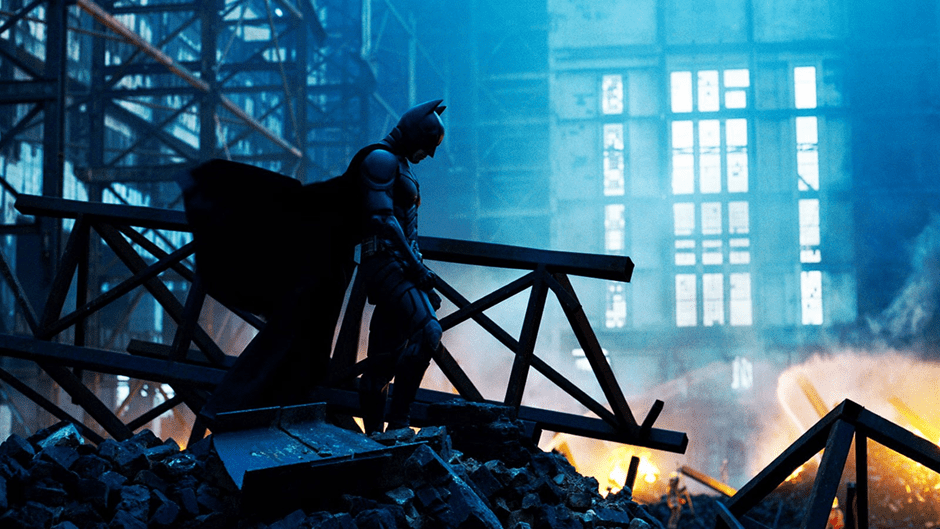
The film wonderfully works in the original themes of exhaustion and how much it truly costs to achieve a Gotham with some semblance of justice. I perhaps haven’t said anything new here but there is a reason this film is as beloved as it is, and I look forward to returning to it in the future.
The Lighthouse (Robert Eggers, 2019) – Luke Brown
My greatest film of all time is Robert Eggers’ 2019 psychological horror The Lighthouse. The only way I can truly describe what keeps attracting me back to The Lighthouse is through an explanation of my first experience with it. I left the cinema in awe, the visuals, the narrative, the performances, it had all culminated in such a mind-boggling yet beautiful film. What stuck with me most, however, was the soundscape. The haunting blaring of the foghorn rung through my mind for days afterwards, (ironically) fogging up my brain with thoughts of the isolated island that houses the events of the film.
The films narrative follows two lighthouse keepers, played by Willem Dafoe and Robert Pattinson, as they become stranded on the lighthouse’s island due to a storm. The two slowly descend (or rather ascend) into madness, enchanted by the call of a siren. The narrative answers very little, playing into the sub-genre of horror known as cosmic horror, bringing into question not only the characters’ sanity, but the audience’s as well. Does anything truly take place in this film? Or is it all merely the thoughts of a maddening man wracked with guilt? We are not intended to know, which is another reason this film appeals to me in the way it does.
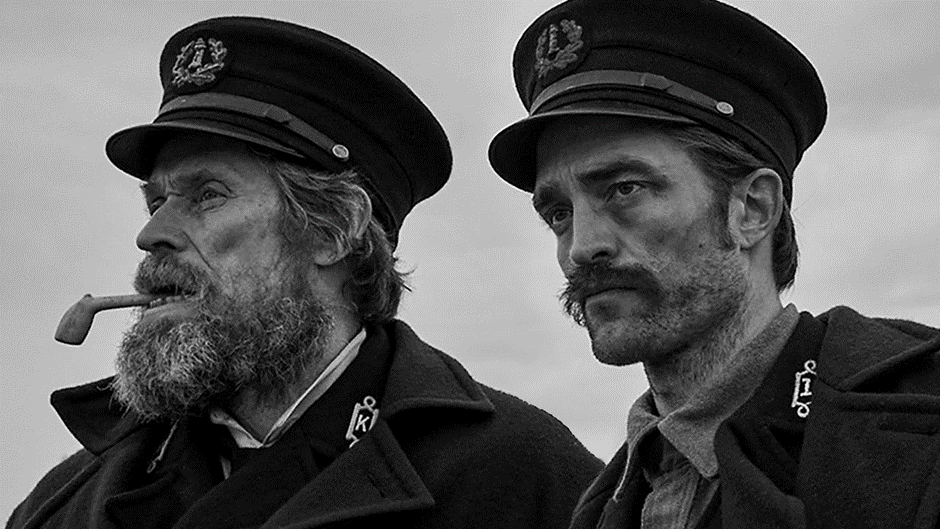
Visually, The Lighthouse is striking. Filmed in black and white and a 1.19:1 aspect ratio, Eggers successfully captures the aesthetics of 1930’s cinema as well as emphasizing the isolation and confinement of the characters, trapped by the black box that confines the image. Ultimately, I am aware that offering up such a recent film as my greatest of all time may be a controversial opinion, however I truly feel that The Lighthouse is just that, due to the combination of masterfully employed techniques on every level of the film’s production.

