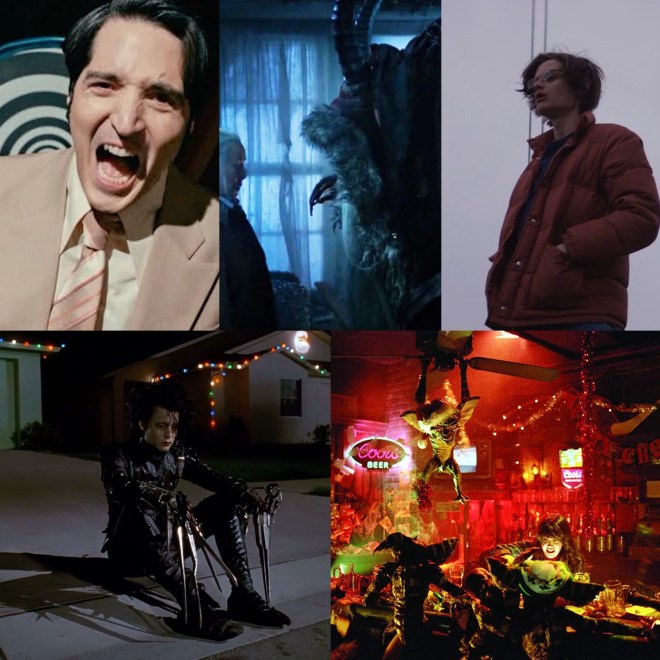
Welcome back to the second part of our ‘Seasonal Horror’ posts! This post will share our Reel Talk editors’ favourite seasonal horror films that take place from the beginning of October to Halloween, to the corresponding late Autumn period and Christmas As discussed in the previous post, these amazing submissions from students in our department and our editorial team will make up our ‘Seasonal Horror’ zine, which will be available in its physical form at our end-of-term Christmas party.
Edited by Awais Fareed
Sonia Naorozy on Late Night With the Devil (2023)

Late Night With the Devil (2023) is an independent supernatural horror film set in the 1970s. Through the use of found footage, it follows the late-night talk show host, Jack Delroy, and his attempt to revive his falling ratings through a special one-off Halloween broadcast, featuring multiple guests of supernatural association: a psychic/medium, a sceptic former illusionist and a parapsychologist, accompanied by her latest subject, a 13-year-old girl allegedly possessed by a demonic spirit.
This seasonal horror stands out for the interesting approach it takes in aligning the audience’s perspective. Firstly, its prologue frames the film as a documentary, intended to show the ‘master-tape of what really happened that night’, through a mix of raw footage from the actual broadcast and clips of the set during commercial breaks. The film differentiates between what was broadcast on television and what we see as an audience today through black and white filters, which cleverly dictate the narrative as it pushes the limits of exploitation in the entertainment industry.
Its rich visual aesthetic emphasises a strong loyalty in the recreation of 70s television, which critics praised. However, it’s hard not to acknowledge the film’s use of generative AI, in animations aiding transitions between commercials and the show. The directors justify that “In conjunction with [their] amazing graphics and production design team, all of whom worked tirelessly to give this film the 70s aesthetic [they] had always imagined, [they] experimented with AI for three still images which [they] edited further and ultimately appear as very brief interstitials in the film”. Having to reiterate how incredibly talented and hard-working your team is to justify using AI comes across as in poor taste. It’s a disappointing fact to know, although hopefully it doesn’t take away from the film’s appeal elsewhere.
Hannah Alon on Super Dark Times (2017)
:max_bytes(150000):strip_icc()/000265899-2000-56e9d26077924c8b94367f4892ce6a7a.jpg)
Being halfway into November, and having said our last farewells to Halloween, we can throw out our jack-o’-lanterns for flashy festive lights in preparation for the festive month of December. The dark coming-of-age film Super Dark Times feels especially fitting for the transition between the two holidays. Much of the film’s spectacle is anchored in its blending of seasons; muted yellow tones and golden hues of autumn overlay the wintry overcast skies and bare branches.
Set in 1996 in an atmospheric suburban American town, best friends Zach (Owen Campbell) and Josh (Charlie Tahan) are just two typical teenage boys, endlessly hormonal and carefree. It is then no surprise that one day their mindless antics, involving a katana, ends in a blood-stained tragedy. This turns a seemingly innocent coming-of-age story into a malevolent tale that embarks on revealing the dark side of the human psyche. For the rest of the film, what ensues is the unravelling of a friendship, one’s mental descent into darkness, and even more bloodshed.
‘It was a fucking accident’
The story centres around this one avoidable incident, which seems to slowly consume the boys from within, especially Josh, who was the perpetrator of the accidental killing of his friend, Daryl (Max Talisman). Following the death, the boys decide it is better to hide their crime, doing so by hiding the body deep in the forest among a bed of fallen leaves while chucking the bloodied katana in a hole in the ground.
Unlike the average tragedy thriller, which might lose itself in the question of ‘Will they get caught?’, Super Dark Times solely explores the profound weight of guilt and trauma imposed on these characters. The film doesn’t compel us to anticipate the characters’ inevitable reckoning, as showcasing their downward descent into darkness makes for a much more intriguing watch – who doesn’t love a bit of schadenfreude?
So if you’re looking for a film that will keep you spooked while still channelling that late-autumn feel, this coming-of-age-turned-thriller-turned-horror might be one to consider adding to your watchlist.
Ava Bibb on Gremlins (1984)
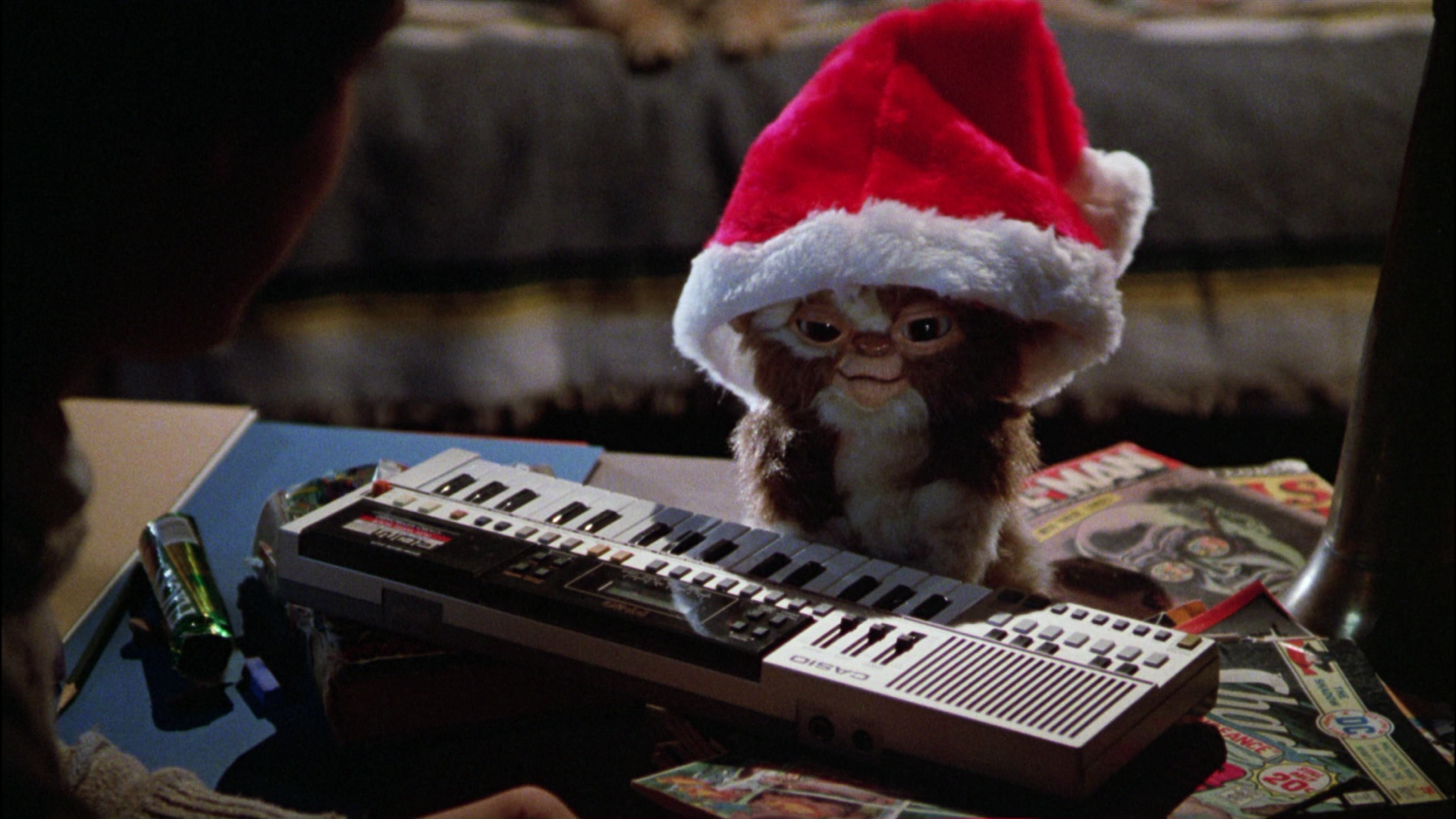
Gremlins (1984) remains one of the most memorable entries in the seasonal horror genre. Directed by Joe Dante and produced by Steven Spielberg, the film blends festive charm with chaos, using its small-town Christmas setting as a backdrop for themes of consumerism, responsibility, and the hypocrisy of small-town America. What begins as a cosy tale quickly unravels into pandemonium after the Mogwai, Gizmo, spawns destructive gremlins who turn the season of warmth into a comedic nightmare.
What makes Gremlins enduring is its ability to balance tones: it is both a family film and a genuinely disturbing horror at times. This duality paved the way for other holiday-themed horror films, showing that the season’s cosy atmosphere can make frightening moments even more impactful. From Black Christmas to the more recent Krampus, seasonal horror uses the contrast between celebration and fear to heighten tension and humour.
Gremlins stands out because it understands that holidays are as much about unpredictability as tradition. By mixing sentimentality with subversive thrills, it helped solidify seasonal horror as a playful, imaginative space where filmmakers can explore the darker side of festivities without ever losing the magic that makes the season memorable.
Archie Douglas-Hamilton on Krampus (2015)
Whilst most known for his cult Halloween favourite, Trick ‘r Treat, director Michael Dougherty has another holiday classic in 2015’s Krampus. Krampus follows Max (Emjay Anthony), a preteen who still believes in Santa Claus, and his dysfunctional family’s attempt to have the perfect Christmas. With the arrival of his extended family, Max is teased by his cousins for his beliefs and tears up his letter to Santa, unwittingly calling upon the monstrous Krampus to show them what happens when you lose the Christmas spirit.
Much like Trick ‘r Treat, Krampus continues Dougherty’s themes of respecting holiday customs and this results in an incredibly festive horror film where every single facet of Christmas is made deadly. Like a modern-day Gremlins in its ridiculous mayhem, Krampus features killer gingerbread, vicious ornaments, demonic elves, and a disturbingly memorable jack-in-the-box with a detachable jaw, as well as the towering cloven-hooved Krampus. All these are brought to life by a talented design team, prioritising slimy practical effects (although there’s some poor CGI here and there). A particular highlight in the film’s visuals is a gorgeous animated sequence which neatly provides exposition regarding the titular monster.
The ensemble cast also helps by leaning into the absurdity and giving it their all. Toni Colette and Adam Scott, whilst not given the funniest lines, are great as Max’s fighting parents, whilst David Koechner and Conchata Ferrell regularly steal the show as his foul-mouthed relatives. Not everything lands, but the overall sense of fun helps support the weaker lines.
Ultimately, Krampus is a highly enjoyable Christmas horror film and, while its message of Christmas spirit is occasionally too earnest, there’s plenty of finely crafted horror set-pieces and fantastically designed monsters to satisfy those looking for a Christmas film with a little more bite.
Lanna-Lau Lau on Edward Scissorhands (1990)
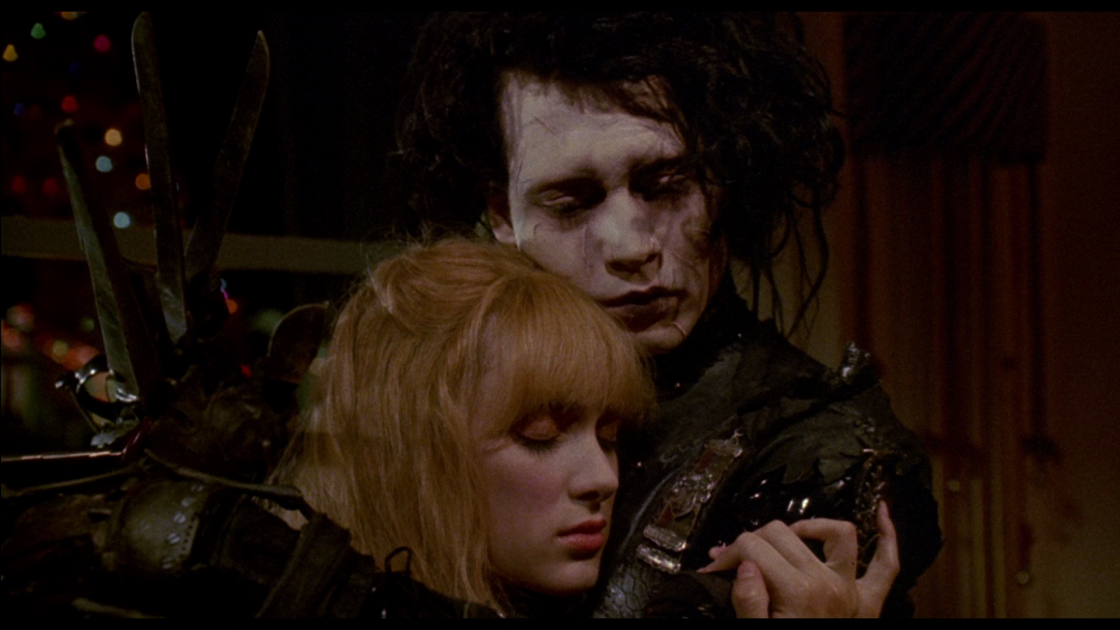
As part of our theme in seasonal horror, I will be revisiting Edward Scissorhands, one of Burton’s most renowned films, and how it can be considered both a holiday and a horror film.
The film is set in a suburban area that is dominated by vivid and bright colours that juxtapose the dark and monochromatic castle where Edward resides, resembling the aesthetics of German Expressionism. The shadows cast on Edward’s eyes also cause him to bear a resemblance to the somnambulist Cesare from The Cabinet of Dr Caligari, a quintessential work of German Expressionist cinema. Both Cesare and Edward were depicted as uncanny and feared by the other characters, and were also seen as tools; for example, Cesare was controlled by Caligari to commit murders, and Edward was used as a commodity to pick locks for Jim. At the same time, both characters were also being portrayed as victims, where Cesare innocently holds a bunch of flowers. Meanwhile, towards the end of Edward Scissorhands, Edward attacks Jim out of protectiveness for Kim, depicting him in a more humanlike, emotional light.
What makes Edward Scissorhands conform to the theme of ‘Seasonal Horror’ is the symbolism of snow and Christmas. As an elderly Kim notes towards the end of the film, the neighbourhood would stop snowing without Edward’s existence, believing that he is still alive. Edward, despite his resemblance to Cesare, had the ability to change and impact others through his childlike innocence and imagination, transforming the banal suburban area into a place filled with his creations, from unique hairstyles for the neighbours to ice sculptures during Christmas. Symbolising the purity and innocence Edward has brought into the neighbourhood, and his ability to influence others. The irony behind how Edward is separated and shunned from the neighbourhood during a festival revolving around family gatherings causes the ending to feel more tragic and allows the audience to sympathise with Edward, further conforming to the conventions of German Expressionist cinema, dipping into the anxieties of the average audience using looming shadows and the exploration of the strange and bizarre. In the case of Edward Scissorhands, the film taps into the anxieties of social isolation and alienation.
Whether you are already a pre-sold fan of Burton’s works or are unfamiliar with his works, Edward Scissorhands is a film worth revisiting this Christmas, for its touching narrative and how one might resonate with Edward’s alienation.
 reeltalk0.movie.blog