Written by Ella Crowther, Edited by Awais Fareed
Introduction
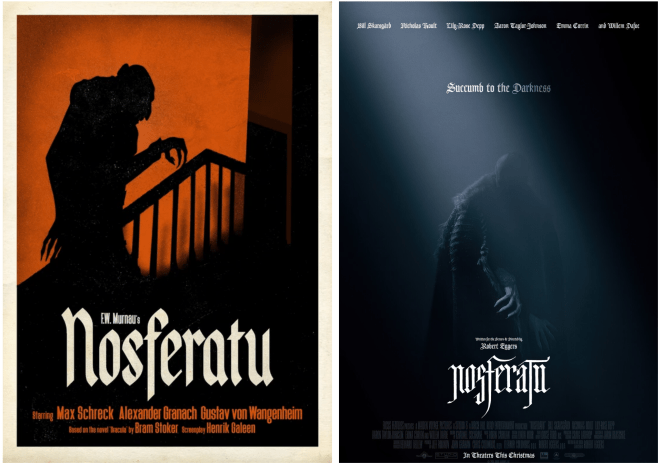
Nosferatu (1922) is often regarded as the first horror film, specifically vampire film, setting the foundations for many more to come. With the German Expressionist movement emerging at the time, its haunting atmosphere, strong shadow work and distinct production design are central to this eerie depiction of a blood-sucking monster living amongst men. Remaking Nosferatu feels like the perfect fit for Eggers; with his reputation for being one of the best horror directors in recent years and his clear passion for all things history and folklore, these are traits which will hopefully shine through in his version of this gothic vampire horror. With Nosferatu out in cinemas now, it feels like the perfect time to reflect on his filmography!
(A few spoilers ahead)
The VVitch (2015)

The VVitch (2015), Egger’s feature-length debut, watches the anguish and collapse of a Puritan family trying to settle in the backwoods of New England after being outcast from their settlement. We mainly follow Thomasin’s (Anya Taylor Joy) perspective as the eldest daughter of the family. The specificity of 17th century costumes and sets and the Shakespearean-esque dialogue ground the mythical and macabre elements in some historical truth.
It’s for this reason that The VVitch is always included in ‘top folk horror’ lists. It makes use of tropes like isolated rural settings, alternative belief and religious systems and helplessness in the face of an ancient threat: in this case, the devil himself in his goat form, ‘Black Phillip’. Danger is always lurking within the community of folk horror films, clear in the family’s mistrust towards each other, or rather (perhaps unfairly) mistrust of our protagonist, Thomasin. Of course, it’s all too late once it’s revealed that the threat isn’t coming from the family but from their barn.
This subgenre suits Eggers’ work with its focus on local and rural myths and traditions. Fairytale horror feels like it’s seeped into a history book as Thomasin’s downfall (at least from a Puritan perspective) is inspired by the past while not being an outright period film.
Folklore is a crucial aspect of Eggers’ films, but equally so is his exploration of all things human. While the Witch of the Woods certainly isn’t any help, the family can also blame themselves for their downfall, turning on each other as they grieve the disappearance (and pretty brutal death) of the youngest son, Samuel. Thomasin’s choice to join the devil wasn’t just a desire to ‘live deliciously’ but desperation from having withstood the destruction of her family; we might question whether she had a choice at all. Eggers explores complicated themes of family relationships, religion and madness, the latter of which is definitely evident in his next film.
The Lighthouse (2019)
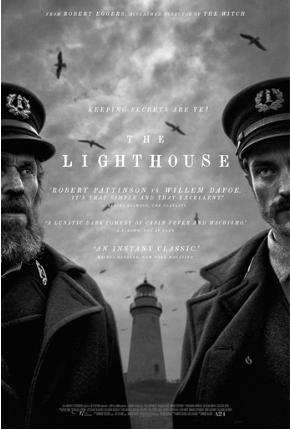
The Lighthouse (2019) stars Willem Dafoe, who plays Thomas Wake and Robert Pattinson, who plays Ephraim Winslow (or Thomas Howard? but I’ll call him Ephraim for now), and pretty much only them as they find themselves separated from civilisation as lighthouse keepers when a storm hits their island. The Lighthouse has a number of historical inspirations, but one comes from much closer to home for Eggers; the screenplay idea originally belonged to his brother and was more of a ghost story set in a lighthouse. Eggers adopted the idea of applying his distinctly moody and mythical touch to explore two wikies’ descent into madness.
Working with Jarin Blaschke, the director of photography on all of Egger’s films, The Lighthouse has a rich black-and-white look, complementing the claustrophobic and hypnotising atmosphere that plagues Ephraim and Thomas. The Orthochromatic black and white film wasn’t sensitive to red colours, making them appear a heavy black on the actors – which I think hints enough about the film’s deranged ending.
I also want to point out something I don’t often hear people say about The Lighthouse (so maybe it’s just me), but it has some humour in it, too. Of course, there’s the occasional farting from Thomas, crazy tonal shifts from affectionate (almost romantic) to destructive, and Thomas’ impressively ominous monologue that sparks from Ephraim simply not fancying his cooking. It’s safe to say Eggers covers a whole range of emotions on their voyage towards insanity.
The dialogue was mainly inspired by writer Sarah Orne Jewett’s accounts of New England sailors and captains’ dialects. Like Black Phillip, Eggers uses animals as a bad omen; we quickly realise why it’s ‘bad luck to kill a seabird’. Once again, viewers can experience how Eggers realises his interest in period-specific environments, local tradition and superstition, pulling viewers further into the madness. Other influences include the Greek myth of Prometheus and the real tragedy of the Smalls Islands. Ephraim’s penalty for climbing to the top of the lighthouse against Thomas’s will is not unlike Prometheus’s punishment for stealing fire from Olympus, and off the Welsh coast of Pembrokeshire, a lighthouse keeper was taunted almost to the point of insanity by the death of his fellow keeper during a harsh storm. The Lighthouse is a curious blend of various stories, a feature of Eggers’ work which is of a much grander scale in his next film.
The Northman (2022)
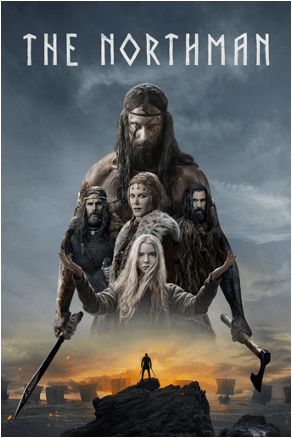
The Northman (2022) travels beyond Egger’s birthplace of New England to distant 9th-century Norse Mythology. Anya Taylor Joy (Olga) and Willem Dafoe (Heimir) return to work with Eggers on this epic, alongside Alexander Skarsgard (Amleth) and Nicole Kidman (who plays Amleth’s mother Gudrun). After Amleth’s father is killed by his uncle Fjolnir (Claes Bang) when he is a young boy, he swears to avenge his father and save his mother. Twenty or so years later, we follow him on his bloody journey for revenge. You might notice a few narrative similarities with William Shakespeare’s tragedy Hamlet since Hamlet was also inspired by the original Scandinavian story of Amleth. For me, the most interesting point of comparison was Amleth’s mother Gudrun with Hamlet’s mother Gertrude; where Gertrude’s motivations are perhaps more ambiguous and uncertain, Gudrun seems much bolder in her involvement in Amleth’s father’s death. The scene where this is revealed between Amleth and Gudrun certainly allows for somewhat dramatic Shakespearean performances from Skarsgard and Kidman and complicates the emotional turmoil Amleth has endured in the mourning and revenge of his family. The Northman is really where Robert Egger’s passion for history and ancient culture shines through, with Viking age instruments a part of score compositions to the silver amulet around Amleth’s neck.
As per usual, historical accuracy is interwoven with a more collective, spiritual Viking memory as more legitimate scenes of pillaging the village Garoariki or the ancient Icelandic ball game of Knattleikr are well balanced with the mystical Seeress prophets, glorious Valkyries, and a battle with an undead Draugr soldier. I would argue that the more fantastical elements (of all of Egger’s films) don’t take away from how faithful they are to life but rather emphasise fidelity to the characters’ perception of the world around them. The Northman is teeming with Viking culture and religion, contributing to our immersion in Amleth’s journey and the wider Viking world. The film is a great example of what Eggers can do when he’s adapting such grand stories as Amleth’s, showing some great potential for Nosferatu.
Conclusion
Willem Dafoe has once again returned to work with Eggers on Nosferatu, alongside other big names such as Lily-Rose Depp and Bill Skarsgard. With Egger’s passion for history and precision when it comes to production design, I’m excited to see what he’ll do with the lore and themes of this vampire classic!
 reeltalk0.movie.blog
One thought on “Robert Eggers – Filmography and Nosferatu”