Written by Awais Fareed, Edited by Aaron Jagger
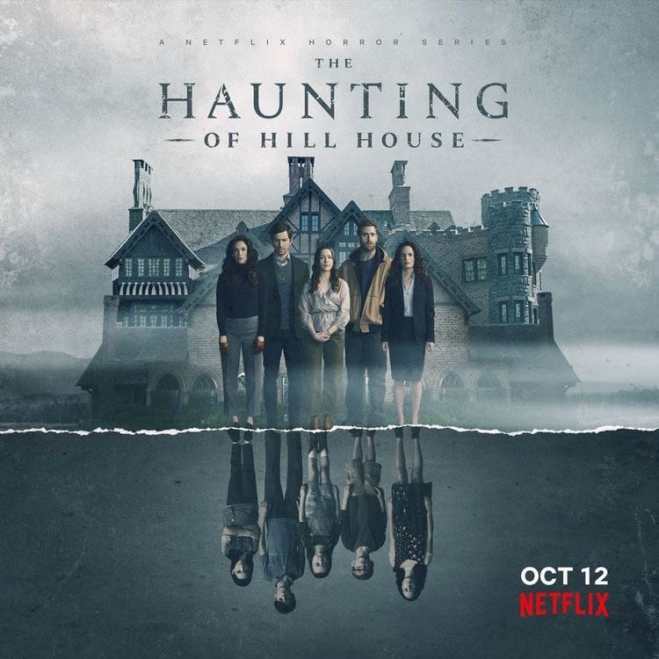
I don’t enjoy being negative or disparaging about a director or their work, but Mike Flanagan is a director I can never truly get behind. I did enjoy the absurdity of Ouija: Origin of Evil (2016), but the Netflix projects that he is consistently praised for have always felt flat to me. These shows have become some of the most popular and prolific horror programmes on streaming platforms to date. His first Netflix series, which remains to be his most successful, is an adaptation of Shirley Jackson’s 1959 gothic horror novel, The Haunting of Hill House. The hype that this show has received and still receives to this day confuses me, as it butchers everything that made the book so uniquely chilling.
The decision to change the relationship of the characters is one of my main issues with the series. In the novel, they are strangers, called to be participants in a study as a result of experiencing “abnormal” situations. In the show, the characters are an estranged and dysfunctional family. The family dynamic is certainly interesting as it opens the show to discussions of generational trauma and grief, but it also opens up the space to lose what makes the original story so haunting. The nuclear family made up of parents Steven and Olivia and their children, twins Luke and Eleanor, Shirley (named after author Shirley Jackson), Theodora and older brother Steven, become a poor attempt to lengthen and push the show into a somewhat engaging ten episodes. If you want a show about a traumatised, dysfunctional sibling dynamic, then This is Us (2016-2022) already has that covered. The Haunting of Hill House actually has little to say about the power of grief and generational trauma that hasn’t already been explored in more meaningful ways in the novel. The show hides behind a false shroud of complexity, flipping between the past and the present to show just how broken this family is, but what it actually has to say can be summarised in a small sentence. The family is haunted and not the house. This is what the show is about; this is ultimately what it has to say, and it also means nothing.
The Haunting of Hill House feels like it’s just ticking tropes off a list. The dysfunctional family trope as well as the family haunted house trope, of which so much horror seems to centre on now. Hill House takes that trope and produces something dull and sanitised. It’s like the characters and their relationships with each other are pre-programmed and robotic. Plot points focusing on the house never dive deep enough. The mom commits suicide in the house, not by her choice but by the manipulation and fear that the house’s many ghosts are causing her. Then, 25 years later, her youngest daughter Nell hangs herself in the same place where she jumped, at the top of the staircase of the house. It makes the reason behind this simple and easy to sum up: trauma. Nell is simply doomed by the plot, and that’s it. She is no longer a character but a fable of generational trauma. The show tries to package a message about the power of grief in a way that is so disconnected and ultimately meaningless, that you can’t help but roll your eyes a bit.
Flanagan turns what Jackson satirises in her novel into the beating heart of his series. He treats ghosts as secrets, guilt, insecurities and regrets. It becomes so on the nose that it loses any powerful message that the book garnered with its impactful show-don’t-tell approach. The ghosts in the show become literal, popping up everywhere out of nowhere, lacking in scares. It’s as if Flanagan read the novel with his eyes closed, he never actually understands how to use the titular Hill House the way Jackson intended. I don’t even want to mention the terrible “red rum” subplot that the show goes into because it simply makes no sense and only exists to remind you that Flanagan loves Steven King and the horror genre. The show never actually uses the house to its full capacity. It lacks the creepiness of Eleanor Vance (Nell Crain in the show, the family is named after the man that originally built Hill House) sleepwalking onto the library ledge as she hears her deceased mother’s call. The house isn’t evil in the show; it’s barely even bad. It’s just big and cold and full of ghosts. The literalness of the ghosts makes sense in a horror programme but not in The Haunting of Hill House, where the ghosts work better as being questions instead of manifestations. The ghosts in the novel are not supposed to be as simplistic as “guilt”, a buzzword that only exists to elicit fear and dread, but are instead supposed to be something larger and thus more terrifyingly real as they all reside in a single woman’s head.
This brings me to my final and biggest qualm with The Haunting of Hill House. Flanagan completely and utterly destroys the Nell/Eleanor character. Eleanor Vance is probably one of my favourite characters ever simply because of how relatable of a character she is. Eleanor is eccentric, endearing and needy, but also funny, strong, observant and full of rage when she wants to be. Eleanor is the character that holds the novel together. The novel works to place us inside Eleanor’s troubled mind. She is afraid that she has been left behind by the world after caring for her ill mother for so long, she has anxieties about living with her sister, as well as a crushing loneliness and a desire to be liked. When she arrives at Hill House, she is still grieving the death of her mother but is excited for a new start. She is immediately enchanted by Theodora who is vivacious and a free spirit, everything that Eleanor wants to be, and this leads to Eleanor craving Theodora’s approval at every given turn. The show removes this pivotal aspect of Eleanor/Nell – the queer interpretations of her character become lost to a bland manic pixie dream girl version that Victoria Pedretti tries so hard to play. I despise how quick they killed her in the show as well and how utterly meaningless it was, and ultimately how meaningless her character became.
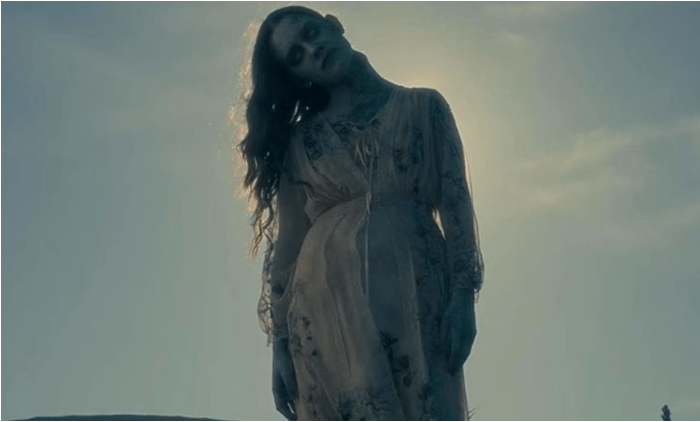
The Haunting of Hill House does not know what to do with the Nell/Eleanor character similarly to how it does not know what to do with the house. The Netflix series does not realise that Eleanor is its heart, its mind and its eyes. Flanagan does not understand the importance of Eleanor’s obsession with Hill House and how she believes that she is the only person who can truly understand it, how Eleanor believes that the house is calling out to her and only her. The show removes the motif of “Eleanor come home” in favour of the red rum-like reference, or the “Bent Neck Lady” storyline. That being said, the Bent Neck Lady episode of the show is my favourite episode because it seems like it is trying something fresh, and the final product is something that is actually quite scary. It feels like it might finally say something concrete about trauma, but once again, it falls short. They just kill Nell off; she is the bait that Flanagan throws at his plot to keep it flowing. The episode still suffers pacing issues like the others, and it inevitably feels just as bland despite some moments of shocking pathos towards the end. The shock evaporates quickly though, as this version of Nell is a poor imitation of the Eleanor Vance that drives the original story with her depth of character.
Flanagan chooses to go for on-the-nose, ghostly clichés about trauma and grief instead of focusing on what made the original story so compelling. Shirley Jackson’s novel operates as a tale of an outsider finally feeling like she belongs somewhere, and the deeper horror this reveals about trauma, grief, the mind and self. Eleanor feels like the house needs her as much as she needs it, and this dependency is what causes ghosts to arise. The house is described as “arrogant”, like a “living organism” and “not sane” because it is alive. The house facilitated Eleanor’s breakdown – or maybe it truly is haunted. Even if it is not actually haunted it still speaks to the mind of the person who needs it to be. Eleanor has found her purpose: to be in Hill House. The silence and seclusion of its walls bring forth her ghosts.
The show messes up Eleanor/Nell’s demise by providing her with an ending that is tragic but ultimately meaningless. The end of the book summarises the meaning well: Eleanor kills herself in the driveway as she cannot bear to leave Hill House (or because Hill House cannot bear to let her go). The true misery of Eleanor Vance lies in her death. She arrived at Hill House never to leave. Whether it is seen as sad is up to the reader, as Eleanor has finally found a place where she belongs, and she can stay here now for the rest of eternity. The house provided Eleanor with a space to project the manifestations of her troubled psyche. The reader is left to wonder what exactly in the house brings out these disturbances in Eleanor, whether it is actually haunted or if it is just a solitary space where she has no other choice but to face her traumas. Maybe the house is just a house. Whether you believe it is haunted is up to you. The novel presents grief, guilt and regret, not as ghosts but as something that cannot be placed into such a simple category. Eleanor’s grief is powerful, and it manifests into something dangerous in her mind. This is one of the many examples of what makes the novel so complex. The house is the haunting, which is a message that the show could never truly comprehend.
 reeltalk0.movie.blog