Written by Yu Hua
Wong Kar Wai’s films intertwine visual elements with time and space, moving away from traditional storytelling toward a format resembling slow, rhythmic poetry. In Fallen Angels, Wong further explores his unique, melancholic, and elusive cinematic aesthetics, characterized by constant camera movement, ambiguous colours, and fragmented characters and plots. The film effectively constructs a ‘pathological’ world of loneliness and alienation for viewers, enabling them to accept the peculiar behaviours of the characters and their relationships.
The narrative does not unfold in a tightly woven way; rather, it is extended through the extensive internal monologues of five protagonists, combined with close-ups and various framing techniques that create a deeply personal and subjective narrative experience. The first protagonist in the film’s beginning is Huang Zhi Ming (Leon Lai), a lazy and cold-blooded killer. The second character introduced is Ming’s agent (acted by Michele Reis) who specializes in arranging killings. Although she and Ming are, in a strict sense, business partners, she secretly yearns to develop a romantic relationship with him. However, the appearance of a “neurotic girl” (played by Karen Mok) complicates her unspoken affection for Ming. The fourth character is He Zhiwu (Takeshi Kaneshiro), a mute weirdo who escapes from a prison- perhaps a mental institution. He forces passersby to pay him to avoid becoming his next customer. Zhiwu encounters a girl, Charlie (Charlie Yeung) on the street and begins his unrequited love. The director portrays urban marginalized figures as symbols, identified only by their fragmented information. Their ambiguous identities reflect the insignificance of city dwellers within the ‘concrete jungle’, also representing a broader collective. These characters depicted in the film serve as a mirror of the collective experiences in urban life, with shared traits of anxiety, solitude, and dislocation.
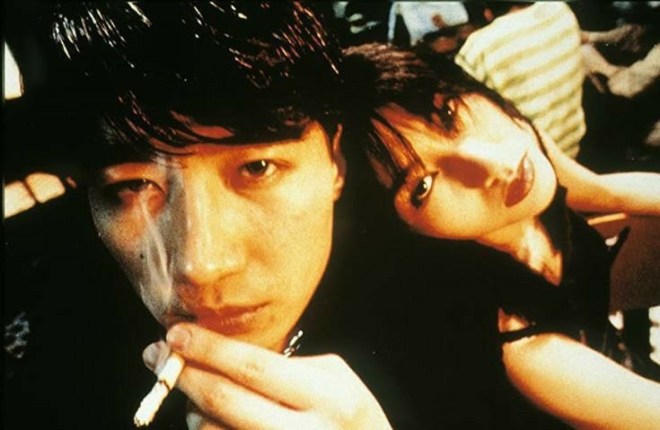
The protagonists’ occupations, such as assassins and drifters, embody a fluidity and instability that evoke a natural sense of fear and displacement. An amount of handheld shots underscore the instability of the protagonists’ environments and their strangeness. To evoke an emotional tone that aligns with the behaviours of the film’s characters, the film employs a significant amount of wide-angle shots for close-ups of their faces, making the characters appear strikingly strange and twisted. The wide-angle perspective distorts the lines of the frame, making the close-ups of the protagonists of a somewhat grotesque quality. This magnification of their sense of loneliness allows the audience to observe their expressions intimately, experiencing the shifts in their emotions. The wide-angle lens also creates a sense of distance between each protagonist, suggesting that even when they come together, they remain fundamentally far apart. The shaky camera movement and post-production effects present a dazzling and disorienting visual experience. The surreal colors and distinctive lighting present a vibrant yet cold tone, complemented by irregular shot compositions. This combination results in a postmodern sensory experience that is both captivating and unsettling.
 reeltalk0.movie.blog