Written by Ying Qi
Tangled is an extraordinary Disney princess film directed by Nathan Greno and Byron Howard in 2010, which transcends the boundaries of animated filmmaking by incorporating a variety of forms. The film is a modern reimagining of the classic tale of Rapunzel, staying true to the traditional essence of the narrative while immersing the audience in a balance of intense themes like resilience and hope, conveyed through moments of humor and song. Throughout the film, Tangled explores the nature of human desire, examining the different causes and effects of yearning, making the story deeply relatable to viewers.
The film follows the story of the young Rapunzel (Mandy Moore), who dreams of seeing the ‘floating lights’: lanterns released on her eighteenth birthday. However, Rapunzel is confined to her tower by her manipulative Mother Gothel (Donna Murphy), who exploits the magical anti-aging powers of Rapunzel’s hair to maintain her own youth. Despite her mother’s harsh refusals, Rapunzel never loses hope. This resilience is subtly highlighted through the film’s colour palette: inside the tower, muted, dull tones dominate, while Rapunzel often gazes longingly at the vibrant green landscape, bathed in golden sunlight and bright blue skies. Her determination is consistently emphasised through her optimism, which shines through in key moments of the film.
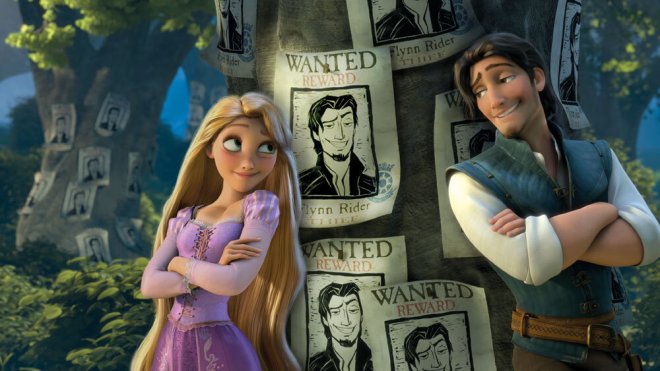
The arrival of Flynn Rider (Zachary Levi) marks a turning point for Rapunzel, revealing new layers of her character. Surprised by Flynn’s confidence and arrogance, the innocence and purity once central to Rapunzel quickly evolve into fiery passion. Sensing an opportunity to finally leave the tower, Rapunzel clings to Flynn for guidance, showing her assertiveness by blackmailing him to achieve her goals. Though their partnership initially seems unlikely, full of trials and tension, the duo gradually develop strong chemistry, sharing moments of laughter and intimacy. As they begin to trust one another, they work together to tackle both their personal struggles and shared ambitions.
In addition to its narrative, the film’s thematic depth is enhanced by key symbolic elements. The lanterns symbolise hope and the pursuit of dreams, representing the idea of chasing what you long for, regardless of the obstacles in the way, both physically and metaphorically. Rapunzel’s long, golden hair represents not only her magical power but also her agency and safety net. However, as Flynn bravely cuts her hair, it emphasises that Rapunzel will no longer be confined to the world she knows. Instead, it symbolises her newfound independence and the opportunity to start her new life.
Though the tale of Tangled could be analysed endlessly, one of the film’s greatest strengths is how it encourages viewers to reflect on their own lives. It reminds us not to sit idly by and merely wish for our dreams but to take action and pursue them. By the end of the film, Rapunzel is no longer the sheltered, innocent girl with magical hair but a courageous young woman willing to risk everything to follow her dreams and create her own destiny, and I think that is what makes the film so great and different compared to many other princess films.
 reeltalk0.movie.blog