Edited by Awais Fareed & Linh Duong
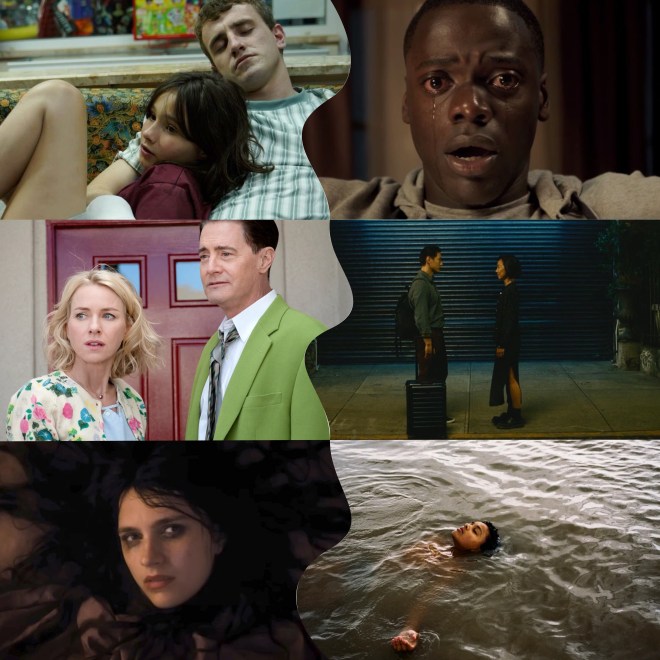
Introducing the theme for this year: Old vs New! From captivating directorial debuts to household names such as Scorsese and Coppola’s return to the big screen, to the (sometimes endless) number of remakes from old classics, this year’s theme encompasses and appreciates the long legacy and exciting future of the film and television industry. Here are some of our editors’ pieces on their favourite directorial debuts/established directors’ films and television shows from recent years!
Meg Spies on Aftersun (Charlotte Wells, 2022)
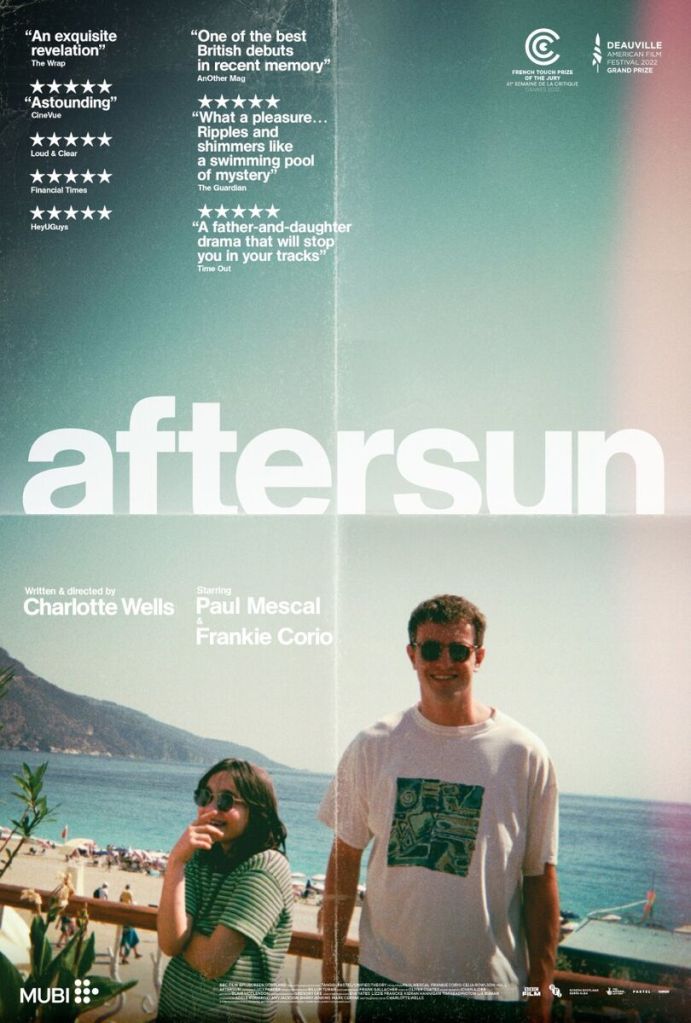
Aftersun marks the lachrymose directorial debut of Charlotte Wells, a Scottish filmmaker who makes an indelible impression in British cinema through her nuanced and introspective exploration of memory. Wells contemplates the gravity of paternal bonds, capturing the fragility of unnoticed moments that leave permanent imprints. Aftersun is a semi-autobiographical story centred on preteen Sophie and her young father, Calum, as they share a holiday at a Turkish seaside resort in the late 1990s.
Wells incorporates an oscillating chronology by blurring temporality through flashbacks and oneiric flashforwards. Subjectively narrated through Sophie’s adult perspective as she reminisces her pivotal adolescent summer, the film delicately navigates the complexities of childhood memories and the elusive nature of understanding our parents as people. Wells’ direction brings an understated elegance to this narrative, layering past and present through grainy camcorder footage, fragmented memories, and glimpses of unspoken emotion. Her writing and directorial mastery, (a process that’s taken eight years) is intimately reflective, illuminating a memory’s capacity to be simultaneously vivid yet indiscernible. Permeating Aftersun is the ostensibly mundane moments of Sophie and Calum’s holiday: the film’s cinematography is often observational and intentionally fragmented, simultaneously mirroring young Sophie’s appreciation of seemingly tedious interactions with adult Sophie’s process of remembering. Despite the sporadic, intimate close-ups, Wells often keeps the camera at a distance to capture the everyday interactions between father and daughter as if watching them from the outside. This distance from us to the characters creates feelings of helplessness for spectators, which mirrors adult-Sophie’s powerlessness whilst reflecting on memories of her dad, heightening the suffocating sense of grief and loss.
Aftersun was met with acclaim for its emotional resonance, rich visual style, and Paul Mescal’s superlative performance as Calum, injecting a haunting complexity to Wells’ vision of a man who is as loving as he is inaccessible. The film establishes Wells’ directorial capacity to transform a personal microcosm into a universally relatable macrocosm. With Aftersun, Wells emerged as a nascent voice in cinema, establishing a directorial style marked by subtlety, emotional depth, and a profound sensitivity to the relentless lingering of grief.
Jamie Pakes on Klaus (Sergio Pablos 2019)

Although Klaus is Sergio Pablos’ first directorial work, he is far from new to filmmaking as a whole. He worked for several years as an animator for Walt Disney Studios where he worked on films such as Tarzan and Hunchback of Notre Dame. Pablos also developed the initial screen story ‘Evil Me’ which would later be turned into the Despicable Me franchise. With so many years of experience working in animation, it is no wonder that his directorial debut would be as remarkable as the festive Klaus.
Pablos’ work on both 2D and 3D animation was crucial to the look of Klaus, which appears to blend the two styles beautifully. The animation is hand drawn; a nostalgic style rarely used in modern western animated films. However, Pablos used an original lighting system named ‘KLaS’ to create a partially 3D look, as well as the occasional entirely 3D element, combining the styles to create a final product with a look unlike any other animated films.
This unique style is used to bring the eccentric wintery town of Smeerenburg and its outlandish cast of characters to life. It’s a genuine pleasure to watch the unlikely pairing of spoilt, deceitful Jesper and kind but slightly grumpy old Klaus transform the town from a decrepit, gloomy battleground to one full of love and togetherness, providing the essential warm-hearted joy for any Christmas film. Despite this, Pablos certainly isn’t shy to pull on our heartstrings, with more than one tear-jerking moment. Even if Klaus can be slightly predictable at points, Pablos’ directorial debut has found a much-deserved spot amongst my annual Christmas rewatches.
Awais Fareed on The First Omen (Arkasha Stevenson, 2024)
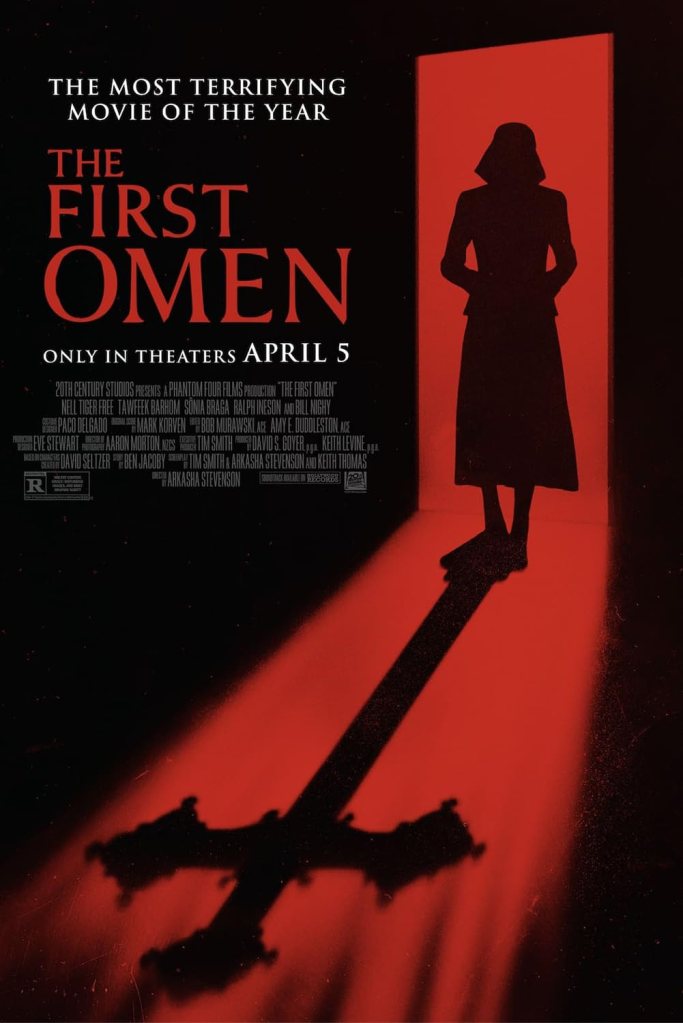
The First Omen is a 2024 horror prequel film directed by Arkasha Stevenson in her feature film debut. Stevenson previously co-directed the Netflix programme Brand New Cherry Flavour before its untimely cancellation after only one season. The film revolves around Margaret, a young American woman who is sent to Rome to begin her service to the church.
The First Omen, in some ways, rivals the original Omen film and one of the main ways it does this is through its use of visuals. The First Omen is by far the most visually appealing horror film that I have seen all year, and the visuals of the film are one main aspect which solidifies Stevenson as an interesting new filmmaker. One of the main visuals of the film that consistently runs through my mind whenever I think about this film is a scene where Margaret, played by English actress Nell Tiger Free, is lying down and the camera implicitly focuses on the way her hair takes up so much of the scene. In this moment, you can’t help but notice the way that Margaret’s hair looks like dozens of unwinding spiders and this visual motif of spiders begins to become synonymous with the film. The imagery of spiders is so important in the film and it’s particularly poignant that it arises from the layout of Margaret’s hair in this scene as the imagery of spiders reflects Margaret’s repression of her past and her subconscious trying to tell her who she is, in ways that become creepier and more devastating. I also liked the way the film paid homage to scenes from other horror films in such interesting and gripping ways, such as the homage to Possession that is so insanely well done and the homage to one of the most popular scenes from the original, done in a new and gnarly way.
Mohini Zhang on Blossoms Shanghai (Wong Kar Wai, 2023)

Blossoms Shanghai is the first TV series directed by Wong Kar-Wai in 36 years after his first film As Tears Go By in 1988. With his signature aesthetic style and vast experience, Wong Kar-Wai illustrates the growth and struggles of characters from various classes and backgrounds amid rapid shifts of the times, showing a memory of 90’s Shanghai.
Along with “The Development and Opening Up of Pudong” and the opening of Shanghai Stock Exchange, industrialisation, urbanization, openness and competitiveness grew rapidly in Shanghai. In such a volatile environment, a single slip may cause lasting sorrows.
“Do you know the Empire State Building in New York? It takes an hour to run from the bottom to the top, but only 8.8 seconds to jump down from the roof.” This is the first lesson Uncle Ye taught Abao about stocks, establishing the plot of the entire series — the great ups and downs of individuals in the economic boom. While some characters are failing at the drop of the hat, like Mr. Jin, who committed suicide because he was in debt for following the wrong stocks, other characters succeed by adapting to the changing era, such as Ling Zi, who reopens her restaurant and introduces new dishes which combine the features of Kaiseki and Shanghainese cuisine to attract consumers.
As a new attempt made by a seasoned director, Blossoms Shanghai is undoubtedly successful. It integrates the nostalgic symbols of Shanghai with modern perspectives, achieving a generation of people’s unique memories of the 1990s.
Daedula Graham on The Boy and the Heron (Hayao Miyazaki, 2024)
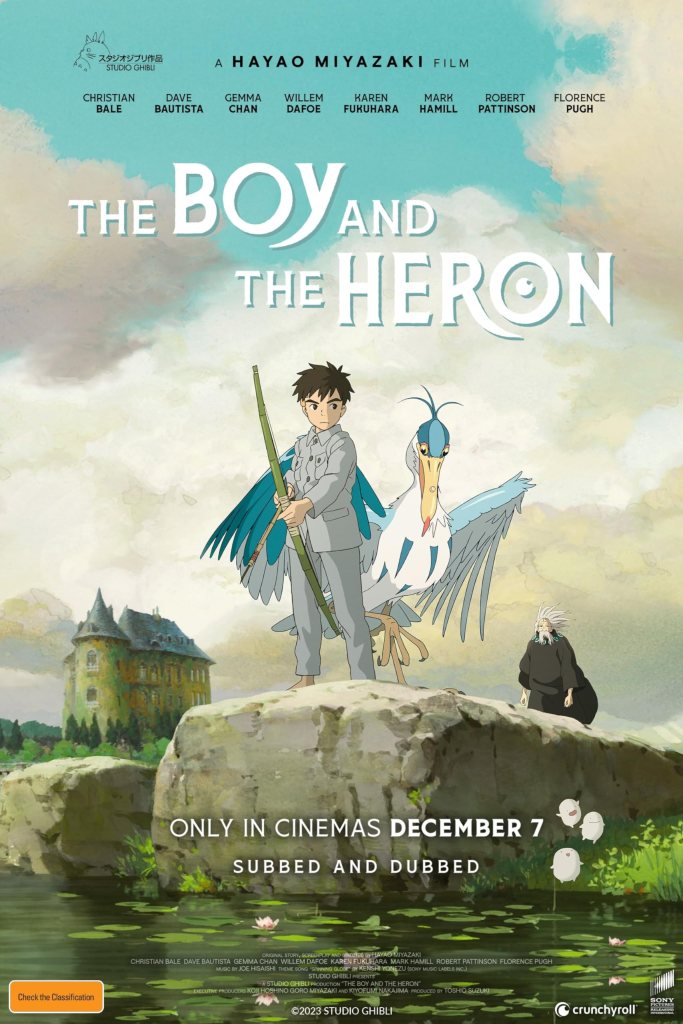
If you’re anything like me and have an unhealthy relationship with the website X, formerly Twitter, then perhaps you saw the minor controversy around the 96th Academy Award’s category for Best Animated Feature. The entire category feels almost akin to a microcosm of this blog’s latest theme, The New Vs The Old. In one corner you have the promising newcomer, a symbol of both new animation techniques and the currently domineering sub-genre of superhero films, Across The Spiderverse (2023), whilst in the other you have the reigning heavy weight of hand drawn animation Hayao Miyazaki’s The Boy and the Heron (2023). The upset occurred when Heron took the allegorical belt.
While the Oscars are by no means an accurate barometer for either popular consensus or objective quality this is one of the very few cases where the opinions of the Academy and my own have converged. Whilst I think very few would disagree that Miyazaki is one of the greatest living directors of animated feature films, I would go even further to say that he is at the very least one of the most proficient and unique directors of popular cinema. Such talent could have only been forged through the creation of a prestigious oeuvre spanning from TV work starting in the 70s with Future Boy Conan, to his early feature films with studio Ghibli, to finally his Oscar winning work and critical acclaim after the turn of the century. Throughout this multi-decade career repeating motifs such as aeronautic idealism conflicting with state authoritarianism, magical realist approaches to environmental conflicts, and Heideggerian pastoralism have seemingly haunted his work, being developed in every subsequent film before finally culminating in the magnum opus of The Boy and The Heron. Such a crescendo of artistic passion could not only be achieved by an aging master of their craft but it is also a conclusion only possible thanks to a career started in the relative artistic freedom of the 1970s, rather than the system of global megabrands Spiderverse finds itself situated in.
Aaron Jagger on Hereditary (Ari Aster, 2018)
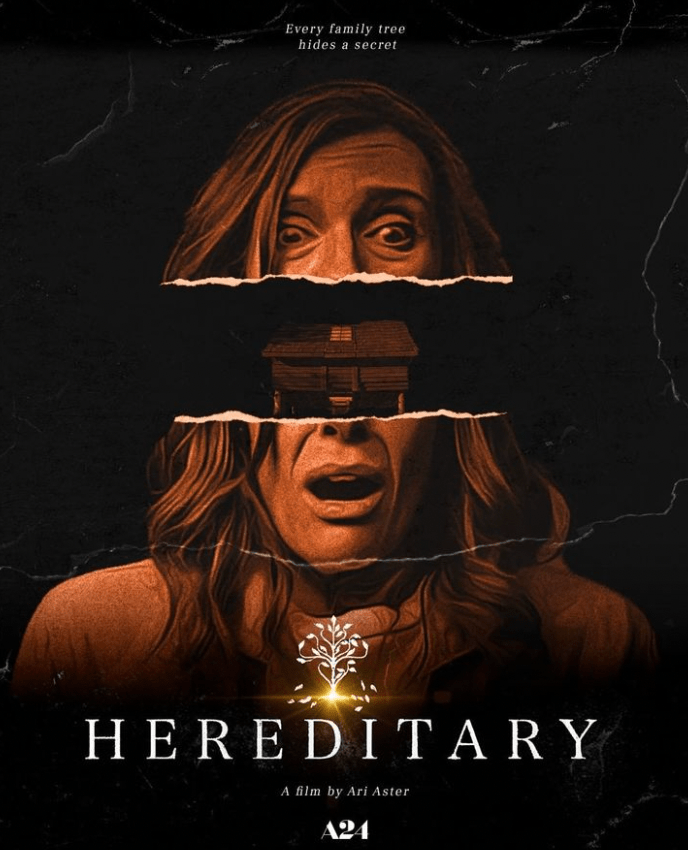
It may sound odd to describe Ari Aster as a ‘new’ director, yet his hit debut feature Hereditary only arrived in 2018. Since then, he has gone on to direct the equally acclaimed Midsommar (2019) and the divisive Beau is Afraid (2023), carving a distinctly stylised name for himself in the contemporary horror genre.
Hereditary situates us in the domestic, with all the domestic horror conventions to boot. It even has a few surprising ones along the way. Headed by Toni Collette, we follow a family unit on the brink of collapse after shocking events unfold in the first act. Collette gives a chilling performance as uncanny mother Annie – a performance that is still regarded as one of the biggest Oscars snubs in recent memory. Alex Wolff also makes a lasting impression as Annie’s son Peter, a boy struck down by trauma and left numb to his mother’s growing rejection. The two face off in one of the most memorable dinner table confrontations in film history: ‘I am your mother’ has never sounded so cruel.
While performances in Hereditary are equal parts nuanced and terrifying, Aster’s adept use of form cannot go amiss. Hereditary is a visual delight, with whip pans and match cuts so jarring they are sure to elicit a few jumps in and of themselves. Aster uses form to play with the spatiotemporal, cutting from day to night back and back to day again, transitioning from room to room in the home seamlessly, as though the structures of time and space themselves have become unravelled. The effect is one of unease, casting doubt on the stable unit of the nuclear family. Aster understands the horrors of the domestic all too well in his still groundbreaking directorial feature film debut.
Evie McCrae on Get Out (Jordan Peele, 2017)
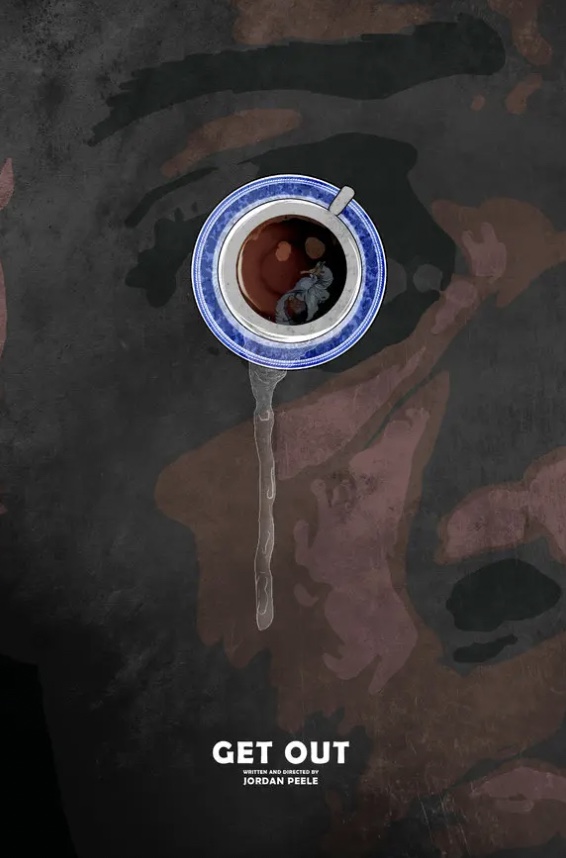
In 2017, the horror-comedy Get Out became Jordan Peele’s directorial debut and the start of his unique auteur style that would later become fleshed out by his following films Us (2019) and Nope (2022). The film revolves around the life and relationship of the protagonist, a black man called Chris, with his white girlfriend, Rose. The pair take a road trip to meet Rose’s family for the first time, and the following events are subtly but increasingly disturbing, supplemented by Peele’s tact for situational humour — mostly dark and occasionally light-hearted. The sense of horror that emanates from the film calls from themes of racism, colourism, and a general sense of prejudice and superiority from the white host family, themes that are used consistently in Peele’s later works.
Get Out (2017) received an incredible amount of love from viewers and critics alike and received four Academy Award nominations. Peele formed his own film and TV company in 2012 called ‘Monkeypaw Productions’, which Get Out was created under, and is an entirely independent production company aiming to create ‘artistic, thought-provoking projects’. Some of their other notable works include films such as Candyman (Nia DaCosta, 2021) and Monkey Man (Dev Patel, 2024).
Peele’s work often involves a majority black/POC cast and crew, often starring actor Daniel Kaluuya, who Peele once remarked was his “favourite actor in the world,” and therefore is a sort of muse for Peele, even writing a role in his latest film Nope (2022) for Kaluuya. Peele casts black people in his films to combat racism in the film industry, as the director, he has the power and determination to entirely avoid casting white people (particularly men) in any lead role in his films, and almost positively never will in his entire directorial career.
Linh Duong on Past Lives (Celine Song, 2023)
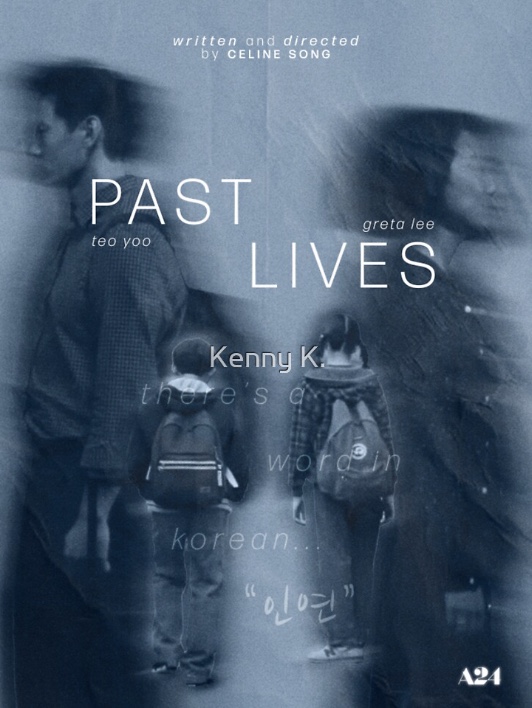
Song’s directorial debut, Past Lives, is a poetic and meditative snapshot of Asian immigrants, of the possibilities of connections, life choices and the age-old question of ‘What could’ve been?’ The director subverts the last question, instead offering an emotionally mature love triangle, if you could even call it that. The representation and conversations among the lead trio, Nora Moon (Greta Lee), John Magaro (Arthur) and Hae-sung (Teo Yoo), do not focus on romance but nonetheless love a love which stems from a deep mutual understanding and appreciation of one another, of each other’s experience and their relationship with their cultural identity.
Song’s directorial debut reads like a piece of poetry, a melodic and quiet reflection of real life. The film feels extremely personal and intimate, a story that could not be told by anyone else other than Song. She crafts a beautiful landscape of New York, of the relationship between each character and leaves audiences with an ending which makes you emotional and pining for a feeling that cannot be encapsulated.
The film, released in 2023, is a modern classic. It travels through the 2000s to contemporary society through Nora and Hae-sung’s relationship- from their rediscovery of each other through Facebook friends to their endless Facetime calls and loss of internet connection. Their relationship survives the vast distance between South Korea and America, all through the instant connection and gratification of the internet. Yet its intercultural themes of immigration, cross-cultural relationships, and not feeling ‘Asian’ enough remain ever so timeless.
James O’Connell Nash on Twin Peaks: The Return (David Lynch, 2017)
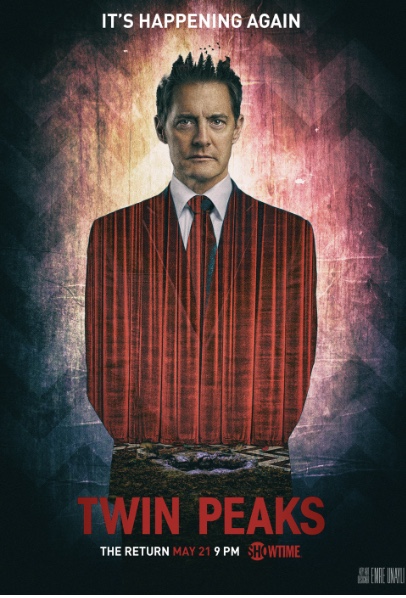
Twin Peaks: The Return finds David Lynch adrift in a modern America that is increasingly unrecognisable to him, even as Lynch’s lifelong fixations, hopes, and terrors echo across it.
Much, if not most, of the show takes place far outside the settings and characters of the show’s original two seasons. The Return rejects the warmly lit, wood-panelled Americana of the original Twin Peaks in favour of cold, digital renderings of bland, antiseptic suburbs and offices across 21st-century America.
Within these spaces, however, Lynch situates haunting echoes of his earlier work’s mise-en-scène. A deer’s head in an otherwise featureless, anonymous office building is an eerie synecdoche for the ageing auteur’s displacement in contemporary society. A jarring contrast is built between the unflatteringly captured faces of the show’s returning cast and the smoother, more youthful, but all the more unsettlingly blank faces of younger actors.
These juxtapositions illustrate the tension between irony and sincerity that has been a constant through both Lynch’s career and critical responses to it. His vision of Twin Peaks, show and town alike, as an archaism, harshly confronted with a sterile and unfeeling 21st century, is often presented with deadpan mean-spiritedness. However, Lynch retains the capacity for deep tenderness and affection. For every scene of Kyle MacLachlan playing an oblivious holy fool in the place of his beloved Cooper character, Lynch delivers scenes as heartfelt as anything in his oeuvre, not least Ed and Norma’s reunion.
Overall, the show’s emotional force lies between these poles. Lynch’s vision builds to a cry of horror that could not be more bitterly felt. The Return’s influence is readily apparent in such zeitgeist-catching new releases as The Beast (Bertrand Bonello, 2024) and I Saw the TV Glow (Jane Schoenbrun, 2024), suggesting that this cry continues to speak profoundly to the current moment.
Lily Simpson on Bird (Andrea Arnold, 2024)
A Joyous Return to British Cinema
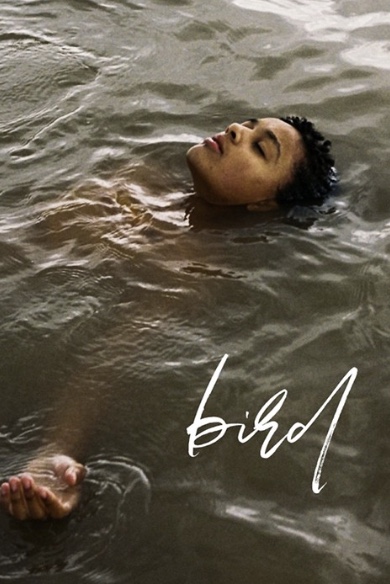
Andrea Arnold’s latest film, Bird, marks a striking return to her British social-realism roots after over a decade since Fish Tank (2009). Attending a pre-screening hosted by Letterboxd, the film’s striking joy and dogged reality provided an affective experience for the audience. Combining realism with moments of uncanny beauty and humanity, the film’s collection of vivid imagery pasted together in unfamiliar ways serves as memories and insight into Bailey’s life, a life of poverty lived by too many but lit by joy.
The film centres on 12-year-old Bailey (Adam’s), who navigates the journey from girlhood to womanhood whilst living in a Gravesend squat. Through Arnold’s direction and Robbie Ryan’s evocative cinematography, the working class are framed as art, pastiches of ordinary people as touching portraits of life. We see Bailey’s bird-like transformation guided by buoyancy for the future. In this time of confusion, Bailey meets who she needs most, the mysterious Bird (Rogowski), an accumulation of lofty movement and misty joy. Bird potently portrays the quiet dignity and joys of working-class resilience.
Bailey captures the ephemeral qualities of life through her phone, using it as a barrier to see in situations she deems unstable, creating a digital space where she is validated and exists wholly, displaying these visions of life in technicolour on a projector in her bedroom, an innately transitory device. Bailey craves to be understood and seen, a concept which Arnold respectfully and intricately understands applies to much of her audience, too.
43.5% of households in Gravesham are in relative poverty (Gravesham Community Profile 2024), a number amplified by Arnold’s urgent portrayal of Bailey. Whilst a magical bird man may be unable to nurture the other impoverished children around the United Kingdom, embodiments of freedom and guardianship serve as symbols of hope and resilience for Bailey’s journey of self-discovery. The ability to rise above and see beyond immediate surroundings and the spirit of survival embodied by Bird recommends itself as a potent fable of hope for our country. Unguided by any important backstory and unapologetic practicality, Bird stands as a projection of what Bailey needs at this time in her life: the possibility of transcendence and the comfort of being seen and cared for in this unforgiving world.
Michael Maxwell on Perfect Days (Wim Wenders, 2023)
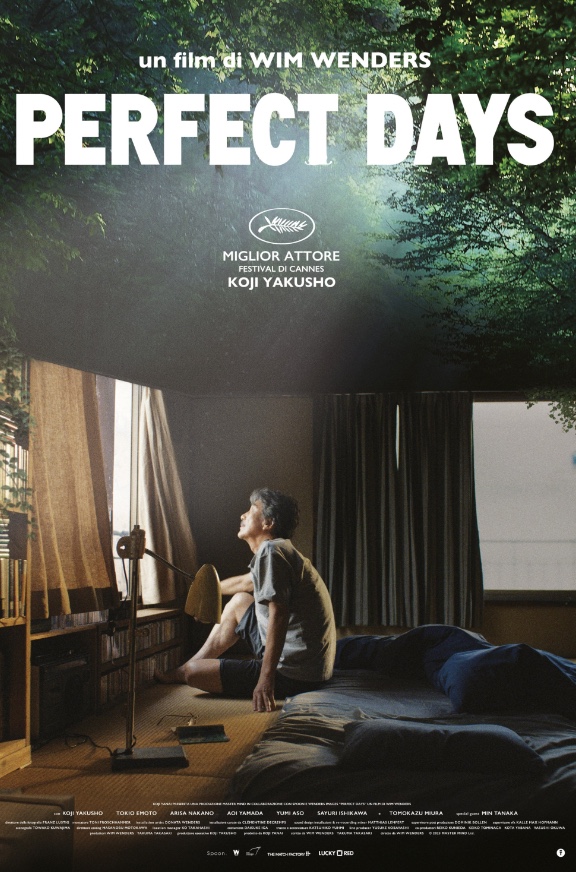
Perfect Days (2023), directed by Wim Wenders and co-written by Wenders and Takuma Takasaki, is my pick for ReelTalk’s Old vs New editorial collection. Wim Wenders is a highly decorated and prolific filmmaker who began his career as part of the New German Cinema movement. The film won the Ecumenical Prize as well as Best Actor for Kōji Yakusho at the Cannes Film Festival in 2023 and has received much critical acclaim. My reasons for selecting Perfect Days are twofold.
I chose this film due to its nature of being a recent film by an experienced director, released 53 years after his debut feature, Summer in the City. I also chose Perfect Days as it deals directly with the conflict between old and new through its narrative structure, the relations between the characters, and its mise-en-scène.
The protagonist, Hirayama, is an ageing toilet cleaner in a city undergoing increased modernisation and urbanisation, resulting in a depersonalising feeling of loneliness. His response to the alienating nature of Tokyo is through connecting with a philosophy part-existentialist and part-Japanese tradition in which he enjoys the small moments of life for their own sake, deliberately slowing down life in order to experience it to the fullest.
Hirayama meets many different people throughout the film, each with distinct and eccentric personalities that affect him on an emotional level. Combined with an incredible soundtrack, and the stellar performances of all actors involved, Perfect Days deserves to be considered one of the best examples of modern slow cinema, managing to invoke the style of one of the greatest directors of all time, Yasujiro Ozu, while maintaining its uniqueness as a modern masterpiece. Perfect Days leaves its viewers with a solution to the problem of modernity’s loneliness and gives hope for a new way of living.
Ethan Jones on Furiosa: A Mad Max Saga (George Miller, 2024)
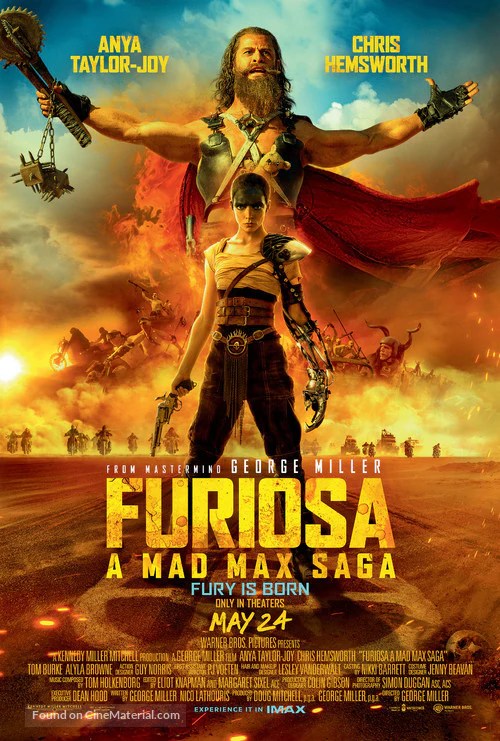
There aren’t many franchises that are as intrinsically intertwined with a director as Mad Max is with George Miller. Since debuting together in 1979, Miller and Max have continually redefined and reenergised the cinematic car chase, crafting four mainline entries in the saga. Half of these entries are legitimately great, including one critically acclaimed spin-off this past year which somehow outdid them all. Furiosa: A Mad Max Saga may not feature Mad Max in any major capacity, but it is nonetheless peak “Mad Max”; a dizzying, dazzling, demonic work of action bravado that bursts off the screen with a propulsion, menace, and impish glee hither to unheard of in the modern blockbuster. Everything remains centred around Anya Taylor-Joy, who anchors the manic Wasteland with a presence, glare, and emotional depth that consolidates the spectacle into something humane and real. Chris Hemsworth, meanwhile, is gleefully madcap and utterly off the chain, once again demonstrating how great a villain he can be when given the freedom to let loose and groove. It’s a truly tremendous action picture and emblematic of what forty-five years of experience of constantly honing your skills over a number of decades, is capable of; a film which is gritty and gnarly and goofy and gross and exciting in so many ways, all collated together in a cold-blooded ballad where love and devotion battle against misery and vengeance. It is, in other words, the quintessential Mad Max adventure.
Ethan Jones on Talk to Me (Danny Philippou & Michael Philippou, 2023)
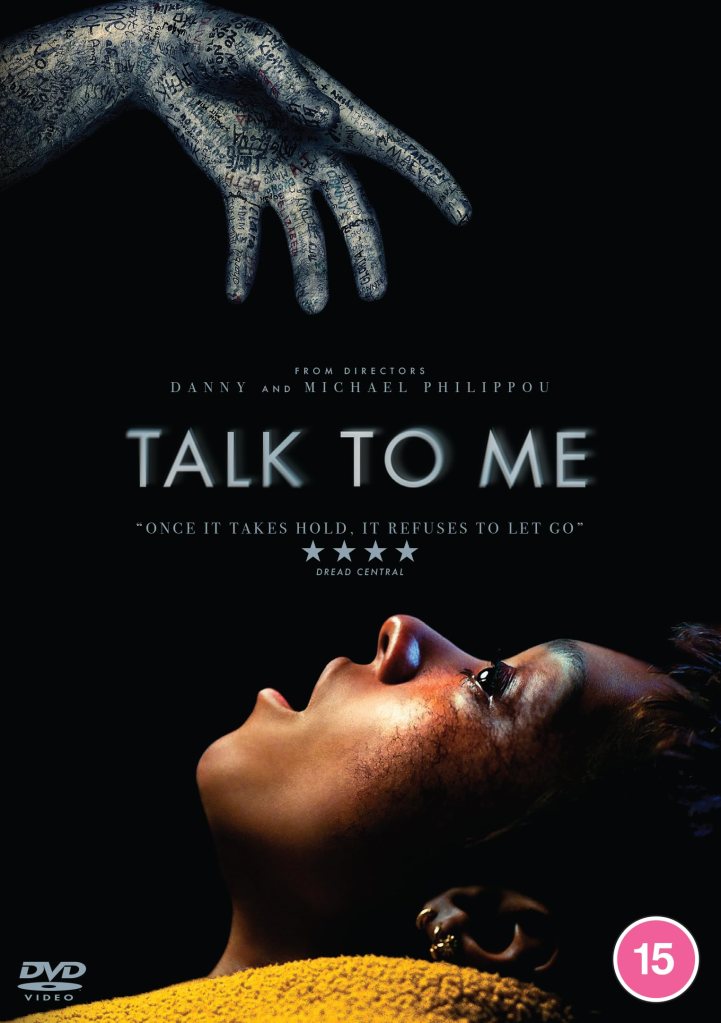
We’re always living in a Golden Age for horror, but the 2020s have been truly special. From the visceral to the cerebral, from the latest gory slasher to whatever new nightmare A24 has cooked up, the horror genre has pulsed and pounded with frightful ferocity and glee the past few years, often from exciting new voices a la Julia Ducournau (Titane), Ari Aster (Hereditary), Coralie Fargeat (The Substance), Jane Schoenbrun (I Saw the TV Glow) and Parker Finn (Smile). But there is a confidence to Talk to Me, the directorial debut of YouTuber brothers Michael and Danny Philippou, that made it such an exciting shock to the system upon its release last year, equal parts incessantly bleak as was deviously creepy, with the occasional splatter of brutality thrown in too, to really keep you on your toes. The film features a very likeable, lived-in cast, spearheaded by the excellent Sophie Wilde, and communicates its terror through a combination of incredibly gnarly visual effects and cinematography that at times feels possessed by the spirits which jolt its walls. If you like feel-good horror films, then this probably isn’t for you; otherwise, it’s one of the most instantly iconic horror films to arise in recent memory, where just the sight of its creeping hand can creep you to your core.
 reeltalk0.movie.blog