Written by Meg Tebbutt
Sam Raimi makes the most classic Raimi-return to superhero cinema for Marvel’s ‘official’ entry into the recent Multiverse cinematic trend.
Bringing together his cult horror Evil Dead roots with his noughties Spider-Man trilogy, Raimi manages to direct the most original Marvel movie of our time, merging body-horror with dark magic in this (albeit weak) Multiverse exploration. When compared to Everything Everywhere All at Once (2022), released the same year, Raimi’s presentation of the Multiversal concept falls flat: its universes are effectively rushed through in one sixty-second energetically edited CGI sequence, before presenting the characters in a universe much like our own – with a little smart nod to cult favourite Bruce Campbell along the way. This comparison to Daniel Kwan and Daniel Scneinert’s absurdist comedy multiversal drama is enough to displease audiences sold a ‘Multiverse of Madness’. But the ‘Madness’ and the film’s overall beauty can be excavated within Raimi’s classic horror lens for the auteur’s fans.
At the heart of the narrative and fresh from her Disney+ spin-off series WandaVision, Wanda Maximoff (Elizabeth Olsen) struggles to sleep in a universe in which her children do not exist. Desperate to pursue what she has lost, Wanda follows the power of the Dark Hold – an ancient book of the Damned – to become the Scarlet Witch and possess her own body (called ‘dreamwalking’) in different universes in order to reunite her family.
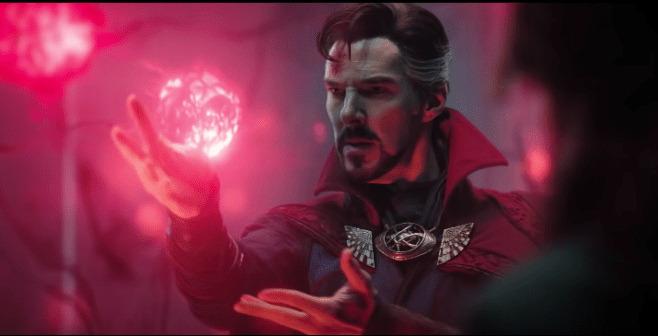
Steven Strange (Benedict Cumberbatch) and America Chavez (Xochitl Gomez) intend to stop her from destroying these universes through her use of dark magic by pursuing the book also, leading to an incredible Raimi-rich zombie sequence as Strange dreamwalks in his multiverses’ corpse. The emotional core remains with Olsen’s impassioned and diverse performance as a heartbroken mother turned vengeful, murderous witch.
Disappointingly, the soundtrack from Danny Elfman feels tired and uninspiring. Complementing the image in typical Marvel fashion, it feels far from the groundbreaking compositions of Elfman’s classic Tim Burton partnerships, instead connoting a carbon-copy of other Marvel works with perhaps a slightly darkened tone. Nevertheless, triumphant moments on screen are accompanied by victorious music swells, and in moments of uncertainty the music lingers low, ominously. Although fitting within the horror-esque tone Raimi has captivated throughout, the soundtrack is blander than it should be.
Due to the change of director from Scott Derrickson to Raimi midway through first-time feature screenwriter Michael Waldron’s script, it is debatably evident in the finished feature that the plot underwent a vast amount of re-writes and reshoots before the script was even finished. As a result, the plot is fast paced – to the extent of feeling rushed. Dialogue at points is undeveloped and at times is only saved by actor delivery. At other moments however, conversation lacks emotive complexity and draws laughable attention to itself. Raimi strings together pieces of plot with persistent dark, gory visuals and shock factor – for a 12 rated Marvel it is inarguable Raimi got away with his idea of gore under the guise of fantasy, thus it stands out from Marvel’s typical one-cuss, low-stakes violence ratings.
Overall, the movie is fun. Raimi allows the audience into his unique take on modern Marvel blockbuster cinema. Where it lacks proficient writing, the camera interrogates and enhances some stunning visuals within the universe. The genre-blending is unique and surprising, and the individual must decide if it works in the context of superhero Doctor Strange. One thing you can never fault Raimi on – he knows how to make a picture fun.
And I had so much fun with this.
 reeltalk0.movie.blog