
Written by Anastasia Gandzha and Katia Hiver, Edited by Alejandra Benavides Valcarcel and Amelia Evans
Our last post of Berlinale reviews spans the Forum, Generation 14plus, Documentary, and Panorama categories from the festival. Students share their thoughts on films like No Other Land and Holy Week
Category: Forum
Редакцiя/The Editorial Office (Roman Bondarchuk, 2024)
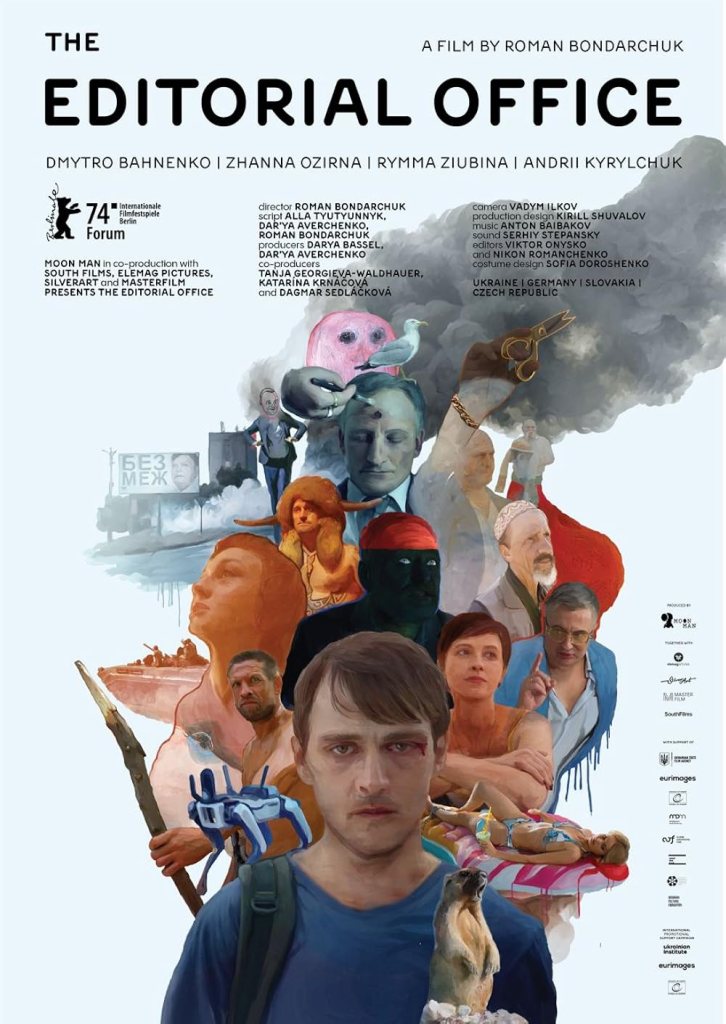
“A kitschy satire on the tension between global and national identities”
The film is a very self-aware political satire on the mediatisation of the Ukrainian war and politics. In my opinion, it states a great point about the Western ‘awareness vs actions’ conflict. Politically, the work holds great tension between the global and national identities as well as the problems of taking wide scale attention from the local issues of existent corruption, climate crisis, gender and social inequality. Incredibly, the film was set and shot just before the Russian invasion of Ukraine, and completed during the war.
Nevertheless, this great premise was performed through such kitschy imagery that sometimes you lose the sense of unity in the narrative and style, and something that could be a very promising piece becomes questionable in its form.
2.5/5 Anastasia Gandzha
“Ukrainian take on Sorry to Bother You”
How do people write stories like this? The type of refined humour is well-balanced, smart and political. The characters of the film are fable-like, giving the story an almost folkloric tone, which is something I really love.
We need to dare more in the characters we create and the situations we put them in. We need to be more obvious in our messages and use irony in a film to be truly provoking. This film does it brilliantly.
Definitely one to watch again!
4/5 Katia Hiver
Săptămâna Mare/Holy Week (Andrei Cohn, 2024)
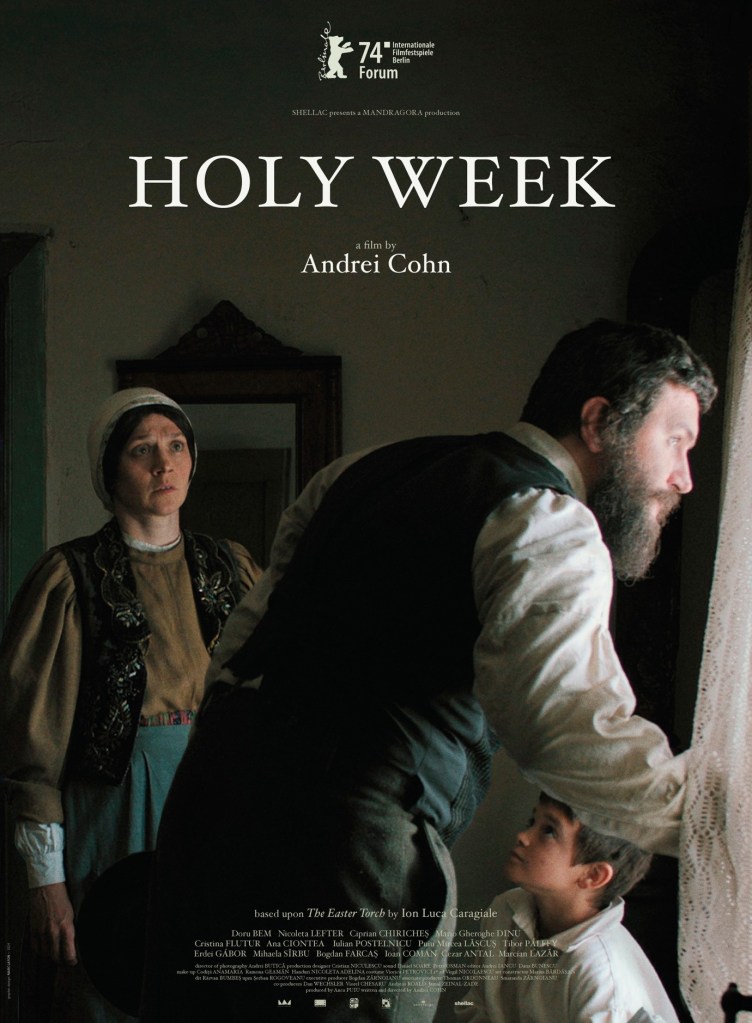
“The peak of slow cinema.”
The film is set in the holy week in rural Romania, around 1900. The tense relationship between the Jewish innkeeper Leiba and Gheorghe, his Christian employee, leads to the alienation of the Jewish family by an anti-Semitic environment and to the following tragic outcomes – the circle of violence.
The absolute peak of slow cinema, which makes you immerse yourself in the cinematic beauty of rural landscapes, laugh as part of table conversations and hold your breath in the final and opening acts, which doesn’t use a single word to build up the tension that makes you shake after the screening.
4.5/5 Anastasia Gandzha
“Hospitality as a mask of human cruelty.”
I don’t even know what to say. Silence. Everything is gorgeous in the real grimness of rural life. There is not one single shot that isn’t well thought out. The dialogue feels so natural and I am really blessed to be able to understand it in its original language. Even though the film is set in the 1900s, the dialogue feels modern and sadly still relevant – I feel like I’ve heard conversations like this before. The opening and the ending sequences of this film completely blew my mind – their interconnection, violent silence and the inability of intervention, created by the long take, are indescribable.
The film loses some of its momentum after the first half, in which we wonder where the story is going, if there is actually any. Indeed, these kinds of films are concept movies and here I feel like the overall message is the fact that hospitality is a mask hiding the cruelty as a part of human nature.
4.5/5 Katia Hiver
Category: Generation 14plus
Who By Fire/Comme Le Feu (Philippe Lesage, 2024)
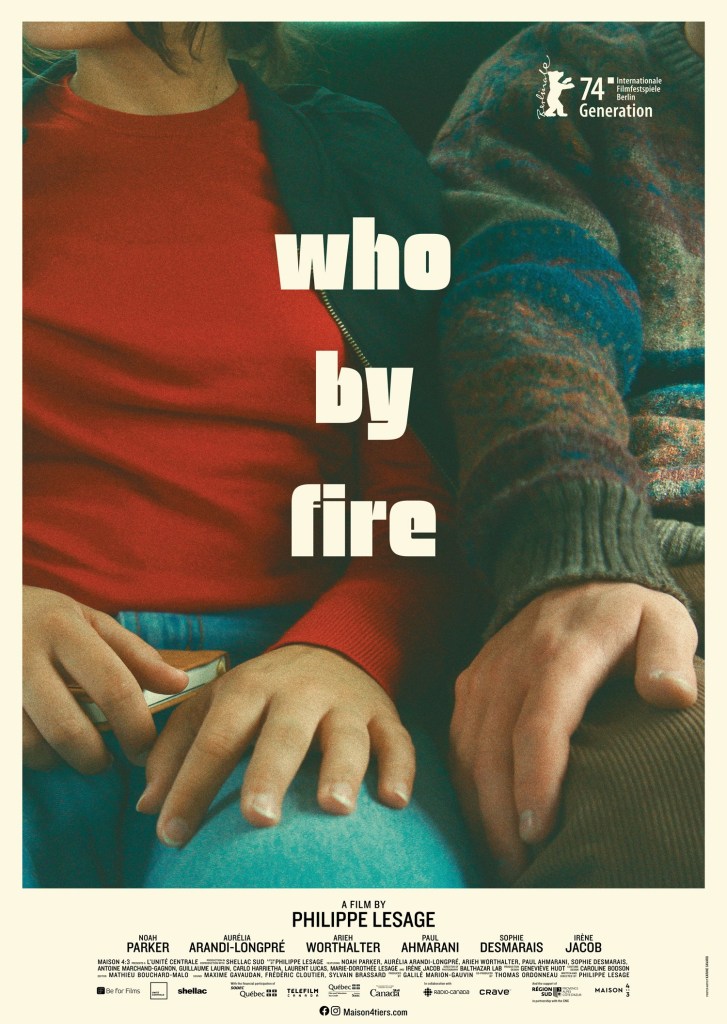
“An absolute masterpiece from the opening to the titles.”
A great piece of work with an incredible atmosphere, composition and directing. The film depicts the holiday reunion of two filmmakers and their families, which reopens old wounds and creates new ones between the generations. The characters and their interactions are so well-written that it’s an absolute joy to watch. Lesage creates an environment where viewers can almost participate in the table arguments as an additional member of the family. The film’s construction of humour is another level of observational comedy.
The cinematography is an absolute masterpiece from the opening sequence of a road or the incredible choreography of the dancing and dining sequences to the peacefully dangerous scene of kayaking.
This film is probably what Olivier Assayas tried to achieve with his Hors du temps, part of Berlinale’s competition category, but failed completely. Comme Le Feu, on the contrary, succeeds.
4.5/5 Anastasia Gandzha
“Quebec cinema strikes again.”
So good. Probably one of the best films of this year’s Berlinale programme. I was hooked throughout the whole film and didn’t know where the story was leading me next. The film tackles literally all the major themes and ideas of human experience. I can’t wait to watch it again.
5/5 Katia Hiver
Category: Documentary
No Other Land (Basel Adra, Hamdan Ballal, Yuval Abraham, Rachel Szor, 2024)
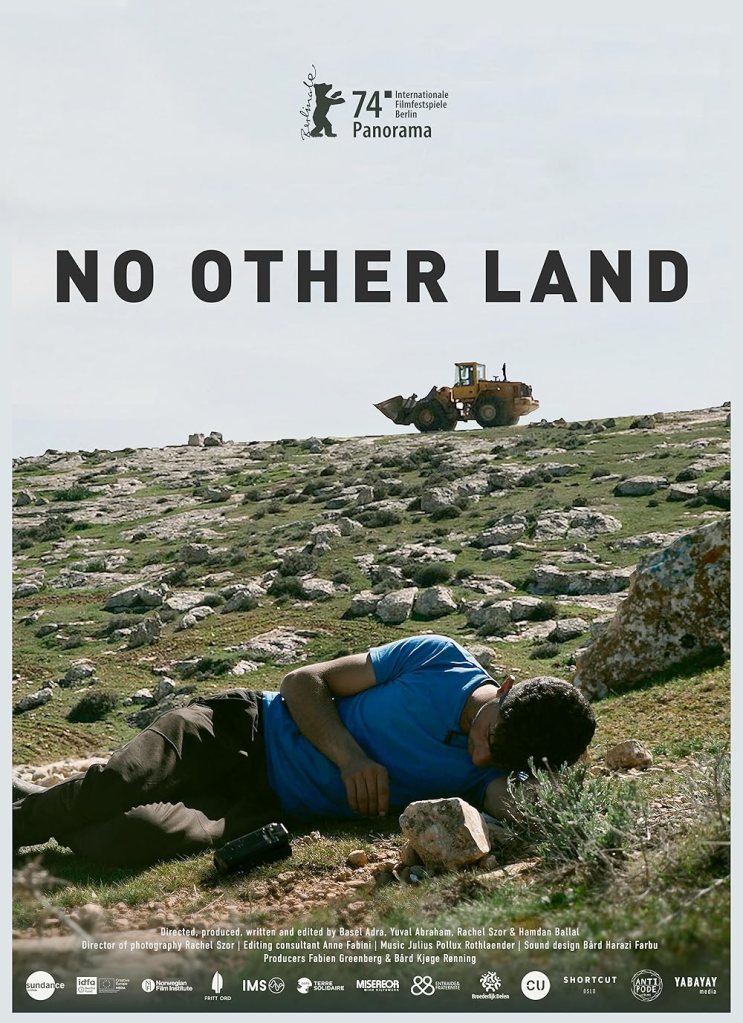
“Don’t weaponise guilt.”
I have such immense respect for such a great effort from these first-time filmmakers, which, after hearing about the way they made this film, heightens this respect. It is hard to be cinematic, realistic and political at the same time, but this film truly manages to have some intense scenes, giving a voice to the whispered stories. It is also an incredible film about friendship and its value beyond any circumstances.
One of the sentences addressed to the West by the directors of this documentary, which remained ingrained in my brain is “Don’t weaponise guilt”. This year Berlinale is definitely playing with our sense of guilt – collective and solitary.
3.5/5 Katia Hiver
Category: Panorama
Janet Planet (Annie Baker, 2023)

“Discovering the child’s gaze”
After the male gaze, and the female gaze, cinema nowadays ventures and wants to popularise the child’s gaze. I am curious how this idea will be developed and pushed in the future. For now, I feel that filmmakers are too enthused with their own nostalgia to fully explore this new way of seeing.
I loved the visuals and how the child’s perspective is rendered by the image, however, I expected much more from the narrative, something deeper and more allegorical.
3/5 Katia Hiver
“An obsessive infatuation in an infant’s mind.”
The film is a sensual and sentimental exploration of a Mother/Daughter relationship in the case when the emotion towards a parent turns into an obsessive infatuation. Unique theme, picturesque mise-en-scène of rural Western Massachusetts, the aftertaste of summer night air with a growing promise of autumn, developing as the feeling of falling out of love with the protagonist’s romanticised image. I truly enjoyed this film visually and conceptually!
4/5 Anastasia Gandzha
 reeltalk0.movie.blog