Written by Daedula Grabham, Edited by Martha Kershaw
Starting in 1952 and continuing each decade since, Sight and Sound magazine have listed the top 100 greatest films of all time. This list has been contributed to over the years by some of the greatest critics and academics to study film. Its latest incarnation released just last year caused a minor upset with Jeanne Dielman, 23 quai du Commerce, 1080 Bruxelles (Chantal Akerman, 1975) dethroning the last decade’s previous, and perhaps more conventional, winner Vertigo (Alfred Hitchcock, 1950). Obviously, this world-renowned list created by the synthesized opinions of 1,639 members of filmic intelligentsia is… entirely wrong! Putting Some Like It Hot above Rashomon is a concept dreamt up by a madman. Luckily the cultural taste makers and maverick zeitgeist sculptures of Warwick Film and Television Studies’ student body and staff (those who could be bothered to fill out the poll anyhow) are here to put the record straight with the true greatest films of all time. Below are the top ten most popular films from the over 200 films nominated, listed in no particular order. However, since the difference in votes was negligible, due to the varied taste of our students and staff, in the upcoming Film and Television Department Christmas party it will be up to you to vote for how these films rank in a list of the greatest of all time.
1. Apocalypse Now (Francis Ford Coppola, 1979): 4 votes (19th on the BFI Sight and Sound list)
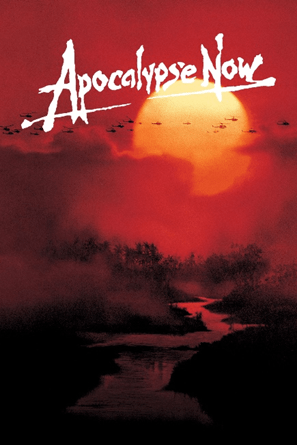
The first of two Coppola films on this list, and arguably his magnum opus, Apocalypse Now is, if not the greatest movie of all time, certainly the greatest Vietnam movie in Hollywood history (sorry to all the Kubrick head’s out there but Full Metal Jacket didn’t get nominated, although he will be making an appearance on this list). Loosely based off the 1899 novella The Heart of Darkness (Joseph Conrad) the film follows an ensemble cast of American G.Is who escort Captain Willard (Micheal Sheen) up a river through South Vietnam to execute the murderous (and potentially deranged) special forces agent Colonel Kurtz (Marlon Brando). This passage through the war-stricken nation explores the horrific consequences of war both on the cowardly and knavish American soldiers and the glorious and indominable Vietcong. But the film also shows the almost farcical side of war through vignettes of attempts at surfing under enemy fire and strip teases in occupied territory which demonstrates the stomach-churning banality of this conflict. As the group travel further up the river and eventually meet Kurtz the events of the war begin to affect their minds, reality and fantasy fuse to become a twisted reflection of the insanity of the conflict as questions of America’s neo-imperialist project begin to be raised in one of the most damming critiques of American foreign policy in a major narrative film. It will perhaps be surprising to read that Apocalypse Now was nominated but did not win the Academy Award for Best Picture, losing to Kramer Vs Kramer (Stanely R Jaif 1979), but it did win Best Cinematography. Perhaps more prestigiously it also won the Palme d’Or in The Cannes Film Festival.
2. Vertigo (Alfred Hitchcock, 1958): 4 votes (2nd on the BFI Sight and Sound list)
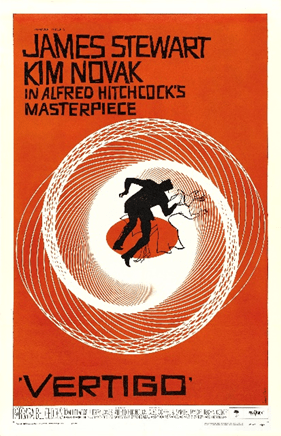
Last decade’s winner of the BFI Sight and Sound’s Greatest Films of All Time poll fittingly becomes joint first place within Warwick Film and Television Studies’ Greatest Films poll. Vertigo, adapted from the novel D’entre les Morts (Boileau-Narcejac), is a psychological drama film starring James Stewart. Stewart plays a retired police chief named John “Scottie” Ferguson who suffers from acrophobia (an extreme fear of heights), due to an incident during his career. John is hired by a friend to follow the friend’s wife Madeleine (Kim Novak) in a story that soon spirals into a tale of murder, seduction and an all-consuming obsession that threatens to throw John off balance permanently. Vertigo is considered by many to be Hitchcock’s masterpiece and is also famously known as the first film to feature a dolly zoom, permanently altering the landscape of cinematography. However, the film experienced a mixed reception on its original release as, despite doing well financially, it wasn’t recognized by critics. This was perhaps due to the perception of Hitchcock as a creator of populist crowd-pleasers at the time, rather than the auteur he is considered as now (thanks in part due to the work of the Cahiers du Cinéma writers). But over the years the film has garnered more and more critical appraisals and is now considered a must watch piece of film history.
3. 2001: A Space Odyssey (Stanley Kubrick, 1968): 4 votes (6th on the BFI Sight and Sound list)
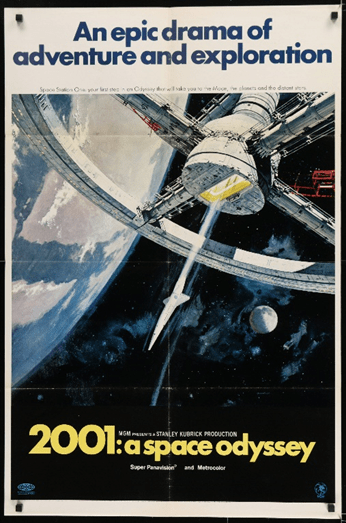
Our first, but certainly not our last, Kubrick flick comes joint first place with this sci-fi masterpiece. The story of mankind’s technological progress from mere simians to being able to trek the stars is communicated effortlessly in its career defining opening sequence. Another adaptation of a novel, this time by Arthur C Clarke, 2001: A Space Odyssey revolutionized the science fiction genre through its intense focus on realistic depictions of futuristic concepts and its dazzling commitment to visual effects. The surrealist imagery that Kubrick is known for fuses with the hard sci-fi setting to wonderous effect, exploring the possible future of a post organic mankind. Of course, the most iconic example of this is HAL-1000, whose presence has transcended the film itself, becoming an icon of pop culture. This modern epic is steeped in a fittingly Odyssean sense of grandeur, with every shot being a totally realized and immaculately detailed portrait of a possible life in the 21st century.
4. The Godfather (Francis Ford Coppola, 1972): 4 votes (12th place on the BFI Sight and Sound list)
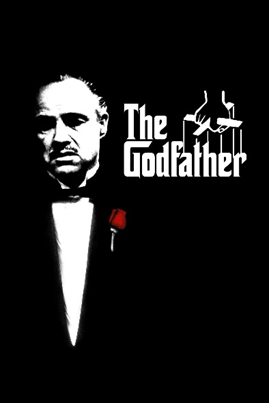
By far the most obvious film to make its way onto this list is The Godfather. This privileged position within the cultural zeitgeist is of course entirely earned. Coppola’s film chronicles the rise of the Corleone family in 1940s New-York exploring the twisting elements of mob politics. A layered portrayal of crime and corruption, Coppola’s landmark of the gangster genre was loved by critics and general audiences alike. Being not only the highest grossing movie of 1972, but the highest grossing movie of all time (for four years before it was finally dethroned by Jaws (Steven Spielberg, 1976)). As mentioned, the film was loved by critics as well winning Best Picture in the 1972 Academy Awards. Compared to the modern consensus on the film, Coppola did not win Best Director: that honor went to Bob Fosse’s work on Cabaret (1972) which some might say also deserves a place on this list despite its diminishing popularity.
5. Cleo from 5 to 7 (Agnès Varda, 1962): 4 votes (14th place on the BFI Sight and Sound list)
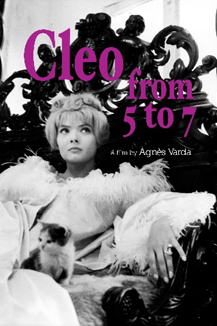
A classic of the French New Wave, Cleo from 5 to 7 is unique amongst its contemporaries for not only being directed by a woman, but also for the way in which it chronicles and explores feminist issues in 1960s France. Following the troubled life of Florence (Corinne Marchand), better known by her stage name Cleo, through the process of the eponymous 5am to 7pm, with a series of deeply personal first-person cinematography. The rhythmic style of French-New Wave styled editing helps to perfectly encapsulate the real time aspect of the film, creating a realistic sense of chronology to the films. This chronology also encapsulates the incredibly specific cultural atmosphere of Paris from the 60s, Varda’s camera having an almost documentarian gaze towards the dually rotting and flourishing city of Paris.
6. Silence of the Lambs (Jonathan Demme, 1991): 4 votes (Not on the Sight and Sound list)
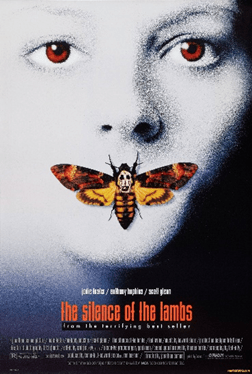
As for reasons that will be obvious to anyone who knows me, I have a rather antagonistic view for our 6th place film, so I’ll leave it up to fellow Reel Talk Editor Amelia Evans to sing its praises:
“As a film, I studied closely in my undergraduate, I am delighted to hear that the film has been selected in the Top 10! The film follows Clarice Starling (Jodie Foster), a soon to be graduated FBI agent who is assigned to the case of Buffalo Bill (Ted Levine), a serial killer who murders women and steals their skins. Starling requests the help of Hannibal Lecter (Anthony Hopkins), a psychologist who is incarcerated for his cannibalistic tendencies. The film was immensely popular at the time of release and has solidified itself as a modern classic.
The Silence of the Lambs navigates themes of misogyny through the perspective of Agent Starling. The film shows the female experience through various points of view shots and direct address from other characters. As a mainstream film from 1991, I am amazed at how the film communicates its feminist narrative and demonstrates the difficulties some women in power face.
Though the film has received backlash in their depiction of Buffalo Bill, who is potentially a transgender woman, I feel the intention of the film has been miscommunicated. Starling and Lecter conclude that Buffalo Bill’s identification of a woman is an act of self-hatred rather than self-realisation. In fact, the pair discuss how transgender people are non-violent and are incapable of committing the atrocities of the film.
Therefore, in my opinion, the film expresses an incredibly progressive and informative themes within a deeply captivating thriller. Give it a watch if you haven’t yet!” – Amelia Evans, postgraduate
Daedula’s Buffalo Bill Addendum: Personally, whilst I can emphasize with the perspective of those that view Silence of the Lambs as a piece of progressive cinema, Buffalo Bill’s reliance on the murderous trans woman trope and their similarity to the regressive myth of the autogynéphilie is too much for me to stomach. Making the FBI and the medical institutions attached to them the arbiters of who is truly trans and who is a perverse monster is a reactionary thematic core.
7. In the Mood for Love (Wong Kar-wai, 2000): 4 votes (5th in the BFI Sight and Sound list)
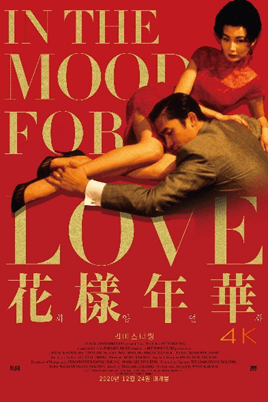
This deeply seductive tale of forbidden love in mid-century Hong-Kong has now firmly established itself as a classic within filmic spaces, rising to the top five of the Sight and Sound list in the decades since its release. A master of atmosphere and visual storytelling, Wong Kar-wai explores the journey of two star-crossed lovers, whose own partners are engaged with the respective spouse of the other. The richly textured setting of a crowded Hong-Kong apartment block is made iconic, in a similar fashion to the space stations or war zones of other films on this list. Marital issues have never been as gripping as in this story, which is positively drenched in its protagonists’ yearning for a true connection in an alienating metropolis.
8. The Shining (Stanley Kubrick, 1980): 3 votes (88th on the BFI Sight and Sound list)
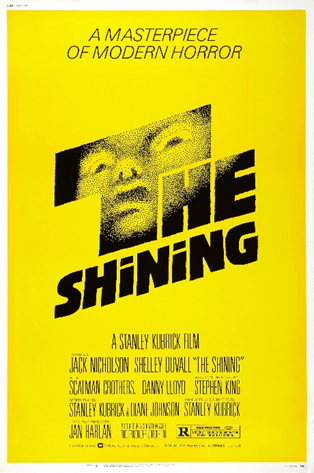
Coming in seventh place is the universally renowned and critically lauded horror masterpiece The Shining…which I have not seen. So, to save me from the embarrassment of basing this entry on half remembered Simpson’s parodies, Thomas Hemmingway has kindly offered his own insight into this incredible cinematic achievement:
“Every Stanley Kubrick film has its own pleasures and they’re all worth returning to over and over, but I don’t think there’s a film of his which is as rewarding to rewatch as The Shining. It was met with a mixed response upon release and has slowly found its audience over time. Maybe it’s because, much like the labyrinth hallways of the Overlook hotel, the film seems to change with each viewing. Sometimes it’s completely engrossing and terrifying, but I’ve also found it slow and uncomfortably paced. Nicholson’s performance is sometimes too much, hamming it up to extreme degrees, but on the right day, it’s his greatest achievement in a career full of iconic roles. In addition to its technical innovation, it also arguably features Kubrick’s most assured direction and contains some of the most iconic images in the history of film.” – Thomas Hemingway, Teaching Fellow.
9. The Truman Show (Peter Wier, 1998): 3 votes (Not on the BFI Sight and Sound list)
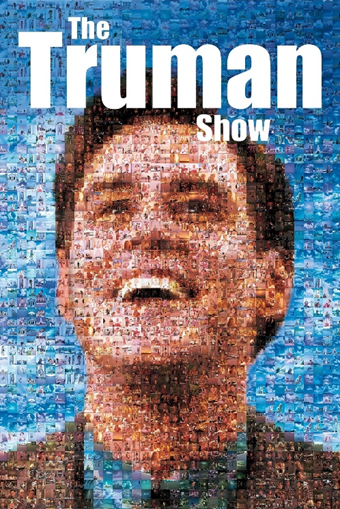
The Truman Show stars everyone’s favorite comedian Jim Carrey engaging in his familiar wacky antics. In this film, Carrey’s said wacky antics are trapped in a Baudrillardian nightmare existence. The film’s total simulacra and near-panopticon level of surveillance is all in the name of a parodic reality tv show. The Truman Show brought post-modernist thought and filmmaking fully into the mainstream with its depiction of constantly shifting virtual reality a year before The Matrix (1999) made it cool to do so. Jim Carrey delivers a standout performance playing a far more dramatic role than the rest of his oeuvre, though not his first considering The Cable Guy (1996, Ben Stiller) three years prior. The twisted mix of comedy and philosophy The Truman Show has proved to be prescient, as reality television continues to be an important aspect in all our lives, especially with the rise of the quasi-dystopic family blogs that fulfill The Truman Show’s dark prophecy.
10. Parasite (Bong Joon-ho, 2019): 3 votes (90th in the BFI Sight and Sound list)
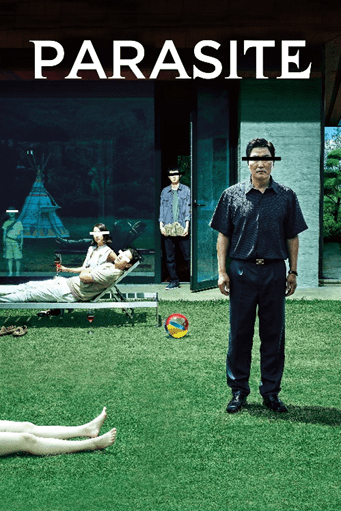
The latest film on our list but don’t let this fool you; this film easily stands shoulder to shoulder with the classical giants that also inhabit this list. A story in two parts, first comedy and then tragedy, it details the life of a working-class family in modern-day south Korea and their various intersecting issues. Parasite acts as a biting critique of capitalism in its exploration of the inherent unjust nature of the fundamentals of class structures and the resulting conflict, especially in relation to South-Korea’s hyper-capitalist society. This film, perhaps controversially, won both the Oscar for Best Picture and Best International Feature Film in 2022. Due to its mix of wide-reaching themes and culturally specific critiques, Parasite continues to reverberate worldwide.
There we have it: the ten greatest films in the history of cinema according to YOU! Despite the random ordering of films, the difference between the highest voted film and the lowest is a single vote. Not to mention that seven different films all tied for first place! So, to find the true rankings from best to worst (or tenth best if you’re more charitable than me) we’ll leave it once again up to you, student body and faculty of the Warwick Film and TV department, to decide which amongst these stunning classics is truly the greatest of all time.
 reeltalk0.movie.blog