Written by Miguel Antunez Vega. Edited by Ethan Jones
Argentinian cinema and television have always been a platform in which the underlying hardships, crime and corruption of the country could be represented, giving a voice to the marginalised and often unheard. In this article, I will analyse how the portrayal of “justice by your own hands” has evolved in the Argentinian TV Crime Neorealism of the 2000s to reflect the country’s changing contexts and explore how a popular subgenre eventually became hyperbolized and lost its original effect.
The “Classics”
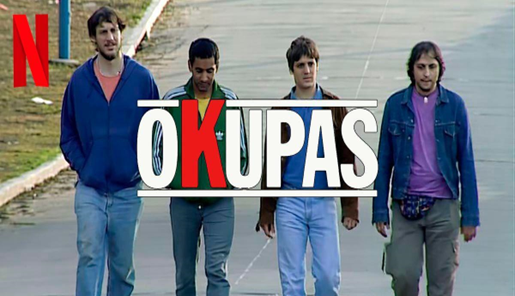
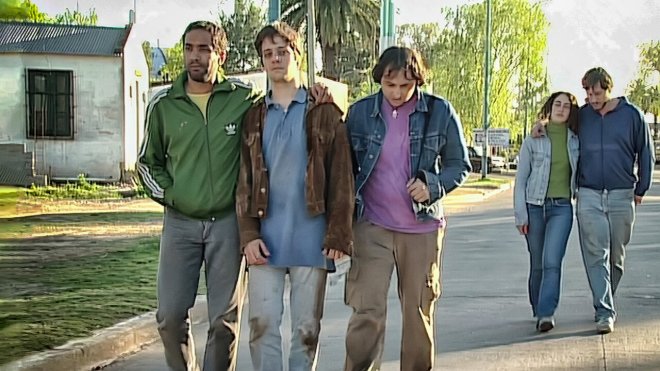
Bruno Stagero became a household name in Argentina after co-directing Pizza, Birra, Faso, a minimalist day-in-the-life story of a group of delinquents as they move from “petty-theft” into armed robbery, in 1998. The film’s realistic depiction touched many viewers who contemplated the protagonists’ entrapment and destined downfall. A few years later, Stagero went on to write, direct and create Okupas, which for many is the quintessential example of Argentinian Neorealism. The limited series, starring acclaimed actor Rodrigo de la Serna as Ricardo, follows four friends living in a squatted house as they encounter gangs, drugs, robberies, and introspections of existentialism. Ricardo is the one who invites the other three characters to illegally live with him in a large apartment after getting employed by his cousin to “look after the house” following a series of police evictions.
Interestingly, while the other three characters come from poor economic backgrounds, Ricardo is a “cheto vago” (lazy guy from the upper middle-class) who finds adrenaline in his attempts to “curtirse” (colloquially understood in Argentina as adapting to the hardened “lifestyle” of a lower socioeconomic class) and to feel like “el mas capito” (the boss). As viewers, we often find Ricardo to be unbearable as he struggles to fit in with the cruel world that he ignorantly romanticises. In the end, the four friends, pushed by Ricardo’s anger, get revenge on the criminal gang that killed their dog. Here, Ricardo gets a shocking reality check when he kills the gang’s leader and, in his stunned paralysis, helps causes the death of Chiqui (Franco Tirri), a tender and sweet fan favourite character. This leads to the audience being confronted with the brutality that arose from the passive viewing pleasure crafted in Ricardo’s attempts at “curtirse”.
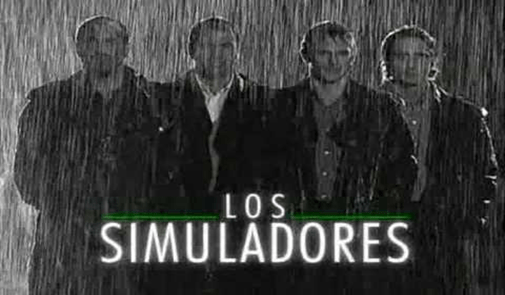
Extremely different in almost every sense, Damián Szifron’s Los Simuladores felt far more satisfying and feel-good rather than directly confrontational. The plot revolves around four talented con artists who organise elaborate operations to help solve people’s problems. Alongside the professionality and brilliance of their work, the protagonists’ personalities gradually reveal themselves throughout the different episodes: Santos (Federico D’Elía) is a cultured and traditional genius who designs every step of their plans’ logistics; Ravenna (Diego Peretti) is “the chameleon” in charge of characterisation who seemingly excels in everything he does; Lampone (Alejandro Fiore) is a hardened war veteran employed in transport and mobility; and Medina (Martín Seefeld) is a warm character who listens to Disney music and carries out the investigations.
Some of the show’s most notable operations include: helping a high school student pass seven final exams so that he is not held back a year; making a woman fall in love with a lonely guy by transforming him into a Special Agent who saves the world from Nazis; and provoking moral change on a corrupt cop by pretending to be NASA agents analysing an extra-terrestrial encounter. The show meshes the noir aesthetic seen in its credits with far-fetched and eccentric scenarios, producing a realness and emotionally profound Argentine identity by being filmed in famous locations. Furthermore, the show came out only a year after the country’s huge economic crisis in 2001 and was thus far more sentimental for Argentinians, whose continued love for the storylines caused a follow-up film almost 20 years after the show finished.
The “Future”
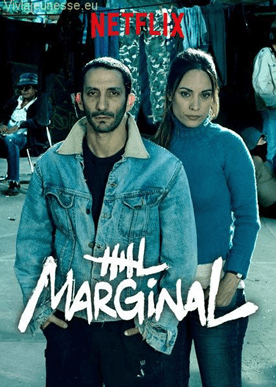
In 2016, Sebastián Ortega and Adrián Caetano created El Marginal, a show which focused its first season an undercover cop named Pastor (Juan Minujín) who is blackmailed and tasked with a mission to infiltrate a brutal prison in Argentina and gain the respect of the prisoners to rescue the kidnapped daughter of a judge hidden there. Despite season one having a strong ending for most of the characters, the show’s success led to it being renewed for multiple seasons, with the second and third being prequels that did not even feature Pastor, and seasons four and five acting as sequels to the original. As the show progressed, it became increasingly popular and was acquired by Netflix, where both its budget and the narrative exaggeration increased significantly.
This was particularly hyperbolised when viewed in contrast with other TV series from the time, such as the 2015 true crime limited series Historia de un Clan, which was created by Luis Ortega (Sebastián Ortega’s brother) and follows the Puccio family of kidnappers who commit brutal crimes whilst pretending to be just another “normal” family. In fact, the “epicness” and expansion in scale of El Marginal becomes evident when simply looking at the poster of each season, as shown below. Therefore, despite its popularity and the portrayal of marginalised people, the exaggeration and idealisation of criminal codes in El Marginal could fall under neither the Neorealist approach and thought-provoking ideals which Okupas left in audiences, nor the satisfying and inspiring “justice by your own hands” that Los Simuladores contemplated in a particularly resonant moment of hardship for Argentina.

In conclusion, there is a clear trend throughout the early 2000s of Argentinian audiences being interested in crime dramas that subtly reflect the country’s hardships, particularly regarding corruption. Whilst Okupas and Los Simuladores felt both timely and timeless, El Marginal followed the path of many Netflix shows and was stretched out due to its popularity, sacrificing its story and realism. This perhaps indicates why Argentina’s TV Neorealism of the 2000s, which left behind beloved gems, has reached an end: the modern desires of viewers prefer escapist entertainment rather than confrontations with the never-ending unbearable reality of the country.
 reeltalk0.movie.blog