Written by Eunsoo Lee
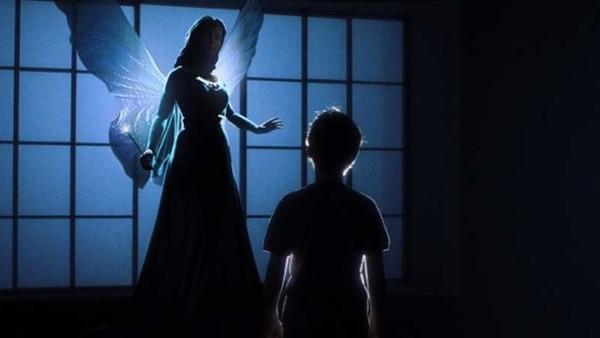
A.I. Artificial Intelligence (Steven Spielberg, 2001) is the story of an artificial intelligence robot, David, who has a childlike love for humans. David is a humanoid robot made by Professor Allen Hobby and given to Henry Swinton and his wife Monica, whose son Martin contracted a rare disease. Monica feels ill at ease with David first, but soon she eventually accepts him. However, since Monica’s son, Martin comes back home and becomes jealous of David, Monica abandons David in the woods. David wants to be with his mother, so decides to find the Blue Fairy in The Adventures of Pinocchio to become a real boy.
This is one of the most well-known SF (Science Fiction) films in the early 2000s and when compared to other contemporary Hollywood SF films, it represents a unique scenario structure (in terms of Blake Snyder’s ‘Save The Cat’).
The Science Fiction genre started from A Trip to the Moon in the early 1900s, and especially in Hollywood various SF genre films were produced through some phases of different styles. For example, in the 1930s, high-paying SF films such as King Kong and Frankenstein were produced, and in 1968, Stanley Kubrick’s movie 2001: A Space Odyssey contributed a lot to the development of the style of SF movies that are now familiar to consumers. Since then, with the success of the Star Wars series, SF genre movies have been utilised in various narratives as an important genre art of film along with the development of visual effect technology.
According to Snyder’s ‘Save The Cat’, he divides film into ten genres; Monster in the House, Golden Fleece, Out of the Bottle, Dude with a Problem, Rites of Passage, Buddy Love, Whydunit, The Fool Triumphant, Institutionalised, and Superhero.
In terms of scenario, the SF genre can be included in each of the above categories because its narrative diversity is wider than that of other genres. Existing Hollywood-dominant SF films focus on action and battle-based scenarios, so they consist of special individuals going through trials and overcoming them, but A.I. is very impressive in that it falls within these two categories; Rites of Passage and Dude with a Problem. As you can watch from the film, there is no antagonist who bothers David, and there are simply trials and steps he has to pass by.
In the process of travelling to become a real human, David suffers from the ordeal of running away from a robot-destroying organisation, intermediate solutions to find clues about blue fairies in the city, and frustration of not becoming a real boy. The most important thing here is that David is not an ordinary person, but a robot. His existence as a robot itself is a problem that he, as the main character, has to overcome in the scenario. This film shows a unique narrative that the SF genre can have in that it does not just present a problem applied from the outside, but a problem within the character.
In conclusion, A.I. provides a different narrative from the contemporary SF films we are familiar with, and it can be understood based on the narrative structure and theory of ‘Save The Cat’. In addition, it can be described more deeply in that the movie set the motif of the fairy tale Pinocchio.
 reeltalk0.movie.blog