Edited by Tijen Mustafa
Welcome to part 2 of our team’s favourite 2020 films that we think you should give a watch just in time for the Oscars and to help you decide what to vote for in our Alternative Oscars!
Issy Smith, Second Year Film Studies
Dating Amber (dir. David Freyne)
Dating Amber was just what I needed last year: a teen drama steeped in nostalgia and self-discovery, filling my longing for a new addition to my niche (though much loved) selection of Irish comfort films. The film, centred on the relationship between two gay teens faking a straight relationship to avoid the harassment of their peers, follows the trend of LGBTQ+ teen films focusing on queer friendship, much to my own personal joy. It likely won’t be a film for everyone (teen dramas and queer cinema rarely hit the mark universally) but it was definitely the film for me.
With its bright colours and often extremely touching imagery complementing the eccentric characters wonderfully, the film navigates the much-traversed period of adolescence with deep understanding and empathy. The two leads invite your sympathy as much as your frustration, and watching their arcs collide and their conflicts build is a rollercoaster that nothing else this year has taken me on. Fionn O’Shea’s Eddie especially earns my praise in abundance: a few of the character’s quiet moments of revelation absolutely strike gold for me. With every joke making me smile and every payoff packing a punch, I often went from laughing to crying over the course of a single scene (usually at the same time).
This is a film that will stick with me for some time (though already having lapsed into multiple re-watches may be to blame) with an ending that packs a punch, characters I just want more of and the performances to back it up. It will undoubtedly be a defining film for many young queer people, and is one I wish that I had at that age. Grab some tissues and a friend for this one.

Tijen Mustafa, First Year Film Studies
The Devil All The Time (dir. Antonio Campos)
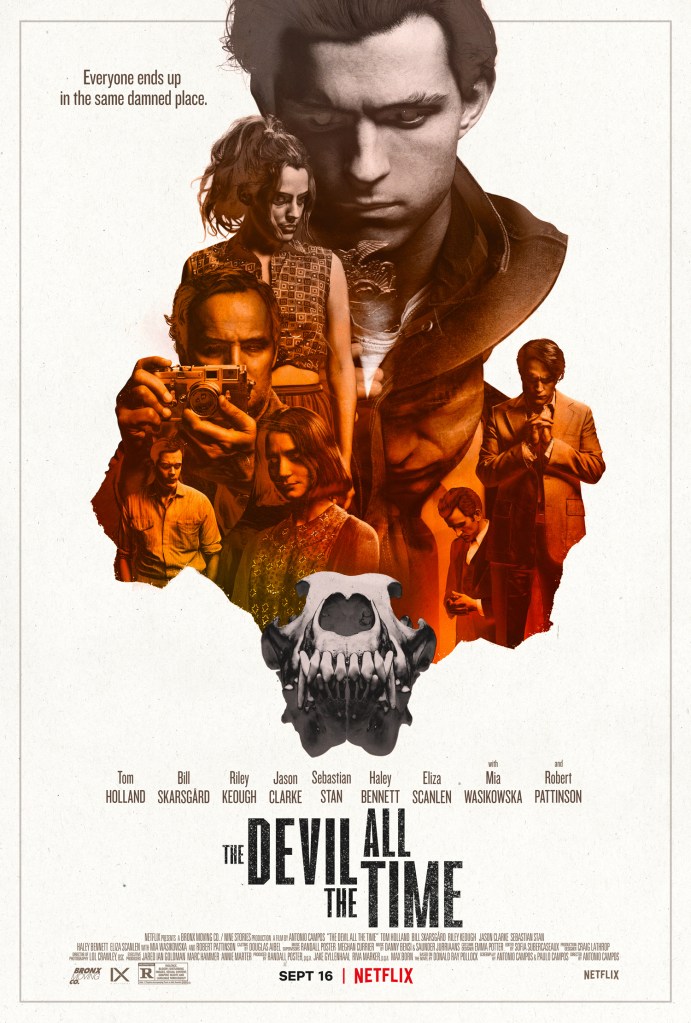
Campos’ newest film, released on Netflix, entails a mosaic story following several intertwining characters across post-World War II West Virginia and Southern Ohio. If you weren’t drawn in by the cast alone (Tom Holland, Robert Pattinson, Bill Skarsgård, etc.), the journeys, sins and clashing of these characters are sure to keep you on the edge of your seat. Tension and darkness seeps from every pore of the film, as we feel submerged by the wave of wickedness and insanity that puppeteers our antagonists. Who is to be trusted, and who is strong enough to survive the Devils that live in their midst?
By plugging the sinister events into the evil-ridden rendering of West Virginia in the 50s, The Devil All The Time gloriously emblemises the dark side of evangelicalism, which is perfectly captured by Robert Pattinson and Harry Melling. All the while threaded together with the spectacular acting from Campos’ cast – not only from an emotional facet, but commonly the accentual perspective in the case of the predominantly non-Southern bracket of actors – this film essentially drowns its audience in perturbed and unsettling scenes, despite upholding a sense of hope which is brilliantly symbolised by Arvin (which would have undoubtedly fallen flat without Holland’s staggering acting).
The light hint of a comical yet poignant irony to the characters’ journeys is layered not only by the meta-narrative (which strangely feels completely appropriate despite the themes and serious events that we deal with), but also due to the fact that the 2009 author of the film’s novel is the narrator. Knowing that we hear from the man who birthed these characters only heightens and secures the film’s ability to worry us, as Campos manages to establish the narrator as an omniscient presence, a higher being that is aware of all the ongoing machinations.
This film has everything you could ask for in a thriller: brilliant acting, a story brimming with an intensity that keeps you on the edge of your seat, and an unrelenting darkness that feels inescapable. Campos has certainly set the bar high.
Nikki Wilks, First Year Film Studies
Borat Subsequent Moviefilm: Delivery of Prodigious Bribe to American Regime for Make Benefit Once Glorious Nation of Kazakhstan (dir. Jason Woliner)

From questionable fashion choices to questionable jokes, ‘Borat’ (Sacha Baron Cohen) is perhaps one of the most iconic and widely recognised, albeit controversial, characters of the twenty-first century. Borat: Subsequent Moviefilm comes fourteen years after its predecessor, Borat: Cultural Learnings of America for make Benefit Glorious Nation of Kazakhstan and follows the shenanigans of Borat as he returns to ‘Yankee-land’ on a mission to gift his daughter, Tutar (Maria Bakalova) to (former) Vice President Mike Pence.
Despite the explicit crudeness and vulgarity of the film, it soon becomes clear to anyone who watches Borat: Subsequent Moviefilm that there is a political agenda at play: it is no coincidence that the film was released weeks before the American election and Baron Cohen pulls no punches with his anti-Trump ideology. Baron Cohen’s mocumentary style of filmmaking is showcased here in all of its cringe-inducing glory. This coupled with the seemingly real and quite-frankly outrageous statements from members of the American public (notably two members of the Republican Party who claim to believe that Hillary Clinton “drinks the blood of children”) makes for a unique comedic experience.
In essence, this is a film that alternates between satire and commentary, making it far more dividing than the first Borat film. There will be elements of Borat Subsequent Moviefilm that some spectators will simply disagree with owing to personal political views and moral beliefs. Despite this, it is definitely worth a watch and can be accessed through Amazon Prime Video.
Albert Bullock, First Year Film Studies
Mogul Mowgli (dir. Bassam Tariq)
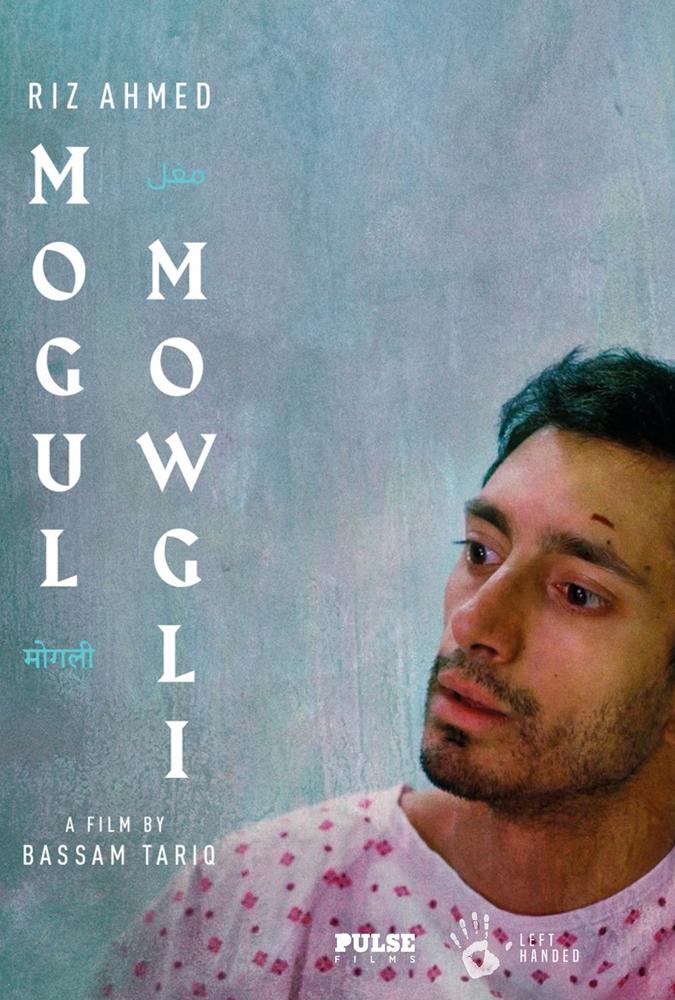
With the staggering critical acclaim of Sound of Metal, a film that stars Riz Ahmed in the main role, a film that came out months apart from this film, and a film that has a very similar overt subject matter, it was very easy to let this fall under your radar. I’ll admit that if I had to say which one I more was excited for, it would’ve been Sound of Metal. However, Bassam Tariq’s Mogul Mowgli has now become my favourite film of 2020 (that I have seen).
Complemented by its relatively short run time, Mogul Mowgli never wastes a moment and, at times, makes you feel like you are losing your breath. It’s abrasive, harsh, anxiety-inducing, and all in all feels like the cinematic equivalent of hyperventilating. Everything about the construction of the image in this film is so tight and so confining that you really do feel the pain that the main character, Zed, is going through. Aspect ratio, proximity of the camera and composition are all incredibly claustrophobic and are used to create some very harrowing sequences. That paired with the editing, which, by the way, is easily the best part of the film, makes for some gorgeous yet effectively horrifying filmmaking.
I was in awe at how Tariq could make the ordinary and mundane appear nightmarish and terrifying – the mosque scene in particular really got to me in ways only a few films have. The film is an excellent portrayal of colonial and emotional trauma on the screen! It was easy to see Lynne Ramsey influences but what Tariq does here is not derivative in the slightest, it felt like his own unique way of expression. Hats off to Riz Ahmed for his work as writer and an unsurprisingly great performance. Don’t watch this on your laptop. Hope you enjoy this great film by Bassam Tariq.
Now that you’ve read our editorial team’s recommendations it’s time to have your say! The Warwick Film and Television Studies Department’s staff and students can fill out our Alternative Oscars poll here. The poll is open till 12 April 2021. We look forward to receiving your responses!
 reeltalk0.movie.blog