Edited by Issy Smith
Christmas time is here at last and what an unusual Christmas season it is. Right now more than ever we all need a little Christmas spirit and what’s better to get us into the festive mood than a diverse range of Christmas movie recommendations from our blog’s editorial team!
Sam Hamilton – First Year Film Studies
The Polar Express (dir. Robert Zemeckis, 2004)
This is a film best grown up with, seen over and again into adolescence and adulthood. At first to be dazzled by its visual confection, warmed by its musical numbers, thrilled by its surreal set pieces; then once more while you come to understand what it is to harbour doubt, to be cynical, to label things you once found enchanting as ridiculous, and again as you reach that sought-after maturity only to quietly long each Christmas for the halcyon days when you might once have genuinely believed… in Saint Nick, in God, in ‘good’. Another Christmas comes, you see it again. Beginning with subtle hints of music, we fade into a cold navy blue night sky teeming with snow. Pan down. Suddenly the music mutates into a heavenly theme as the capitalised phrase gleaming in white and gold rises from the gloom: ‘THE POLAR EXPRESS’. Finally the point lands: that this film, adapted from the children’s book by Chris Van Allsburg, was never about trains or presents or even children: it’s about a need for the ageing to rediscover a redeeming belief in the world, one that can be eternally white and gold and shining in whatever dark cold night we may find up ahead, “as it is for all those who truly believe”.
The odyssey of our nameless protagonist is shaped around this rediscovery. This character occupies a unique space in popular Christmas films, not as a bah-humbugging cynic, but rather a rational child who desperately wants to see past the veil of logic but cannot bring himself to. The Express appears for him at an urgent ‘dark night of the soul’, in religious terms, offering him particular guidance as it also does to disenfranchised Billy and the nameless African-American girl who comes to lead the group, having been at first completely segregated (the film is set in 1956).
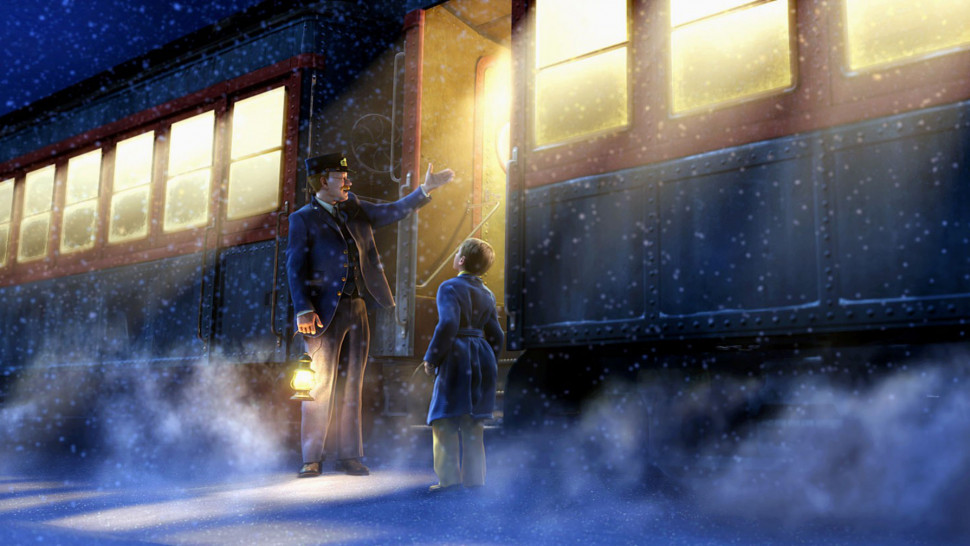
Director Robert Zemeckis has been a continuing champion of motion capture through recent years in Beowulf and most recently Welcome to Marwen. What other medium would allow Tom Hanks to play nine onscreen characters at once? But Express was a pioneering feat for the technology, the most superb showcase for animation of the group, and the most connotative with character and scene, from the enigmatic hobo to the extended silent sequences to the surreal and magical undertones pushing the movie into absurdist territory. By these and other turns the movie gains an impactful rewatchability, crystallises the childish glee common to any universally loved ‘Christmas film’ and makes for the ideal Christmas Eve movie, when it may be most needed.
Martin Jandejsek – First Year Film Studies
Kiss Kiss Bang Bang (dir. Shane Black, 2005)
Are you looking for a movie to watch during Christmas? Something new? Something that makes you forget you are Home Alone and drinking away your loneliness, and that isn’t Die Hard?
Well, it doesn’t matter because this is not about you, this is about me telling you what to watch.
It is the directorial debut of a film nerd turned screenwriter, then turned director who loves the “lower” genres and who manages to reforge his love into scripts filled with a razor sharp dialogue, violence, wit and intricate stories while nonstop playing with the form and formula. And whose initials aren’t QT.
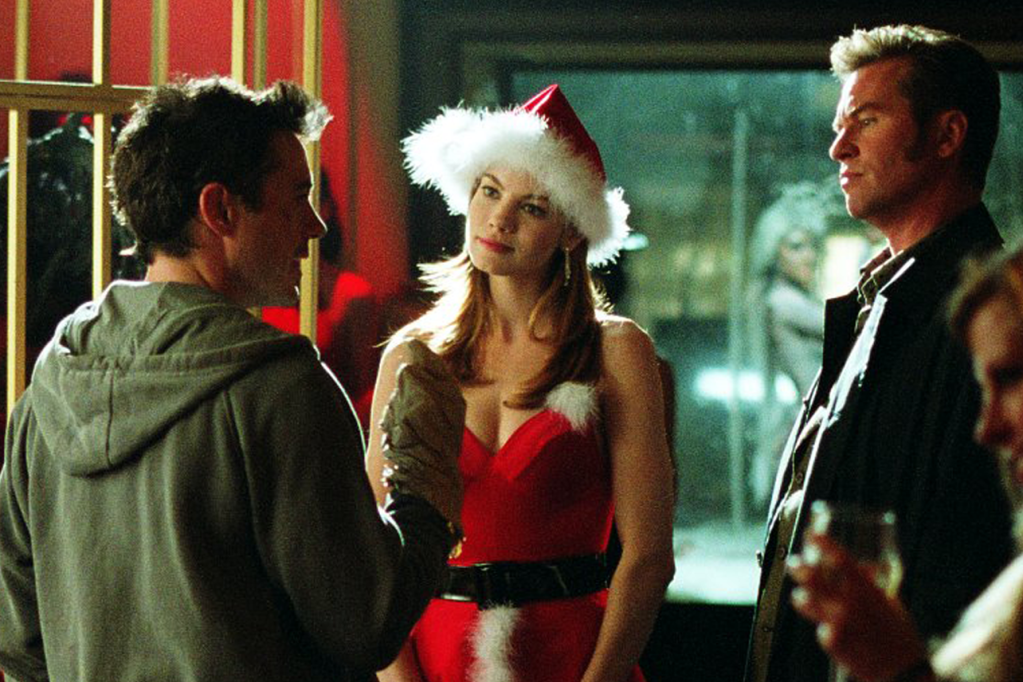
No, this is a film by Shane Black, the King of the Christmas movie genre, and it is visible in every frame. It is a buddy movie/modern noir about an unlikely duo, people trying to do the right thing in a messed-up world and a mysterious murder case that takes place during Christmas. All wrapped up in layers of dark humour and pop culture references.
So, if you’ll find yourself fed up with all the Christmas stuff, don’t be a Grinch and watch a nice picture about murders and the darker part of Hollywood from a guy who is as much cynical about the world as he is hopeful about the people.
Gemma Littleton – First Year Film & English Literature
Home Alone (dir. Chris Columbus, 1990)
“I made my family disappear”- Kevin McCallister
Chris Columbus’ Christmas classic Home Alone follows a young troublesome boy (Kevin), who wishes to be alone after being constantly ridiculed by the rest of the McCallister family who are all set to catch a flight the next morning. During the night a heavy storm causes a power outage and, when the family awake, chaos strikes, and Kevin is accidentally left behind. He awakens to an empty house believing his wish has been fulfilled. However, this quickly changes when he is faced with a supposed serial killer in the street and two thieves targeting his house.

It then feels like a race against time for Kevin to defend his house and himself (“This is my house. I have to defend it.”) and for his mother to get back to him in time for Christmas (“If it costs me everything I own, if I have to sell my soul to the devil himself, I am going to get home to my son.”). This film ultimately pulls on our heart strings as we see Kevin surrounded by imminent danger alongside the reminder of what could’ve been (family celebrations). Columbus predominantly focuses on Kevin’s perspective which gives the film a more innocent and comedic take on the events and inevitably the viewer also anticipates Christmas day just like the protagonist.
If you are looking for a film packed with laughter, seasonal festivities and feels then this classic is for you.
Sophie Behan – Third Year Film & English Literature
Shop Around the Corner (dir. Ernst Lubitsch, 1940)
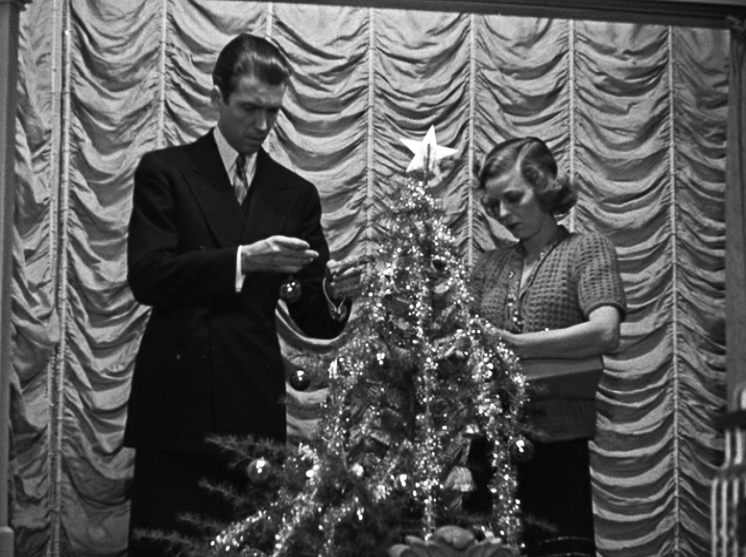
Though Shop Around the Corner might not be a firm first choice for any avid Christmas film lover, I believe that it captures the essence of the festive season through its joy, wit and romantic core. It wasn’t until I watched this film for the first time that I realised I was, in fact, watching a Christmas film in March.
The story takes place on Balta Street, in Budapest Hungary, and follows the movements of Alfred Kralik (James Stewart) as he attempts to maintain an anonymous pen pal relationship with Klara Novak (Margaret Sullivan). The main source of humour and irony in this film is propelled by Alfred and Klara’s real-life interactions in Hugo Matuscheck’s gift shop. Despite their romantic letters that often express an interest of high literature, art, and history, the pair couldn’t despise each other any more in real life if they tried.
Alfred faces a secondary obstacle in the narrative which centres around the relationship between manager and employee. Hugo Matuschek (Frank Morgan) is jealous and secretly lonely. He believes that Alfred is engaging in ‘secret rendezvous’ with his wife and fires him without justification. It is not until later we find out he punished the wrong person and Alfred gets his job back.
Both strains of action come to a head in a final intimate exchange between characters. Matuschek is left alone in front of the snowy store window but finds sanctuary in a 17-year-old employee without parents. Inside the shop, the lights are out, and the space seems even more confined and charming. Alfred is aware of his pen pal’s true identity, but Klara is not. The events that follow are so perfectly timed thematically and narratively it seems that a Christmas miracle is the only necessary end to this film.
“A wallet is quite romantic, on one side he has your last letter, and on the other side a picture of you, and that’s all the music you want”.
Matthew Smolenski – Third Year Film Studies
Eyes Wide Shut (dir. Stanley Kubrick, 1999)
On the frequent use of Christmas as a backdrop for his films, Shane Black states that it represents “a hush in which we have a chance to assess and retrospect our lives.” While retrospection plays a significant role in Eyes Wide Shut, Kubrick takes an opposite approach to the Christmas season by investigating its artifice and transposing the masquerade of Traumnovelle, his source novel, onto the artifice of the Christmas season. The film’s plot is catalysed by the confession of a past adulterous fantasy by Alice (Nicole Kidman), wife of Doctor Bill Harford (Tom Cruise), who becomes consumed by disillusionment towards their relationship that manifests in a dangerous desire for an extra-marital affair.
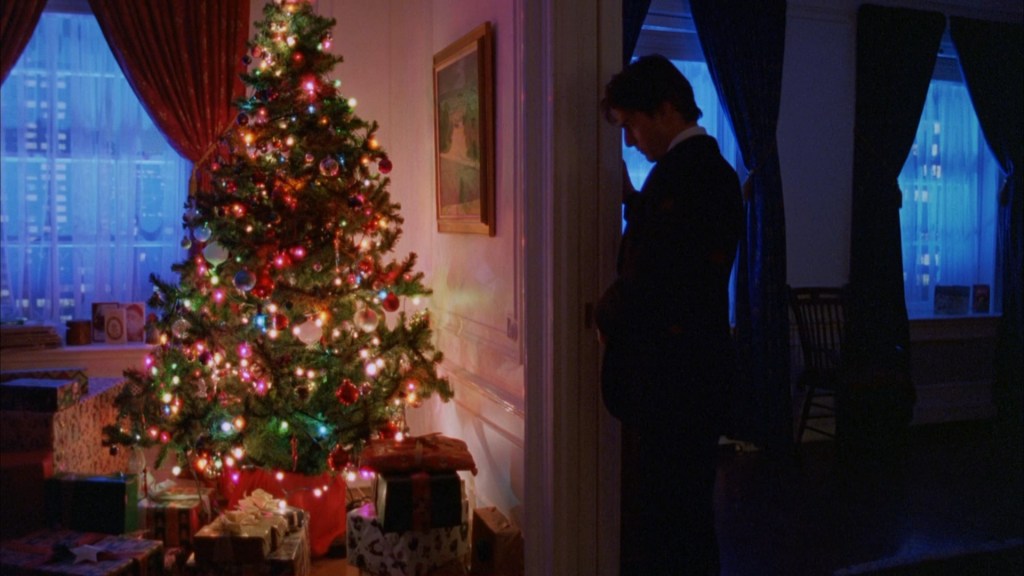
Key to the odd beauty of Kubrick’s final film is the blatant artifice of the New York backdrop that floats behind Cruise as he navigates Pinewood Studios’ elaborate Greenwich Village set. Shot primarily in dream-like nocturnal settings, the regular light sources and colourful Christmas lights of this façade become near-indistinguishable, both decorating and illuminating; disguising and revealing, the same dark network that packages and sells lived human experience like the empty present boxes of the film’s closing toy store scene. In Love Actually’s famous sign-holding scene, the audience is assured that “at Christmas you tell the truth”. In Eyes Wide Shut, this notion of seasonal truth becomes another reassuring lie. It is no coincidence that Alice’s seismic confession at the start of the film is given under the influence of marijuana: it is only the selfish, bodily pleasures of drug use and, eventually, sex, that can unearth anything approximating truth, and that truth can never be wrapped up with a bow.
Christmas is far from window-dressing in Eyes Wide Shut, but Kubrick’s surreal fantasy still stands out as the best-looking Christmas film and, if you’re willing to let it get under your skin, you may find yourself coming back to it like a warm blanket on a cold winter’s night.
Melissa Tavakoli – First Year Film Studies
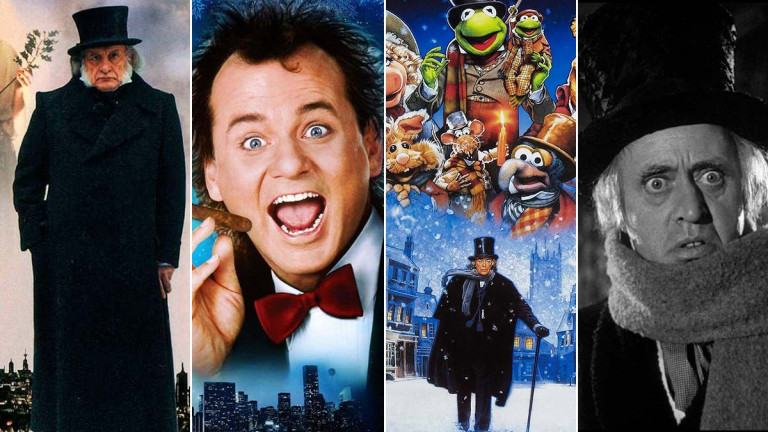
A Christmas Carol (its various adaptations)
The time has come again, where the trees are stripped bare, the sun sets before we get a look at it, and where the rain starts singing. It is the time that our big, fuzzy coats become our priority and without realising, we start feeling nostalgic. The smell of Christmas morning slowly starts to creep in, and the Christmas spirit can be felt at every corner. Of course, while we wait for the holidays to arrive, we indulge ourselves with Christmas films, to help time pass quick. The question is, which timeless film is the best choice for a timeless holiday? Which film has captured the essence of the Christmas spirit? Although there can be many answers, I believe A Christmas Carol best fits these descriptions.
A tale that is timeless and quite literally includes the spirits of Christmas Past, Present, and Future, the film follows a heartless man (Ebenezer Scrooge) that cannot love or pity the people around him, and on Christmas Eve the Christmas spirits pay him a visit. The many adaptions of Charles Dickens’ story, although very different, all reveal the struggles that lower-class people face, especially during an important holiday. As viewers we travel through time, space, and even witness heart breaking moments from Ebenezer’s life. While the character’s eyes and heart are opening to the concept of kindness, we are being reminded what the true meaning of Christmas is. A Christmas Carol reminds us that, to enjoy the holidays, we do not need materialistic items. Instead what makes Christmas so important is the time spent with our loved ones, the joy that is shared between us, and the long-lasting memories made.
So, whenever you feel nostalgic of the holidays, make sure to watch A Christmas Carol and maybe you might even have a revelation just like Ebenezer Scrooge.
Any films you wish were mentioned? A favourite Christmas movie you think everyone needs to see? We’re compiling a list of the Warwick Film and Television Studies department’s Christmas favourites! Please feel free to complete the survey below and maybe your seasonal pick will make the list!
https://moodle.warwick.ac.uk/mod/questionnaire/preview.php?id=1154508
 reeltalk0.movie.blog